-
by sayum
04 August 2026 1:39 PM







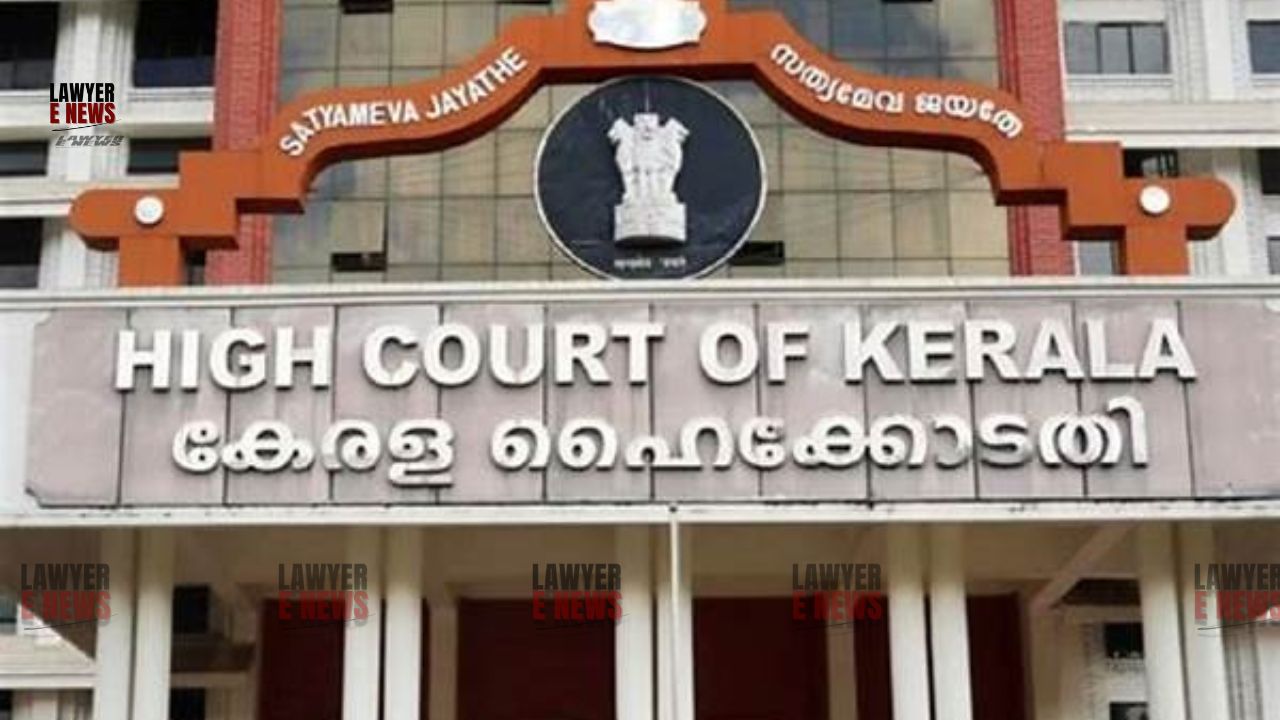
“Emotional Upset After Receiving Divorce Draft Is Not Enough To Prove Abetment” – Kerala High Court setting aside the trial court’s order that had added a charge under Section 306 of the Indian Penal Code against the petitioner after prosecution evidence was recorded. Justice Dr. Kauser Edappagath ruled that the power under Section 216 of the Code of Criminal Procedure to alter or add charges must be exercised with caution and only when supported by sufficient material on record. In this case, there was no evidence to show that the petitioner instigated, conspired, or intentionally aided the suicide of his wife. The Court allowed the petition under Section 482 CrPC and quashed the addition of the abetment charge.
The petitioner, Puthiya Purayil Shaji, was married on 14 August 2005. Tragically, his wife committed suicide on 3 November 2005 by jumping into a well near her residence. Following this, the deceased’s mother, M.K. Padmini, filed a complaint alleging offences under Sections 498A and 306 IPC against the petitioner, his brother, and others. The police, after investigation, filed a final report against the petitioner alone, alleging cruelty under Section 498A. The trial court took cognizance and framed a charge under Section 498A IPC.
During the trial, eleven prosecution witnesses were examined. After this stage, the Assistant Public Prosecutor moved an application under Section 216 CrPC to add a charge under Section 306 IPC. The trial court allowed this application by order dated 2 May 2014. This addition was based on the claim that the suicide was linked to a divorce agreement given to the deceased shortly before her death. Challenging this addition, the petitioner approached the High Court.
The principal question before the High Court was whether the trial court had rightly invoked Section 216 CrPC to add a charge under Section 306 IPC after prosecution evidence had concluded. The High Court began by reiterating the scope of Section 216 CrPC, which allows a court to alter or add charges at any stage before judgment, but only if the material on record discloses the ingredients of the new offence.
The Court observed that while courts can exercise this power suo motu or on an application, the mere fact that an application is moved by the prosecution does not bind the court to accept it unless justified by evidence. The contention raised by the petitioner that the Public Prosecutor had no right to move the application was rejected in light of the later decision of the Supreme Court in Anant Prakash Sinha v. State of Haryana, (2016) 6 SCC 105, which clarified that an informant or victim can bring such matters to the court’s notice. However, the High Court emphasized that the discretion remains solely with the court.
The Court then closely examined the evidence on record, particularly the testimonies of PWs 1 to 3—mother, father, and brother of the deceased. According to their deposition, the deceased had received a draft divorce agreement, allegedly delivered by another accused, which upset her emotionally. She died by suicide three days later. However, none of the witnesses alleged that the petitioner handed over the agreement or played any active role in provoking or aiding the suicide.
Justice Edappagath relied on settled principles laid down by the Supreme Court in several decisions, including Amalendu Pal @ Jhantu v. State of West Bengal, AIR 2010 SC 512, Randhir Singh v. State of Punjab, (2004) 13 SCC 129, Kishori Lal v. State of M.P., (2007) 10 SCC 797, and Geo Varghese v. State of Rajasthan, (2021) 19 SCC 144. These decisions uniformly hold that mere harassment or emotional distress, without direct instigation, conspiracy, or intentional aid, is insufficient to attract Section 306 IPC.
The Court concluded that the necessary legal ingredients of abetment—namely instigation, conspiracy, or intentional aiding—were entirely absent. There was no evidence of a mental process or act on the part of the petitioner that could be construed as abetment. The High Court specifically noted that even the complaint (Annexure A1) did not allege that the petitioner played an active role in delivering the divorce draft or intended to drive the deceased to suicide. Without such linkage, the additional charge under Section 306 IPC was legally unsustainable.
The High Court also dismissed the trial court’s reliance on emotional reaction to the divorce draft as a basis for the new charge. The Court clarified that emotional disturbance alone, no matter how intense, cannot legally amount to abetment unless it is backed by concrete acts of instigation or assistance.
The High Court held that the trial court misapplied the standards for invoking Section 216 CrPC. Though the provision grants wide discretion, it cannot be invoked arbitrarily or in the absence of material evidence. The Court further noted that the Investigating Officer who filed the final report had specifically excluded Section 306 IPC after perusing the case diary, which also supported the view that abetment was not made out. The addition of Section 306 IPC, based solely on inference without evidence of the petitioner’s active role, was deemed a miscarriage of justice.
The impugned order dated 2 May 2014 passed by the Judicial Magistrate of First Class-II, Kannur, was thus quashed. The High Court allowed the petition and set aside the addition of Section 306 IPC.
The Kerala High Court reaffirmed that while courts have broad powers under Section 216 CrPC to alter or add charges during trial, such power must be guided by judicial discipline and evidentiary scrutiny. In criminal law, particularly in cases involving sensitive charges like abetment of suicide, courts must distinguish between emotional upset and legal instigation. Without specific material indicating intentional aid or provocation, no individual should be forced to stand trial for an offence as grave as abetment of suicide. The ruling offers crucial judicial clarity on safeguarding procedural fairness while upholding substantive criminal law standards.
Date of Decision: 22 May 2025