-
by sayum
24 August 2026 11:13 AM








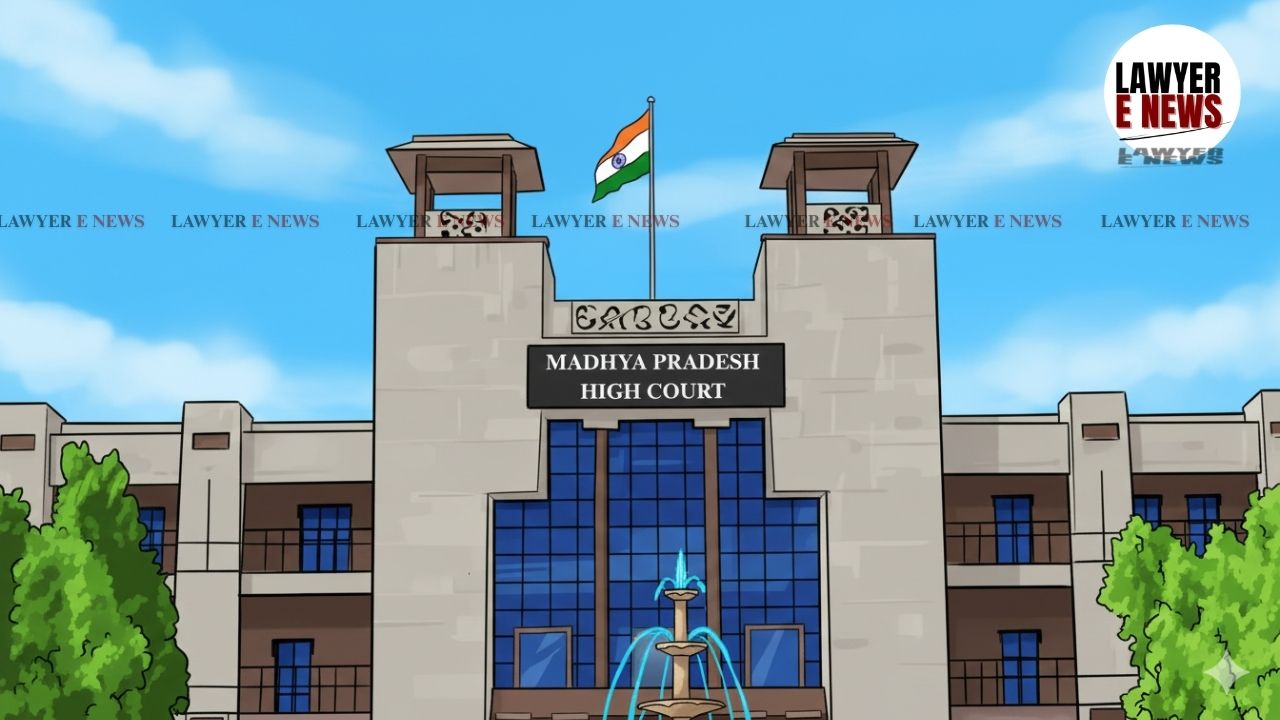
"Absence of policy condition regarding vehicle fitness certificate – No ground to evade liability under Section 149 of MV Act," High Court of Madhya Pradesh at Indore delivered a landmark judgment rejecting a batch of appeals by New India Assurance Co. Ltd., and upheld its liability to compensate multiple victims of a deadly road accident, despite the fact that the fitness certificate of the offending vehicle had expired shortly before the incident. Justice Pavan Kumar Dwivedi, presiding over a bunch of 13 Miscellaneous Appeals arising out of a common award, ruled that in the absence of an explicit clause in the insurance policy mandating a valid fitness certificate, the insurer cannot escape liability.
The accident in question took place on 10 February 2016 on the Ujjain-Maksi Road, where a pickup vehicle, being driven rashly, collided head-on with an Innova car, resulting in the death of four individuals and injuries to others. Appeals were filed by the insurer challenging its liability, and by the claimants seeking enhancement of compensation.
“Mere Expiry of Fitness Certificate Does Not Constitute a Breach of Policy Conditions”
The central issue raised by the insurer was that the pickup vehicle lacked a valid fitness certificate at the time of the accident, and hence, under Section 149(2) of the Motor Vehicles Act, the insurance company should be absolved from liability. However, the Court categorically rejected this submission.
“There is a clear admission of the insurance company’s witness that the policy contained no condition regarding the fitness certificate,” observed the Court, relying heavily on the testimony of Vivekmadhav Rahalkar (NAW-1), Assistant Manager of the insurer.
Citing its own coordinate Bench decisions in Oriental Insurance Co. Ltd. v. Manoj, 2014 ACJ 2389 (MP), and National Insurance Co. Ltd. v. Sunita Markam, 2022 ACJ 1799 (MP), the Court reaffirmed:
“Until and unless violation of the conditions stipulated under Section 149 is specified and established, the insurer cannot be absolved from liability.”
The Court also rejected reliance on contrary rulings from Kerala, Madras, and Allahabad High Courts, stating that the position in Madhya Pradesh is settled and binding.
Contributory Negligence of Innova Driver Deepak Reduced from 60% to 50%
Another important legal issue pertained to the finding of contributory negligence on the part of Deepak, the deceased driver of the Innova car. The Tribunal had held him to be 60% negligent, relying largely on the spot map.
The High Court referred to the Supreme Court’s decision in Mangla Ram v. Oriental Insurance Co. Ltd., (2018) ACJ 1300, which held that mere location of a vehicle post-collision cannot conclusively prove contributory negligence. However, Justice Dwivedi distinguished the facts, noting that the spot map in this case showed both the point of impact and direction of the vehicle, proving that the Innova was on the wrong side of the road.
Nevertheless, he observed: “No evidence showed that Deepak was more negligent than the pickup driver… Thus, contributory negligence is fixed at 50%, not 60%.”
Income Tax Returns Valid Evidence of Income for Deceased Akash
In the case of deceased Akash, the Claims Tribunal had wrongly discarded his income tax return. The High Court corrected this error, holding that:
“The return was filed prior to death and shows income of ₹2,93,260 per annum… It must be accepted as reliable evidence.”
Accordingly, enhanced compensation of ₹23,44,724 was awarded to his parents, including filial consortium.
Double Deduction for Same Claimant in Two Deaths Held Impermissible
In the case of deceased bachelor Rajesh, whose mother Kiranbai was also a claimant in another claim for a separate deceased, the Tribunal had granted only 50% of the compensation, applying Sarla Verma v. DTC, (2009) 6 SCC 121.
However, the High Court held: “Once 50% is deducted for personal expenses of a bachelor, there is no logic in reducing compensation further just because the same parent is claimant in another death case from the same accident. Such deduction is irrelevant and legally impermissible.”
₹5,69,810 was awarded over and above the Tribunal's award.
Parents of All Deceased Victims Entitled to ₹40,000 Each for Consortium
Relying on settled law on filial consortium, the Court awarded ₹40,000 each to the parents of all deceased claimants, including those for whom the Tribunal had earlier omitted this head of compensation.
Injured Victims Without Proof of Disability Not Entitled to Enhanced Award
In the cases of injured claimants Santosh and Manish, the Court upheld the limited compensation awarded by the Tribunal, holding that in the absence of proof of grievous injury or permanent disability, no enhancement was justified.
Engineering Student Hemant Treated as Semi-Skilled Worker
For deceased Hemant, a civil engineering student, the Court accepted his notional income at ₹8,000 per month, as pleaded by the claimants themselves, treating him as semi-skilled. Compensation was enhanced by ₹2,22,578, including consortium.
Interest on Enhanced Compensation @6% p.a.
All enhanced compensation amounts were directed to carry interest at the rate of 6% per annum from the date of filing of the claim petition till realization. The insurance company was directed to pay the entire enhanced amount, as liability under Section 149(1) continues.
The judgment comprehensively addresses critical aspects of insurer liability, the legal effect of fitness certificate expiry, assessment of income, proof of contributory negligence, and just computation of compensation. It also reaffirms the rights of parents of deceased bachelors to filial consortium, and provides important guidance on preventing double deduction in motor accident claims.
Date of Decision: 19 January 2026