-
by sayum
04 August 2026 1:39 PM







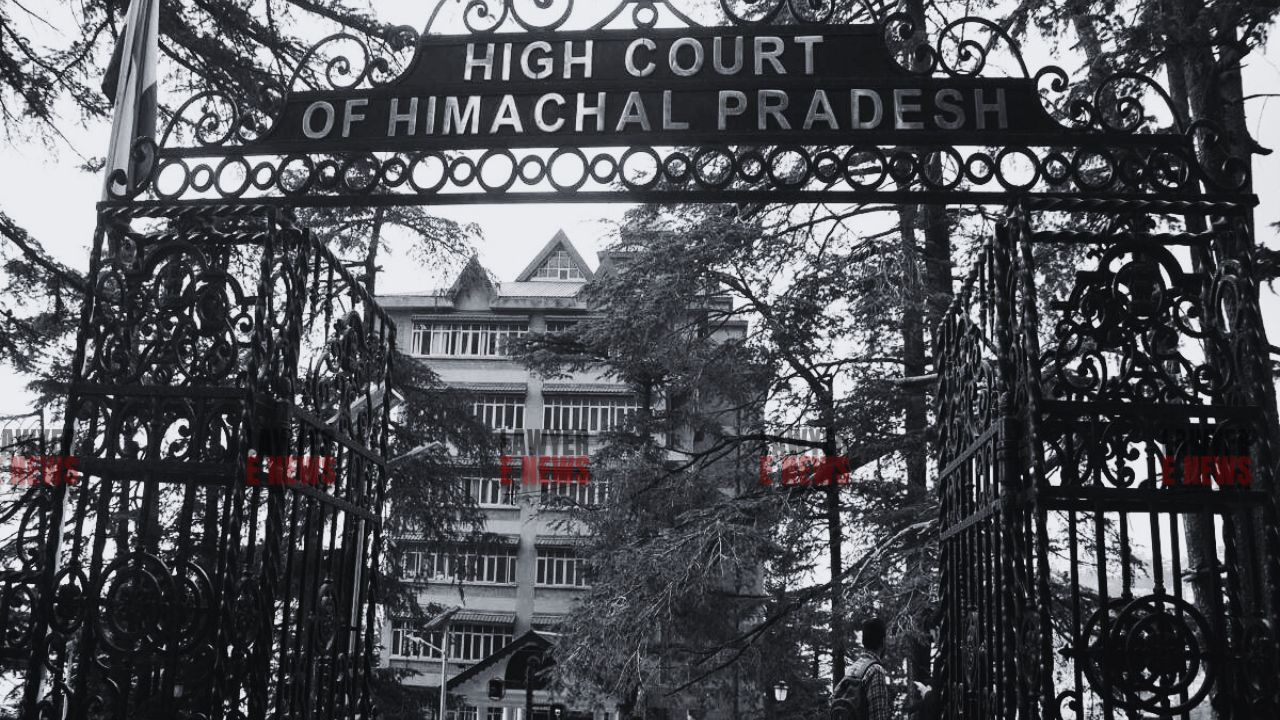
“Inherent Powers Under Section 482 CrPC Not to Be Used to Stifle Legitimate Prosecution”: In a significant ruling on May 30, 2025, the Himachal Pradesh High Court dismissed a petition under Section 482 of the Criminal Procedure Code filed by Pushp Lata Singha, a retired Joint Secretary to the Government of Himachal Pradesh, seeking quashing of FIR No. 03/2020. The FIR related to alleged procurement irregularities in the purchase of hand sanitizers during the COVID-19 pandemic, including accusations of criminal conspiracy, cheating, forgery, and violations of statutory pricing and licensing regulations.
Justice Virender Singh, delivering the judgment in Pushp Lata Singha v. State of Himachal Pradesh & Others (Cr.MMO No. 769 of 2022), held that “the material on record supports a prima facie case” and that the continuation of the prosecution was justified. The Court declined to interfere at the pre-trial stage, reiterating that mens rea—or intent—is a factual issue that can only be tested during trial, not during proceedings for quashing.
Allegations of Procurement Fraud During Pandemic
The case stems from an FIR registered on May 12, 2020, by the State Vigilance and Anti-Corruption Bureau, Shimla, concerning irregularities in the emergency procurement of hand sanitizers by the Secretariat Administration Department during the initial wave of the COVID-19 pandemic.
Pushp Lata Singha, who was serving as Deputy Secretary (SAD), oversaw the procurement process. It was alleged that she approved supply orders in favour of M/s Lalit Kumar—a supplier lacking necessary drug licenses—and that manipulated comparative statements were used to show him as the lowest bidder. Rates for 500ml bottles were allegedly falsified from ₹370 to ₹300 in official documents.
According to the prosecution, this manipulation led to government procurement at inflated prices, violating the Central Government’s notification dated 21.03.2020, which fixed the maximum retail price of sanitizers at ₹50 per 100ml.
Despite her contention that she was absent from office during the lockdown and played no role in the second supply order, the FIR attributed active participation and collusion in the procurement process to her.
Can an FIR disclosing cognizable offences be quashed at the pre-trial stage under Section 482 CrPC?
Answering in the negative, the Court cited the established principle laid down in State of Haryana v. Bhajan Lal (1992 CrLJ 527), that quashing is permissible only when “allegations are so absurd or inherently improbable that no prudent person could ever reach a just conclusion that there is sufficient ground for proceeding against the accused.”
The Court emphasized: “The inherent power should not be exercised to stifle a legitimate prosecution. High Court being the highest court of a State should normally refrain from giving a prima facie decision in a case where the entire facts are incomplete and hazy...” [Para 68]
The Court held that the petitioner’s role in approving the manipulated comparative statements and failing to verify vendor eligibility showed prima facie material to justify trial.
Does the withdrawal of departmental proceedings negate the basis for criminal prosecution?
Rejecting this argument, the Court observed: “Departmental action is not determinative of criminal liability... the show cause notice was dropped without a full-fledged enquiry. Criminal liability arises from independent investigation and evidence.” [Paras 76–77]
Citing P.S. Rajya v. State of Bihar (1996) 9 SCC 1 and Ashoo Surendranath Tewari v. DSP, EOW, CBI (2020) 9 SCC 636, the Court clarified that these precedents were not applicable since no exoneration on merits occurred in this case.
Can lack of mens rea be a ground for quashing criminal proceedings?
The Court emphatically rejected this contention: “Mens rea is a matter of evidence to be examined during trial. The petitioner’s assertion of lack of intent is a triable issue and cannot be adjudicated under Section 482 CrPC.” [Paras 78–79]
It relied on the Supreme Court's decision in Ajay Mitra v. State of M.P. (AIR 2003 SC 1069) but distinguished it on facts, stating that in the present case, the petitioner was directly involved in the procurement process and approval of rates.
Detailed Judicial Reasoning: Tampered Rates, Non-Compliance with Price Caps, and Suppression of Material Facts
The Court found that the petitioner had issued quotation letters to six firms on March 11, 2020, and subsequently approved a manipulated comparative statement. Justice Virender Singh highlighted:
“In the comparative statement prepared by the petitioner, the rate quoted by M/s Lalit Kumar for 500ml sanitizer was shown as ₹300, while in reality, it was ₹370. This manipulation was crucial in projecting him as the lowest bidder (L-1).” [Para 66]
Further, the petitioner placed supply orders on 18.03.2020 and 24.03.2020, with the second order being post-dated to the Government of India’s price cap notification.
“She cannot now claim ignorance of the notification dated 21.03.2020, which fixed the price at ₹50 per 100ml, merely because the State did not issue a separate notification.” [Para 41]
The judgment also noted that the forensic examination matched handwriting on the manipulated documents to the petitioner and other officials, and that the affixation of false MRP labels on sanitizer bottles showed a coordinated effort to deceive.
No Grounds to Quash; Trial Must Proceed
The High Court concluded that there were no grounds under Section 482 CrPC to quash the FIR or the proceedings before the Special Judge (Forest), Shimla.
“The allegations are not improbable or absurd. They are supported by documentary evidence and forensic material. The petitioner’s role cannot be brushed aside at this stage.” [Para 69]
Accordingly, the petition was dismissed, with liberty to the petitioner to raise all her defences during trial.
Date of Decision: May 30, 2025