-
by sayum
24 August 2026 11:13 AM







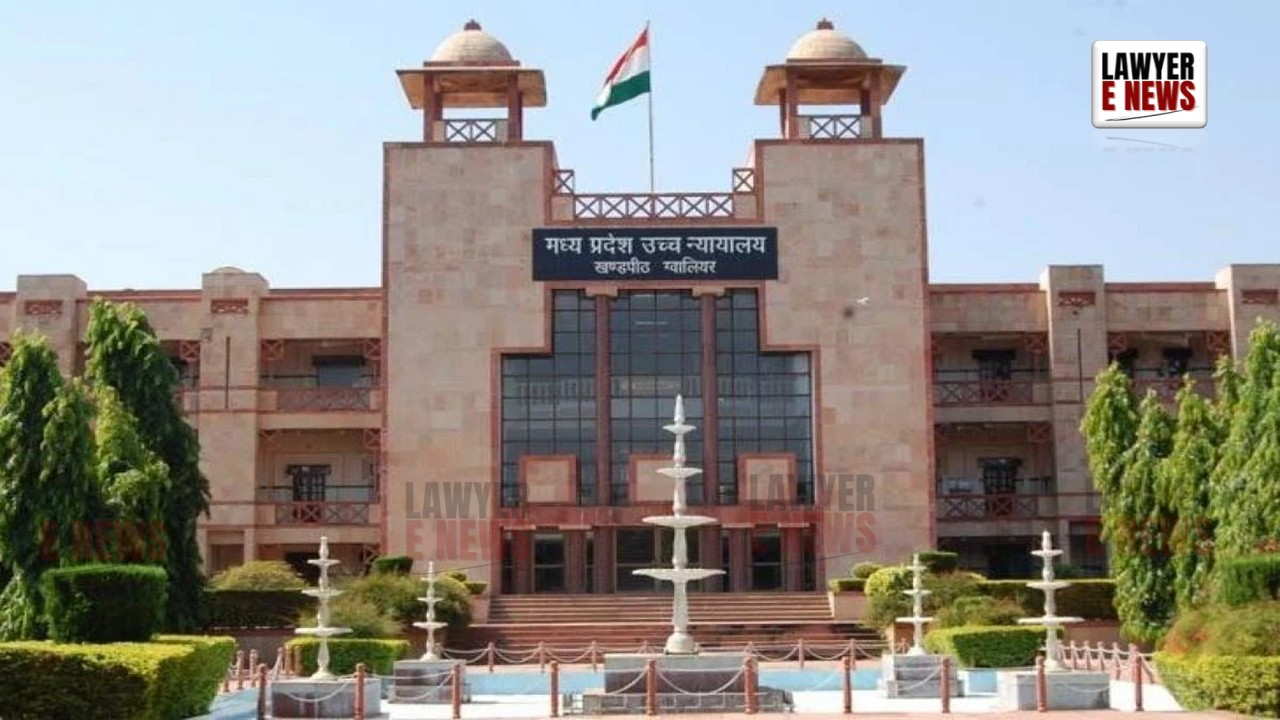
“If Caste is Recognised in Both States, Mere Change in Residence Cannot Defeat Reservation” – In a powerful judgment advancing gender justice and equality in public employment, the High Court of Madhya Pradesh at Indore, on January 12, 2026, quashed the cancellation of candidature of several married women belonging to SC/ST/OBC categories, whose applications for teaching posts were rejected solely for not possessing caste certificates issued by the State of Madhya Pradesh, despite having valid certificates from their native states.
Justice Jai Kumar Pillai held that “a woman cannot be treated as a migrant upon marriage if she continues to belong to a caste recognised as reserved in both States”. The Court observed that such technical rejection without any express bar in the recruitment rules violates Articles 14 and 16 of the Constitution, and arbitrarily denies reservation benefits to eligible women candidates.
"Recruitment Rules Do Not Mandate MP Caste Certificate – State Cannot Introduce New Criteria Midway"
Referring to the Madhya Pradesh School Education Service (Teaching Cadre) Recruitment Rules, 2018, the Court categorically stated:
“There is no express clause in the rules or the advertisement requiring submission of a caste certificate issued only by the State of Madhya Pradesh.”
The Court rejected the State’s contention that such a requirement could be implied or enforced later at the document verification stage, holding such action amounted to changing the rules of the game mid-way.
Citing the Supreme Court’s decisions in K. Manjusree v. State of Andhra Pradesh and Tej Prakash Pathak v. Rajasthan High Court, the Court observed:
“The rules of the game, i.e., eligibility conditions, once laid out in the advertisement, cannot be altered after the process has commenced. Introducing a new condition at the final stage is impermissible and violates Article 14.”
"If Caste is Recognised in Both States, Rejection is Arbitrary and Unsustainable"
The petitioners, who had married residents of Madhya Pradesh, were granted domicile status by competent authorities in Madhya Pradesh. Yet, their candidatures were cancelled during verification due to the absence of a Madhya Pradesh-issued caste certificate, despite possessing valid SC/ST/OBC certificates from their states of origin.
The Court clarified: “Once the caste or community of a candidate is notified as a reserved category in both the State of origin and the State of marriage, the caste certificate issued by the other State must be treated as valid for purposes of eligibility.”
Referring to the Supreme Court's judgment in S. Pushpa v. Sivachanmugavelu and the Constitutional Bench ruling in Indra Sawhney v. Union of India, the Court stressed:
“Reservation is a beneficial provision and must receive a liberal and purposive interpretation. Technical rejection of eligibility on the basis of place of certificate issuance defeats the object of affirmative action.”
"Women Do Not Migrate Out of Their Rights Upon Marriage" – Reliance on Dr. Alka Singh Case
The Court placed strong reliance on the Division Bench ruling in Dr. Alka Singh v. State of Madhya Pradesh (2012), where it was held that:
“A woman belonging to OBC category in both her native and marital states cannot be treated as a migrant merely due to marriage. She is entitled to caste recognition and reservation in the state of her matrimonial residence.”
Justice Pillai affirmed that principle and observed: “The petitioners, now domiciled in Madhya Pradesh, cannot be deprived of reservation benefits solely on account of the State which issued their caste certificate. Such an approach is both gender-insensitive and constitutionally impermissible.”
"State Action Must Be Fair, Predictable, and Within Law" – Court Directs Appointments with Full Benefits
Noting that the advertisement under which petitioners applied did not contain any bar against caste certificates from other States, and that the petitioners had duly qualified the selection process, the Court concluded:
“Denial of appointment on such a technical and unstated ground is arbitrary, violative of natural justice, and legally unsustainable.”
Accordingly, the Court:
Quashed the impugned cancellation orders
Directed the State to verify whether the caste/community of each petitioner is recognised in both their State of origin and Madhya Pradesh
Upon confirmation, the State shall grant appointments, with notional seniority, pay fixation, and all consequential benefits
The entire process is to be completed within 60 days Rule of Law and Gender Justice Prevail
This judgment is a milestone in ensuring that marriage does not dilute a woman’s constitutional identity or her claim to reservation. The High Court of Madhya Pradesh has sent a strong message that technicalities cannot be weaponised to deny legitimate rights, especially in the realm of public employment and affirmative action.
“A woman does not cease to be a member of a reserved category simply because her certificate was issued by another State, when both States recognise her caste,” the Court firmly held.
This ruling reinforces the principles of fairness, transparency, and inclusivity in recruitment, and reaffirms that public authorities must act within the bounds of law and established procedure, not at their discretion
Date of Decision: 12 January 2026