
-
by sayum
28 August 2026 2:11 PM







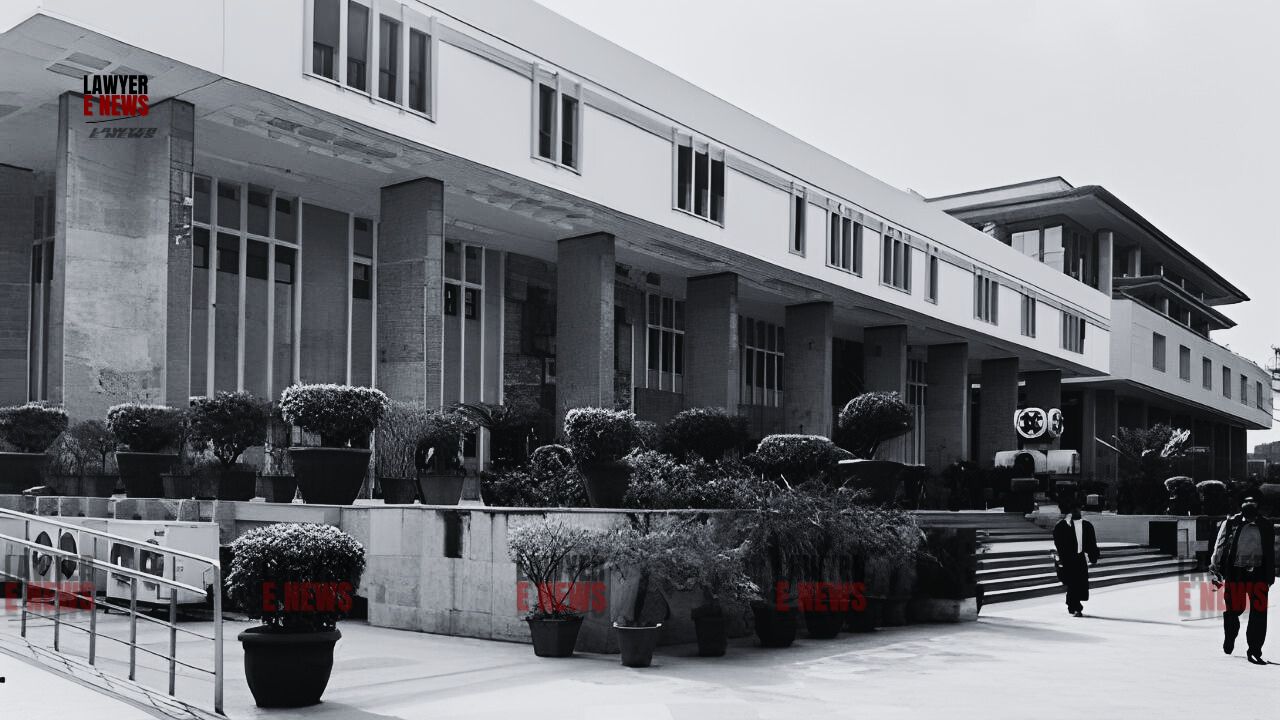
“Earning Does Not Mean Equality—Parity of Lifestyle Is the Benchmark, Not Mere Survival”, Delhi High Court, in a significant verdict, held that a wife is not disentitled to maintenance under Section 24 of the Hindu Marriage Act merely because she is earning, especially when the husband's income vastly exceeds hers.
The Division Bench of Justice Navin Chawla and Justice Renu Bhatnagar enhanced the interim maintenance from ₹35,000 to ₹1,50,000 per month, to be paid by the respondent-husband collectively for both the wife and the child, while rejecting the Family Court’s denial of maintenance to the wife.
“The object of Section 24 is not mere subsistence but to ensure that the economically weaker spouse is able to maintain a lifestyle comparable to what was enjoyed in the matrimonial home.”
“Financial Disparity Cannot Be Brushed Aside—A Crore-Rupee Income Cannot Justify ₹35,000 for Wife and Child”
The Court rebuked the Family Court for failing to factor in the "stark financial disparity" between the parties. The wife, an Assistant Professor earning ₹1.25 lakh/month, was raising the child alone, while the husband, a Senior Computer Scientist at Adobe Systems USA, had an annual income exceeding ₹1.35 crore.
“The respondent earns nearly ten times the income of the appellant… Interim maintenance is meant to ensure parity and fairness—not to leave the weaker spouse to suffer economic hardship due to marriage breakdown.”
Despite the husband's massive earnings, the Family Court had dismissed the wife’s claim for her own maintenance and awarded only ₹35,000/month for the child—an order now modified and enhanced by the High Court.
“A Wife’s Income Does Not Disqualify Her—It Is Her Standard of Living That the Law Seeks to Protect”
Relying on landmark precedents including Chaturbhuj v. Sita Bai (2008) 2 SCC 316, Rajnesh v. Neha (2021) 2 SCC 324, and Nidhi Sudan v. Manish Kumar Khanna, the Court ruled that an earning wife is still entitled to maintenance if her income is insufficient to maintain the standard of living she enjoyed in the matrimonial home.
“Merely because the wife is capable of earning does not mean she must compromise her dignity or that of the child. The goal is not equality of income but equality of dignity.”
The Bench observed that the wife continues to live with her parents post-separation and that such dependence cannot continue indefinitely, particularly when the husband is living abroad with significant perks, assets, and stock options.
“Standard of Living Is Not a Luxury—It Is a Legal Entitlement During Matrimonial Disputes”
Rejecting the husband’s claim that the wife leads a “comfortable lifestyle” post-separation and therefore deserves no maintenance, the Court made it clear:
“The financial self-sufficiency of the wife must be assessed not in absolute terms but relative to the standard of living maintained during the marriage… A lifestyle differential this wide cannot be justified by citing self-reliance.”
The Court further stressed that “maintenance must not be oppressive, nor meagre to drive the applicant to penury or mere support.”
“Child’s Lifestyle Must Reflect the Standard of the Richer Parent”
The wife had also sought enhanced maintenance for the minor daughter, contending that ₹35,000/month was insufficient to cover her educational, extracurricular, and lifestyle expenses. The Court agreed, holding that:
“The lifestyle of the minor child ought to reflect the standard of living of the financially dominant parent.”
In this context, the Court enhanced the total maintenance for the wife and child to ₹1,50,000/month, taking into account rising prices, responsibilities of childcare, and the need for a holistic upbringing.
“Husband Cannot Conceal Assets—Failure to Disclose True Income Invites Adverse Inference”
The wife had argued that the husband deliberately concealed financial details, such as RSU stocks, foreign assets, and additional perks. Though the Court did not impose costs, it did note that concealment or selective disclosure weakens credibility and can be used to draw adverse inferences.
“The respondent’s failure to rebut expenditure statements and disclose material income information weakened his stand… Courts cannot allow financially dominant spouses to manipulate proceedings by selective transparency.”
Maintenance Enhanced, Appeal Partly Allowed
After comprehensive review of statutory provisions, evidence, and judicial precedents, the Court ruled:
“The maintenance amount is enhanced from ₹35,000, as granted by the learned Family Court, to ₹1,50,000 per month cumulatively for both the appellant and the child.”
All other directions of the Family Court’s order remain unchanged. No costs were imposed, and the appeal was disposed of with partial modification in favour of the wife.
Parity, Not Pity—This Judgment Reinforces Maintenance as a Right, Not a Concession
In its lucid and well-reasoned judgment, the Delhi High Court affirmed a progressive interpretation of matrimonial maintenance law, clarifying that interim maintenance under Section 24 HMA is not bound by income alone, but by lifestyle parity, child welfare, and fairness.
The ruling serves as a powerful precedent against stereotypical arguments that earning wives are disentitled to relief, and reasserts the constitutional guarantee of equality and dignity within the family structure, especially during times of marital discord.
Date of Decision: 10.09.2025





