-
by sayum
04 August 2026 1:39 PM







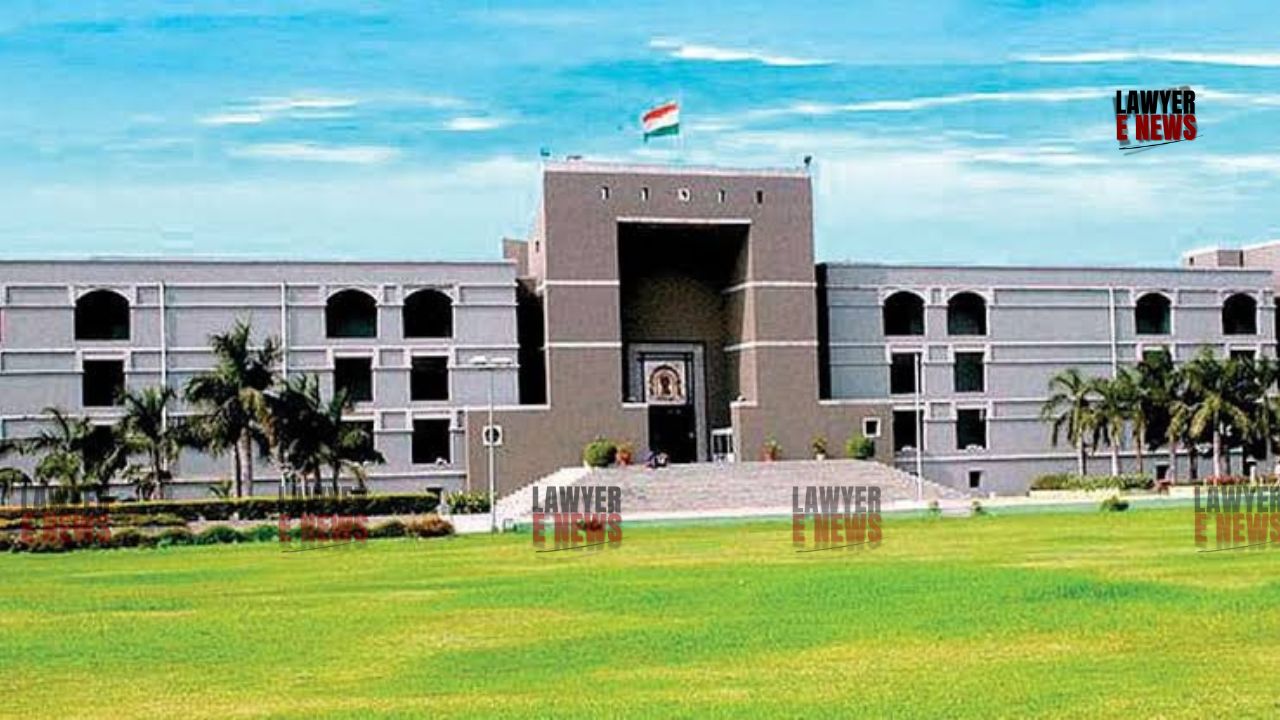
"Court Must Balance Flight Risk With Fundamental Right to Travel" – Gujarat High Court in a significant ruling permitted Sunil Surendrakumar Kakkad, promoter of a defaulting company under insolvency proceedings, to travel to the United Arab Emirates from 7th June to 27th June 2025, despite the existence of a Look-Out Circular (LOC) issued at the instance of a creditor bank.
Justice Devan M. Desai, sitting in civil original jurisdiction, held that the mere apprehension of flight risk, absent concrete evidence or objection from state authorities, could not justify the continued curtailment of a citizen’s right to travel. The Court emphasized, “in absence of any serious contention made by rest of the Respondents, I am of the view that application requires consideration.”
The petitioner, Sunil Kakkad, promoter of Sai Infosystem (India) Ltd., has been facing insolvency proceedings under Section 105 of the Insolvency and Bankruptcy Code, 2016. A Look-Out Circular had been issued against him at the instance of Respondent No.4, a creditor bank, due to allegations of massive loan defaults and a failed repayment plan. The amount claimed by the bank exceeds ₹2,947 crore.
The petitioner approached the High Court seeking suspension of the LOC, submitting that he intended to travel to the U.A.E. for business purposes, specifically to implement software contracts and explore back-end outsourcing opportunities for Indian companies. It was also highlighted that on earlier occasions, the petitioner had been granted permission to travel abroad by coordinate benches of the High Court and had always returned in accordance with court orders.
Bank's Objections: “He May Flee From Justice”
Opposing the application, Respondent No.4 bank, represented by Advocate Ms. Nalini Lodha, submitted that the petitioner had not paid “a single penny” to the banks who had extended massive credit facilities to the now-defaulting company.
It was pointed out that the petitioner had submitted a repayment plan offering ₹50 lakhs in 18 months—an amount negligible compared to the total claims—and all creditors had dissented. Ms. Lodha warned the Court that allowing international travel could enable the applicant to abscond and frustrate the bankruptcy proceedings.
“The applicant is trying to take benefit of so-called legal acumen in escaping from the liability for repayment of huge decretal dues,” she argued, while adding that “if such permission is granted, there are all chances that the applicant may flee from justice.”
Liberty Cannot Be Held Hostage to Presumptions
Rejecting the bank’s apprehensions as insufficient, Justice Desai noted that “on each and every occasion, a separate undertaking has been filed by the applicant in terms of the orders passed by the Coordinate Bench of this Court.” The petitioner had complied with all earlier travel permissions and undertakings, and none of the state authorities or the Bureau of Immigration had raised any serious objections.
The Court emphasized that the right to travel abroad is a fundamental right, and while financial accountability is important, it must be weighed against personal liberty. The Court held: “The lookout circular shall not come in the way of the applicant from traveling abroad, as per the itinerary provided.”
“Liberty With Responsibility”
The Court granted permission subject to several stringent conditions, ensuring both compliance and accountability. These included the deposit of ₹25 lakhs as security, disclosure of full travel itinerary and contact details, a binding undertaking to return, and directions to immigration authorities to permit travel.
Justice Desai clarified: “The applicant shall not open or close any bank account overseas and shall not enter into any kind of property transactions abroad.” Moreover, “no further extension shall be permitted except as per the itinerary submitted.”
Notably, the Court made it clear that “the present application is allowed to the aforesaid extent”, giving the applicant a narrow but vital window to conduct his business abroad under judicial scrutiny.
This judgment reiterates a fundamental judicial approach—look-out circulars must not become instruments to cripple movement without adequate justification. The Gujarat High Court has reaffirmed that financial default, while serious, does not by itself extinguish the constitutional right to travel.
By conditioning liberty on compliance and accountability, the Court walked a careful line between individual rights and the interests of creditors and justice.
“In the absence of strong opposition by statutory authorities and considering prior compliance by the applicant, the application deserves to be allowed with necessary safeguards,” the Court concluded.
Date of Decision: 3rd June 2025