
-
by sayum
28 August 2026 2:11 PM







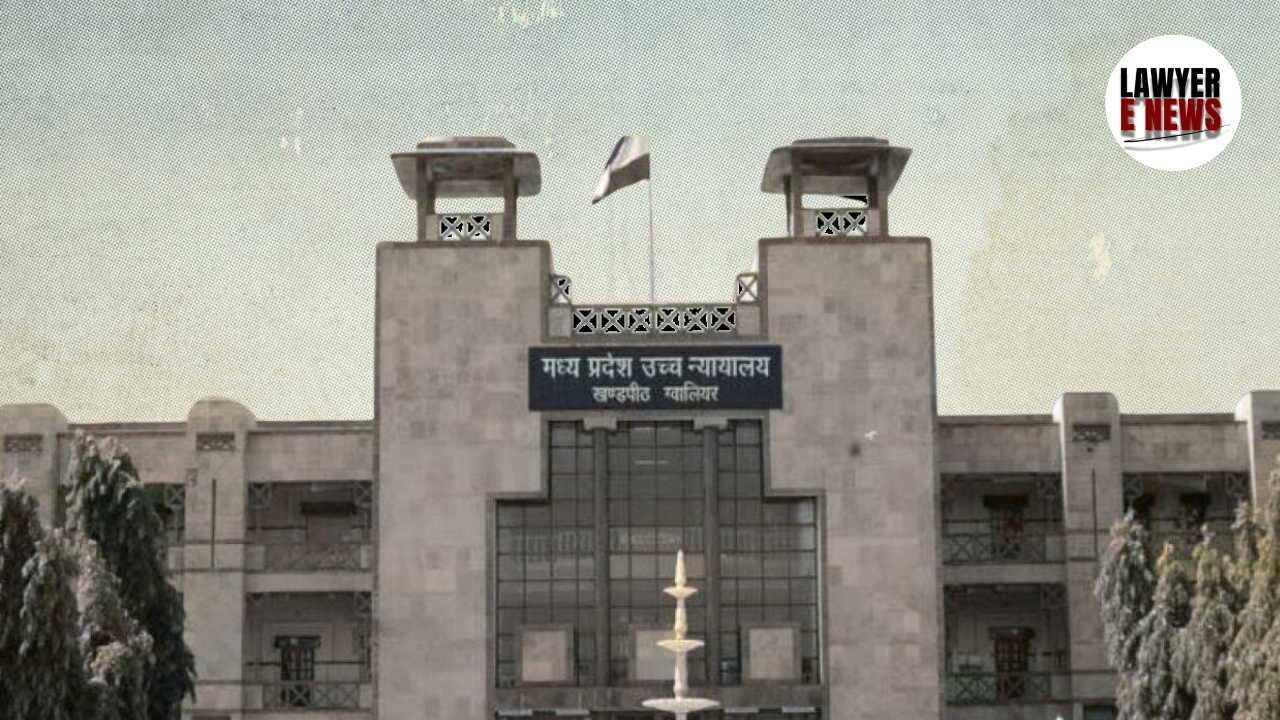
“Public Prosecutor Cannot Act on the Dictates of the State; Must Apply Independent Mind Before Seeking Withdrawal” – High Court of Madhya Pradesh at Jabalpur delivered a landmark verdict, striking down the withdrawal of a criminal case that was allowed by a Judicial Magistrate in a National Lok Adalat without hearing the victim and without proper judicial or prosecutorial scrutiny.
The Court observed that “the Public Prosecutor cannot act like the post office on behalf of the State Government”, and held that “any withdrawal from prosecution must pass the dual test of independent prosecutorial discretion and informed judicial consent”.
“A Lok Adalat Cannot Be a Shortcut to Shut Down Prosecutions – It Is Not an Adjudicatory Forum”
The Court began its judgment by calling into question the legitimacy of an order passed by the trial court during a National Lok Adalat, where the Public Prosecutor filed an application under Section 321 CrPC to withdraw the case. Without any compromise or settlement and without the presence of the victim, the court proceeded to allow the withdrawal and acquit the accused.
Justice Ramkumar Choubey held that this procedure was “an irregular proceeding” and violated the core principles of the Legal Services Authorities Act, 1987, clarifying that:
“Lok Adalat is a conciliatory forum, not an adjudicatory one. It can resolve disputes only by way of compromise or settlement, but not otherwise.”
Citing the Supreme Court’s rulings in Phulan Rani v. State of Punjab (2004) and Estate Officer v. Col. H.V. Mankotia (2021), the High Court reaffirmed that "no adjudication can take place in a Lok Adalat unless both parties arrive at a compromise." The Court condemned the trial court’s action as an “unwarranted preponement” and “jurisdictional excess.”
“The Consent of the Court Must Be Informed, Not Mechanical” – Judicial Oversight Under Section 321 CrPC Cannot Be a Rubber Stamp
The central issue was the trial court’s consent under Section 321 CrPC. The High Court emphasized that this “consent is not to be granted for the mere asking”, and must be based on real and demonstrable grounds that serve the cause of public justice.
Quoting Sheonandan Paswan v. State of Bihar (1987), the Court observed:
“The discretion has not to be exercised by the court mechanically… The Court has to consider the material placed before it and satisfy itself that the grant of consent would serve the interest of justice.”
The Court was unequivocal in stating that the prosecutor failed to exercise any independent judgment, and merely parroted the Government’s order:
“The application clearly reveals that the same was filed in pursuance to the directions issued by the Government. Nothing is to show that the Public Prosecutor in-charge had applied his mind independently to ascertain whether withdrawal of the case would, in fact, sub-serve public justice.”
The Court condemned this as a betrayal of prosecutorial duty, citing Subhash Chander v. State of Chandigarh (1980), where it was held:
“Any authority who coerces or pressures a functionary like a Public Prosecutor in the exclusive province of his discretionary power violates the rule of law.”
“Victim Has a Right to be Heard Before Prosecution is Withdrawn” – Court Recognizes Evolving Victim-Centric Jurisprudence
Addressing the omission to hear the victim before allowing withdrawal, the High Court termed it a grave denial of natural justice. Though the original CrPC did not explicitly provide for a victim’s hearing, the Court noted that judicial precedents and legislative reforms have now recognized this right.
Citing Abdul Wahab K. v. State of Kerala (2018) and Sheonandan Paswan, the Court emphasized that:
“Even under the old CrPC, Courts allowed victims and even third parties to object to withdrawal. The law has evolved, and the right to be heard is inherent when justice is at stake.”
Further reinforcing this shift, the Court pointed to Section 360 of the Bharatiya Nagarik Suraksha Sanhita, 2023, which now mandates a hearing for the victim:
“Provided further that no Court shall allow such withdrawal without giving an opportunity of being heard to the victim in the case.”
Thus, the High Court concluded that withdrawing the case without hearing the victim was a breach of both procedural fairness and emerging legislative policy.
“Prosecution Cannot Be Sacrificed at the Altar of Administrative Convenience or Political Expediency”
Justice Choubey warned against misusing the criminal justice system for extraneous considerations:
“The criminal law, when set in motion, must reach its logical end. A recourse of criminal procedure incoherence from decision on merits is not to be adopted as a main course.”
The judgment reiterated the need to “avert the apprehension of miscarriage of justice”, and stressed that public peace and judicial legitimacy cannot be traded for bureaucratic expediency.
Justice Choubey held that the order dated 30.11.2013 of the Judicial Magistrate allowing withdrawal, and the appellate order dated 27.08.2014 affirming it, were both:
“illegal, improper and passed in irregular proceedings… and not sustainable in law.”
Accordingly, the High Court:
Allowed the criminal revision filed by the victim;
Set aside both impugned orders;
Directed the trial court to restore the criminal case and proceed from the stage prior to the withdrawal;
Ordered all parties to appear before the trial court on 26.09.2025 for further proceedings.
Date of Decision: 16th September 2025





