-
by sayum
23 August 2026 2:56 PM







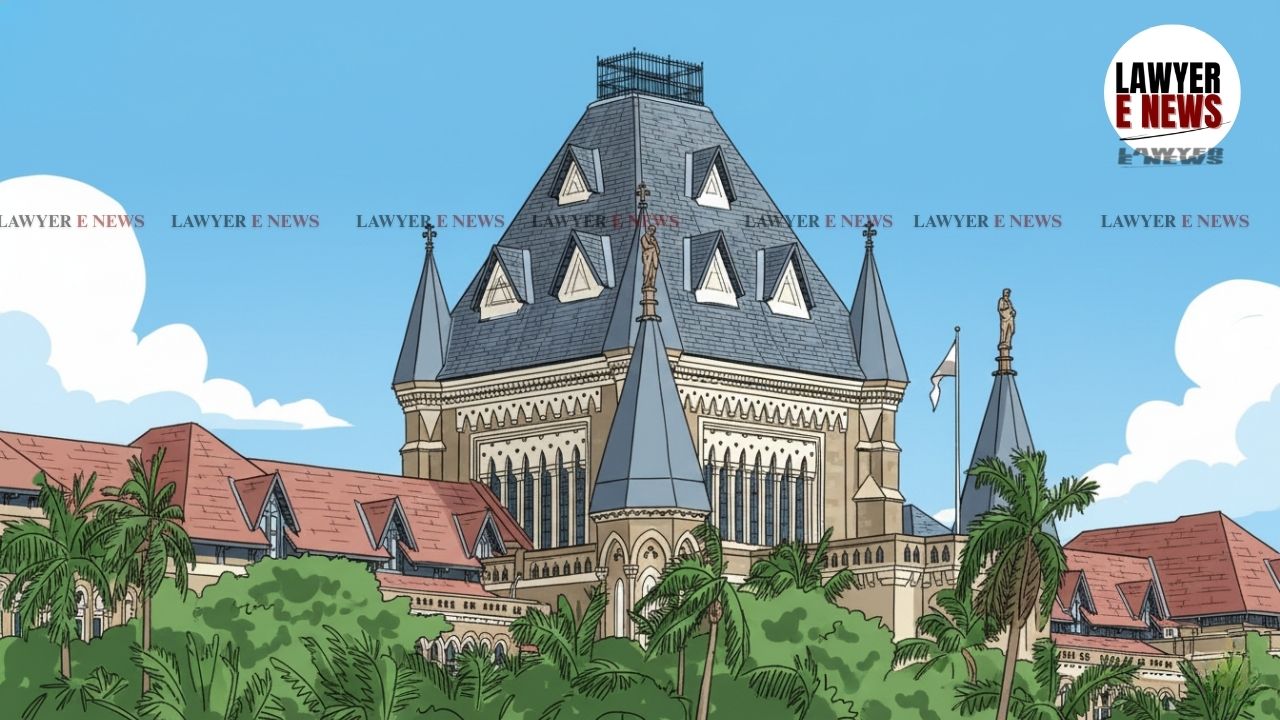
“Parties must be otherwise qualified to enter into a legal marriage — including being unmarried”: In a significant ruling on January 9, 2026, the Bombay High Court dismissed a woman's plea for relief under the Protection of Women from Domestic Violence Act, 2005 (PWDVA), holding that her relationship with a man who remained married to another woman throughout their cohabitation does not qualify as a "relationship in the nature of marriage" as defined under Section 2(f) of the Act.
Justice Manjusha Deshpande affirmed the legality of the Additional Sessions Judge’s judgment dated 26 July 2016, which had reversed the reliefs earlier granted by the Magistrate. The High Court held that the petitioner, having knowingly entered into a live-in relationship with a married man, was not entitled to protections under PWDVA, regardless of the emotional, financial, or biological aspects of their relationship.
“Legal capacity to marry is a core requirement — relationship with married man cannot be elevated to legal status”
The Court’s ruling was squarely based on the binding precedent of the Supreme Court in Indra Sarma v. V.K.V. Sarma [(2013) 15 SCC 755] and D. Velusamy v. D. Patchaiammal [(2010) 10 SCC 469], both of which clarify that not all live-in relationships are covered under PWDVA.**
Quoting the apex court, Justice Deshpande observed:
“A ‘relationship in the nature of marriage’ must meet essential conditions, including that the parties must be otherwise qualified to enter into a legal marriage, including being unmarried. The petitioner cannot claim a legal right under the Act, when she knowingly entered into a relationship with a man who was already married.”
Further, the Court held that:
“Once it is established that the respondent was legally married to another woman and the petitioner had knowledge of the same, the legal sanctity necessary to invoke the beneficial provisions of PWDVA cannot be claimed. Such relationships, even if emotionally or economically significant, fall outside the ambit of Section 2(f) of the Act.”
Live-In Relationship Based on Misrepresentation Still Not Protected under PWDVA
The petitioner contended that the respondent had misrepresented his marital status and falsely claimed that his first wife was mentally ill and that divorce proceedings were pending. Based on these assertions, she claimed to have married him in a temple ceremony and cohabited for several years, even undergoing IVF treatment and giving birth to a child. Numerous documents were placed on record, including a joint property agreement, bank mandates, IVF clinic records where the respondent signed as “husband,” and the child’s birth certificate naming him as the father.
However, the Court held that such evidence cannot override the essential legal requirement of capacity to marry. Even if misrepresentation existed, it could not convert the relationship into one protected by PWDVA.
“The petitioner’s awareness of the subsisting marriage, and her continued relationship with the respondent despite this knowledge, disqualifies her from claiming that the relationship was akin to marriage in the eyes of law,” the Court observed, adding that even a long-standing relationship with features like shared finances and childbirth does not, in itself, meet the threshold set by the Supreme Court.
“Law does not protect a concubine or mistress under current statutory framework”
Justice Deshpande quoted Indra Sarma, emphasizing the distinction between live-in relationships protected under the law and those that are extra-marital in nature:
“A long-standing relationship of concubine though requires some kind of protection, but the D.V. Act does not take care of such contingency and perhaps requires for amendment of the definition of Section 2(f)... which is restrictive and not exhaustive.”
The Court echoed this sentiment, noting that while there may be emotional or social grounds to sympathize with women in such relationships, judicial interpretation cannot expand the boundaries of statutory law beyond what is clearly laid out by Parliament.
All Eight Supreme Court Guidelines Not Satisfied
The High Court also undertook a detailed application of the eight-point test laid down by the Supreme Court in Indra Sarma to determine whether a particular relationship qualifies as being “in the nature of marriage”:
While noting that some factors such as sexual relationship, shared finances, and a child being born were present in the case, the Court found the absence of public projection as spouses, and the lack of legal capacity to marry, as fatal to the claim.
“Even if certain conditions are satisfied, the non-fulfilment of legal eligibility to marry renders the relationship outside the protective scope of Section 2(f),” the Court ruled.
Sessions Court Acted Within Jurisdiction — High Court Refuses to Interfere Under Article 227
Dismissing the writ petition filed under Article 227 of the Constitution, the High Court held that the Sessions Court had correctly applied the law and found no perversity or jurisdictional error warranting intervention.
The trial court (JMFC) had earlier granted maintenance of ₹28,000 per month, ₹5 lakhs as compensation, ₹10,000 for litigation expenses, and passed restraining orders under PWDVA. However, the Sessions Judge had overturned the order, and the High Court confirmed that decision.
“The order passed by the Sessions Court is in accordance with the settled law laid down by the Supreme Court. This Court, in its supervisory jurisdiction, does not find any reason to interfere with the said judgment.”
Legal Remedy Lies With Legislature, Not Courts
While acknowledging that the PWDVA is a beneficial legislation aimed at protecting women, the High Court emphasized that its interpretation must remain within the bounds of the statutory text, unless expanded through legislative amendment.
“Expansion of protection to relationships knowingly entered with married persons requires legislative intervention and not judicial enlargement,” Justice Deshpande noted.
This ruling reaffirms the legal limits of live-in relationship protections under Indian law and sends a strong message regarding judicial discipline in interpreting beneficial statutes.
Date of Decision: January 09, 2026