-
by sayum
07 October 2026 4:32 AM







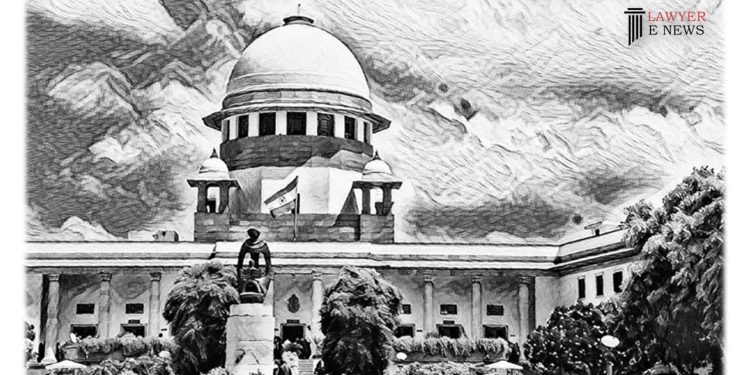
In a pivotal ruling dated October 4th, 2023, the Supreme Court of India has underscored the limitations on the exercise of its inherent powers under Article 142 of the Constitution. The Court emphasized that these powers cannot be used to bypass substantive statutory provisions or extend time limits beyond what is explicitly permitted by law.
The ruling came in the context of a Miscellaneous Application filed by an applicant seeking the issuance of a sale certificate from a bank. The application was found to be non-maintainable as it was filed in a previously disposed of Civil Appeal and also because it sought to extend time limits in contravention of explicit statutory rules.
Quoting from the judgment, the Court observed, "Article 142 of the Constitution of India – Limitations on the exercise of inherent powers – Inability to bypass statutory provisions or extend time limits beyond what is explicitly allowed." The Court went on to elaborate that its powers under Article 142, although broad, are not without bounds and cannot supplant the substantive law applicable to the case.
This observation is critical as it limits the future scope of Article 142, often invoked for doing "complete justice." However, as this judgment has clarified, even the Supreme Court's inherent powers can't extend to violating statutory limits or timelines.
In the ruling, the Court also deprecated the emerging trend of filing repeated Miscellaneous Applications after the final judgment has been pronounced. The Court noted that this practice has "no legal foundation and must be firmly discouraged," further stating that "such an application in the disposed of Civil Appeal No.1902 of 2020, to pursue its strategies and to avoid judicial adjudication in the substantive proceedings, would not be even maintainable in the eye of law."
Apex Court clarified that the applicant was free to pursue other legal remedies, including the refund of the deposited amount from the bank, in accordance with the law.
This judgment is expected to serve as a significant precedent in limiting the scope of the Supreme Court's inherent powers under Article 142 and emphasizing the importance of respecting statutory limitations.
Date of Decision: 04 October 2023
UNION BANK OF INDIA vs RAJAT INFRASTRUCTURE PVT.