
-
by sayum
26 August 2026 1:49 PM







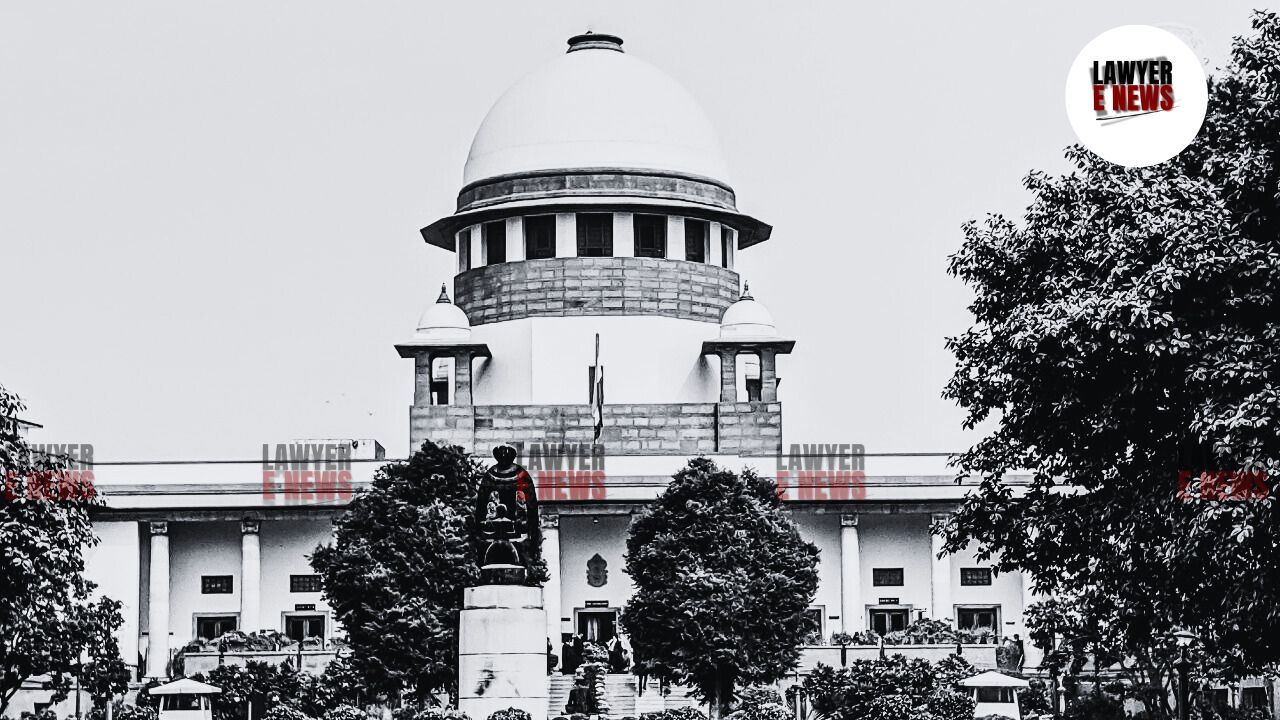
“A Party Cannot Sleep Over Its Rights for Six Years and Then Invoke Arbitration to Resuscitate a Dead Claim”: On 14 October 2025, the Supreme Court of India, in a significant pronouncement under the Arbitration and Conciliation Act, 1996, dismissed an arbitration petition filed under Section 11(5) by Alan Mervyn Arthur Stephenson against J. Xavier Jayarajan, holding that the claim was “hopelessly barred by limitation.” The Bench comprising Chief Justice B.R. Gavai and Justice K. Vinod Chandran observed that even if the petitioner’s contention regarding the last transaction dated 04 August 2017 was accepted, the invocation of arbitration by notice on 09 December 2020, followed by a petition in 2025, was “grossly belated” and devoid of any justification.
Delivering its order in Arbitration Petition No. 21 of 2025, the Supreme Court examined a plea for appointment of an arbitrator under Section 11(5) of the Arbitration and Conciliation Act, 1996, arising out of a partnership agreement dated 20 September 2014. The petitioner alleged monetary disputes stemming from the said partnership and related property transactions dated 04 May 2016, contending that certain sums advanced had not been settled by the respondent.
However, the Court categorically held that the claim, being initiated long after the expiry of the three-year limitation period prescribed under Article 137 of the Limitation Act, 1963, was no longer maintainable. The Court reiterated that “limitation does not merely bar the remedy—it extinguishes the right itself.”
“Even the Last Alleged Transaction in 2017 Cannot Save Limitation”
The petitioner claimed that the last acknowledged payment of ₹1,00,000 on 04 August 2017 constituted the final transaction extending limitation. The notice invoking arbitration was issued only on 09 December 2020, nearly three years and four months after the alleged last payment. Subsequently, the Section 11(5) petition was filed two years thereafter, without any explanation for the intervening delay.
Rejecting the plea, the Bench observed that even if limitation was computed from the last alleged transaction in 2017, the claim was still beyond the statutory period. The Court emphasized:
“Even computing limitation from the last alleged payment on 04.08.2017, the claim would still be time-barred. The petitioner, having slept over his rights for more than six years, cannot now invoke arbitration to resuscitate a dead claim.”
The Court found that the notice invoking arbitration was itself issued beyond the permissible period and that the subsequent petition under Section 11(5) further aggravated the delay. The plea that pendency of a criminal complaint under Section 200 CrPC suspended the limitation was expressly rejected. The Court clarified that “the pendency of a criminal proceeding does not extend or save limitation for civil claims or arbitration proceedings.”
“Invocation of Arbitration After Expiry of Limitation Cannot Revive a Dead Cause of Action”
The Bench held that the Arbitration and Conciliation Act is not a mechanism to bypass statutory limitation. The legislative intent behind Section 11(5), read with the Limitation Act, is to ensure that arbitration is invoked within the same period that governs a civil suit based on the same cause of action.
In a strong observation underscoring the sanctity of limitation, the Court noted:
“The law of limitation binds arbitration proceedings as strictly as it binds civil litigation. Invocation of an arbitration clause after expiry of the limitation period cannot revive a dead cause of action, nor can it compel the court to appoint an arbitrator.”
The Court found that the petitioner’s conduct demonstrated “complete lack of diligence.” Having allowed years to lapse between the last transaction, the notice, and the filing of the petition, the petitioner was found to have forfeited his right to seek reference to arbitration.
“Delay and Inaction Defeat the Purpose of the Arbitration Act”
The Supreme Court reiterated that the Arbitration and Conciliation Act, 1996, was enacted to ensure expeditious dispute resolution and to prevent parties from approaching courts after unreasonable delays. The Court observed that allowing such petitions would defeat the very spirit of the statute.
Chief Justice Gavai, speaking for the Bench, remarked that “a litigant who remains silent for years cannot be permitted to invoke arbitration at his leisure.” The judgment further cautioned that entertaining stale claims would erode commercial certainty and judicial efficiency.
“The objective of the Arbitration Act is speed, finality, and minimal judicial interference. Entertaining stale claims would not only undermine these objectives but also render limitation laws meaningless.”
The Court also noted that the notice invoking arbitration, though issued in December 2020, was followed by nearly two years of further inaction, demonstrating that the petitioner’s approach was neither bona fide nor consistent with the expeditious
Holding that the claim was “hopelessly time-barred,” the Supreme Court dismissed the petition under Section 11(5) of the Arbitration and Conciliation Act, 1996, observing that “no arbitral tribunal can be constituted to decide a claim which has ceased to exist in law due to efflux of time.”
All pending applications were disposed of, and no order as to costs was made. The Court’s ruling sends a strong reminder that delay and inaction cannot be masked under the garb of arbitration, and that limitation applies with full force even in contractual and commercial disputes.
“Law does not assist the indolent. Once limitation has extinguished a right, the invocation of arbitration cannot breathe life into what has long perished.”
Date of Decision: 14 October 2025





