-
by sayum
24 August 2026 11:13 AM







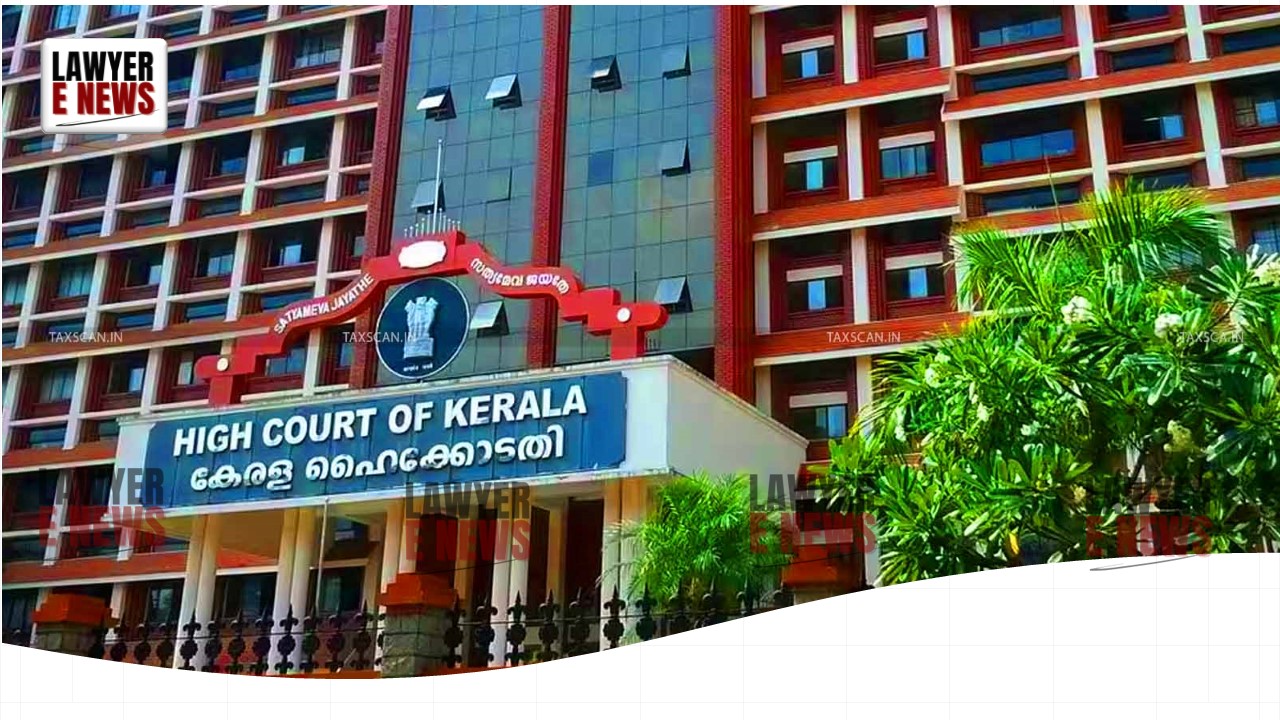
“Custodians of Temple Assets Are Trustees of Public Faith—Any Breach Warrants Stringent Scrutiny”, On January 19, 2026, the Kerala High Court at Ernakulam, comprising Justice Raja Vijayaraghavan V. and Justice K. V. Jayakumar, issued a detailed order in WP(C) No. 40608 of 2025, arising out of Suo Motu proceedings initiated on 21.10.2025 (SSCR No. 23 of 2025), in connection with the alleged systematic misappropriation of temple gold and tampering with gold-cladded structures at the Sabarimala Sree Dharma Sastha Temple.
This court-monitored probe, triggered by grave apprehensions regarding the integrity of sacred temple assets—particularly the Dwarapalaka idols and other components—has now snowballed into a full-fledged criminal investigation involving multiple decades of temple administration, and a growing list of accused persons. The Special Investigation Team (SIT), constituted pursuant to earlier judicial directions, continues to act under the Court’s direct supervision.
“A Scientific Report That Unravels a Criminal Modus Operandi”: VSSC Analysis Exposes Tampering of Gold Cladding
One of the most crucial turning points in the case has been the scientific analysis conducted by the Vikram Sarabhai Space Centre (VSSC) on gold plates seized from the temple premises. As per the Court’s order:
“The absence of nickel and acrylic polymer layers in the original gold-clad plates, the presence of nickel… and comparative thickness of the gold and nickel layers clearly indicate a systematic and methodical process by which the alleged offence appears to have been executed.”
The gold plating done in 1998 was found to be materially different from later additions or substitutions made in 2019 and beyond. The VSSC report, submitted to the jurisdictional court on January 14, 2026, indicates tampering, substitution, and dilution, thereby reinforcing suspicions of organized theft.
Calling it a scientific foundation for criminal liability, the Bench held: “The analysis report… provides critical evidentiary pointers for correlating past transactions with subsequent activities… and examining the existence of any organised or concerted action amounting to criminal conspiracy.”
From Dwarapalaka Idols to Kodimaram and Vajivahanam: Investigation Expands Beyond Initial Focus
The Court noted that the probe, which began with Dwarapalaka idol tampering, has widened significantly. The SIT is now examining multiple aspects of temple administration, including the replacement of the Kodimaram (flagpost) in 2017. Notably, during investigation:
A sacred article known as ‘Vajivahanam’, originally affixed to the old Kodimaram, was seized from the residence of the then Thantri, Mr. Kandararu Rajeevaru.
A certified goldsmith confirmed it to be made of ‘Panchaloha’ with substantial gold content, weighing approximately 10.68 kilograms.
The Court noted that “a detailed enquiry into the Ashtadikpalaka idols at Sabarimala has become inevitable.”
As such, the scope of investigation is no longer confined to a few years or isolated structures. Instead, it now spans temple transactions and decisions made over two decades.
“A Pandora’s Box and Hornet’s Nest”: Judicial Rebuke for Institutional Complicity
In unusually strong language, the High Court condemned the institutional apathy and possible complicity behind what appears to be a long-standing and concealed scheme of misappropriation:
“What initially appeared to be routine administrative actions… has opened a Pandora’s box… revealing prima facie indicators of organised pilferage and misappropriation of sacred temple valuables.”
The Court added that what seemed like bona fide actions were actually carried out through:
“An ingenious modus operandi adopted and laxity in administrative oversight… serious institutional lapses, gross mismanagement and possible complicity.”
The observations underscore a fundamental breach of the Public Trust Doctrine, with the Bench reiterating that:
“Custodians of temple assets are trustees of public faith… any breach warrants stringent scrutiny.”
Scientific Decoding and Witness Statements: SIT Empowered for Comprehensive Investigation
With over 202 witnesses already examined, and statements under Section 183 of the Bharatiya Nagarik Suraksha Sanhita (BNSS), 2023 in progress, the Court directed that: “The Special Investigation Team is to record detailed statements of scientific experts… and to comprehensively decode and correlate the analytical findings with the physical and documentary evidence.”
The SIT is also authorised to collect further samples and conduct surface measurements at Sabarimala Temple on 20.01.2026, during its closure period, to assess the actual quantity of gold allegedly misappropriated.
Further, the State Police Chief has been directed to provide full manpower and logistical support, including the deputation of senior officers, to ensure uninterrupted progress of the investigation.
Tracing Proceeds of Crime and Financial Forensics Underway
The SIT has:
Frozen bank accounts of multiple accused persons;
Identified landed assets for attachment;
And is pursuing a financial trail of misappropriated gold under the framework of BNSS Section 183, which facilitates detailed statements for tracing proceeds of crime.
The Court emphasized that the financial dimensions of the offence must be uncovered with the same rigor as the physical misappropriation of temple artefacts.
Investigation Opened a Hornet’s Nest of Misconduct, Requires Relentless Judicial Oversight
What began as a limited court-monitored probe into theft from Dwarapalaka idols has now expanded into a multi-faceted, multi-year investigation, unveiling a disturbing pattern of alleged organized criminality within temple administration structures. The High Court left no ambiguity in stating that the temple, its properties, and associated artefacts are not private assets but sacred trusts, and the misuse of public faith in their sanctity is a matter of the gravest concern.
The matter is now posted for further hearing and status report on February 9, 2026. Until then, the SIT will continue under strict judicial supervision, backed by scientific forensics, financial scrutiny, and an unwavering mandate to unravel what the Court has described as “a hornet’s nest” of entrenched misconduct.
Date of Decision: 19 January 2026