
-
by sayum
28 August 2026 2:11 PM







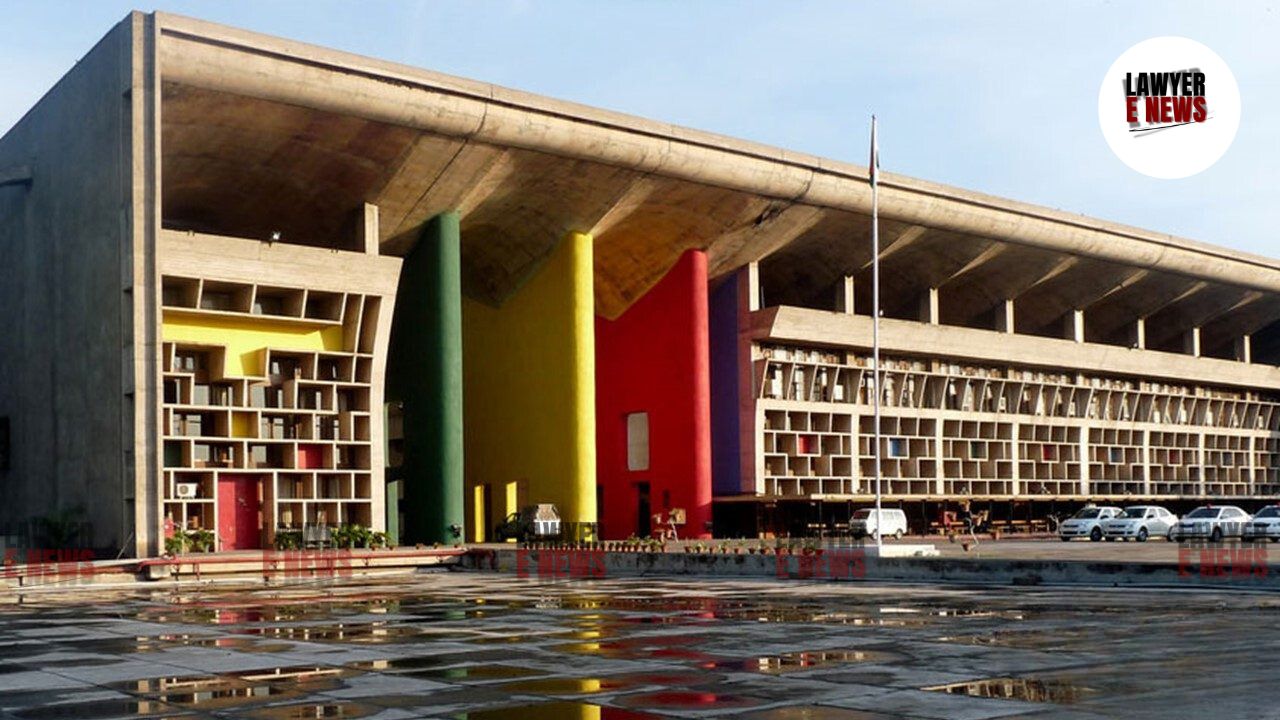
“Prescription of minimum marks is not arbitrary but necessary to uphold the dignity and quality of the judiciary” – On 22nd September 2025, the Punjab and Haryana High Court dismissing a legal challenge to Clause 8.4 of recruitment notifications that prescribed minimum qualifying marks for appointment to the post of Additional District and Sessions Judge (ADJ). The division bench comprising Chief Justice Sheel Nagu and Justice Sanjiv Berry upheld the validity of Clause 8.4, holding that such a condition is neither arbitrary nor ultra vires the Haryana and Punjab Superior Judicial Service Rules, 2007.
The Court observed that prescribing minimum qualifying marks is a legitimate exercise of the High Court’s power to ensure selection of the “best available talent”. The judgment aligns with a consistent line of precedents from the Supreme Court that permit administrative instructions to supplement but not supplant statutory rules, especially in matters of recruitment and promotions in the judiciary.
“Merit Cannot Be Sacrificed at the Altar of Eligibility Alone”—Clause 8.4 Complies with Judicial Service Rules
The petitioner, Rushil Jindal, had appeared in the ADJ examination for both Punjab and Haryana under direct recruitment quotas. Though he secured more than 40% in each paper—the minimum required to qualify the written exam—he failed to meet the 50% aggregate threshold prescribed under Clause 8.4. As a result, he was declared unsuccessful.
He challenged Clause 8.4 of the notifications dated 14.11.2023 (Punjab) and 15.11.2023 (Haryana), arguing that the said clause added an unauthorized condition not found in the respective Judicial Service Rules. The petitioner contended that Rule 7 (Haryana) and Rule 11 (Punjab) only mention a written exam and viva voce with no condition of minimum aggregate marks.
However, the High Court rejected this contention, affirming that Clause 8.4 is well within the High Court’s authority, as:
“The Rules being silent, it was clearly open to the High Court to prescribe such a criterion as it did... the prescription of a 50% cutoff on aggregate scores is not ultra vires.”
“Administrative Instructions Can Fill Gaps Where Rules Are Silent” – Court Reaffirms Doctrine from K.H. Siraj and Dr. Kavita Kamboj
The Court strongly relied on the Supreme Court’s rulings in K.H. Siraj v. High Court of Kerala [(2006) 6 SCC 395] and Dr. Kavita Kamboj v. High Court of Punjab and Haryana [(2024) 7 SCC 103]. These judgments affirm that when statutory rules are silent, executive or administrative instructions can validly prescribe standards such as minimum qualifying marks, provided they are not inconsistent with the parent rules.
Citing K.H. Siraj, the bench noted:“Rule 7 has left it to the High Court to follow such procedure as it deems fit... The High Court is the best judge of what should be the proper mode of selection.”
The Court reiterated that judicial officers must possess more than academic proficiency. As stated in Delhi Bar Association v. UOI [(2002) 10 SCC 159], candidates must also exhibit tact, diplomacy, control over proceedings, and other personal traits assessable only through viva voce.
“Once You Take the Chance, You Can’t Cry Foul Later” – SC Dismissal Bars Re-litigation
Importantly, the Court also invoked the doctrine of estoppel, pointing out that the Supreme Court had already dismissed the petitioner’s earlier writ petition (W.P. No. 501/2024) against the same notifications.
“Once the Hon’ble Apex Court had dismissed the writ petition preferred by the petitioner... he is estopped from agitating the same issue in this petition.”
The High Court concluded that allowing such litigation after adverse rulings from the Supreme Court would encourage forum shopping and undermine the finality of judicial orders.
“Judicial Selections Must Uphold Constitutional Goals of Excellence and Integrity”
In the final analysis, the High Court upheld Clause 8.4 as a valid instrument of quality control in judicial appointments. It emphasized that:
“The prescription of minimum marks qualification does not in any manner become irrelevant... nor is it in contravention of the basic Rules.”
“It is open to the High Court to prescribe the criteria including cut-off marks and ‘minimum marks qualification’ as has been envisaged in Clause 8.4... to assess the merit and suitability of the candidates.”
The ruling effectively shields the judiciary from mediocrity and affirms that constitutional bodies like the High Court can legitimately impose objective performance standards, even if the statutory rules are silent.
Rules May Be Silent, But the Constitution Is Not – Judicial Quality Is Non-Negotiable
This decision stands as a robust endorsement of judicial autonomy in recruitment. By upholding the discretion of the High Court to prescribe minimum qualifying marks, the bench has protected the sanctity and competence of the bench itself. The judgment sends a clear message: judicial service is not a fallback option—it demands excellence.
Date of Decision: 22.09.2025





