-
by sayum
28 August 2026 2:11 PM







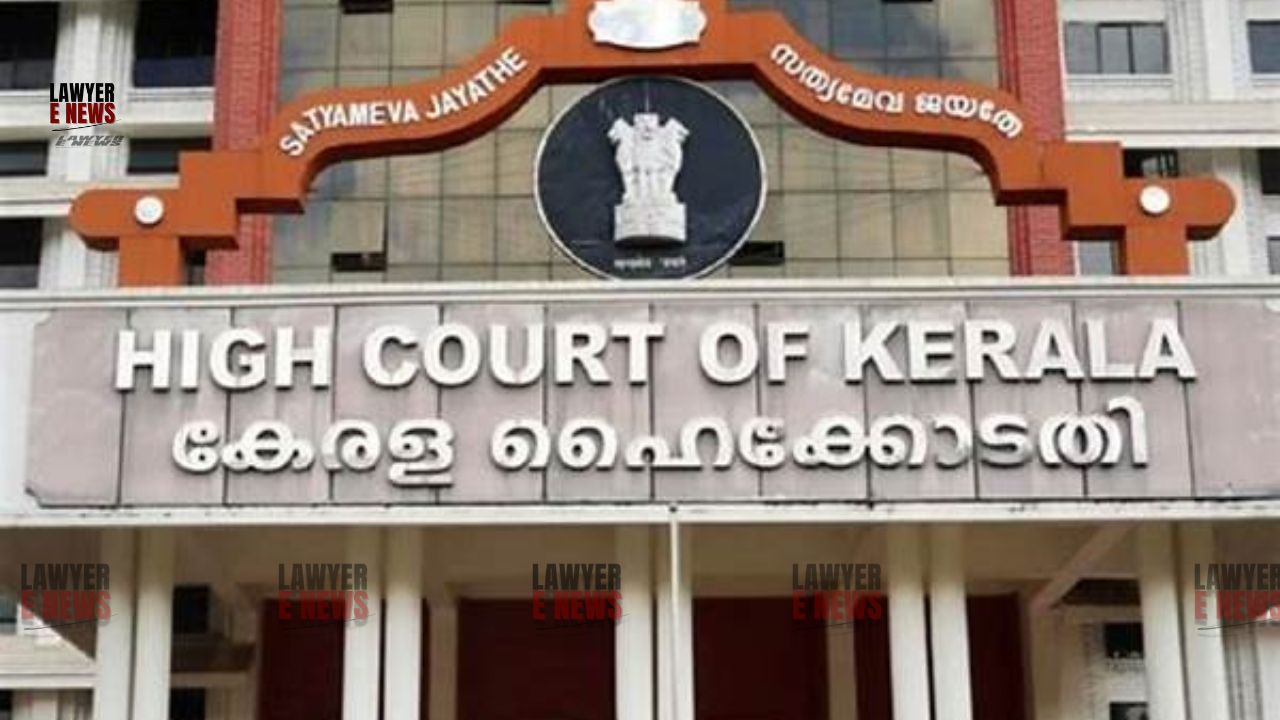
“The Section Makes a Distinction Between the Act and Its Result” — High Court of Kerala delivered a powerful judgment reinforcing that the absence of a fatal wound does not absolve an assailant of the charge under Section 307 IPC if intent and execution are present. The ruling was pronounced by Justice Johnson John, affirming the conviction of Deepu (A1) for attempting to murder PW2 by stabbing him in the abdomen with such force that the intestines and omentum protruded through the wound.
The Court stated unequivocally — “It is sufficient to justify a conviction under Section 307 IPC if there is present an intent coupled with some overt act in execution thereof. It is not essential that bodily injury capable of causing death should have been inflicted.”
“Motive May Not Be Apparent — But the Knife Spoke Louder Than Words” — Attempt to Murder Proven by Circumstantial and Forensic Evidence
The accused, Deepu, along with co-accused Udayabhanu, was charged in connection with a violent attack on the night of 6th August 2005 in front of the victim's residence at Kozhyvettumveli. The victim, PW2, had allegedly opposed the unauthorised liquor sale by the accused. After an altercation with A2, Deepu arrived at the scene and plunged a knife (MO1) into the right abdomen of PW2, causing a grievous injury that necessitated emergency surgery.
The trial court convicted Deepu under Section 307 IPC and sentenced him to 7 years rigorous imprisonment and ₹10,000 fine. The High Court, upon appeal, refused to interfere with the conviction, emphasizing that the combination of eye-witness testimony, medical evidence, recovery of weapon, and forensic results painted a consistent and irrefutable picture of guilt.
Justice Johnson observed that the weapon used (a knife), the part of the body targeted (abdomen), and the nature of the wound (open with internal organs visible) established the intent required under Section 307 IPC:
“The act was deliberate and aimed at a vital part of the body... I find no reason to disagree with the trial court’s finding that the first accused inflicted the stab injury with the intention to kill PW2 and with the knowledge that death will be caused.”
“Even a Non-Fatal Injury Can Carry the Weight of a Murderous Intent” — Legal Threshold of Section 307 Clarified with Judicial Precision The counsel for the accused argued that the lack of a fatal outcome, the absence of clear motive, and the fact that the stabbing followed a quarrel involving another accused, should be sufficient grounds for acquittal. But the Court brushed aside these defences, holding that intent is not always spoken — it is demonstrated by action.
Citing State of M.P. v. Kashiram, the Court reaffirmed that:
“Section 307 IPC makes a distinction between the act of the accused and its result... It is not necessary that the injury should be sufficient under ordinary circumstances to cause the death of the person assaulted.”
Relying on a series of Supreme Court decisions, including R. Prakash v. State of Karnataka, Jage Ram v. State of Haryana, and State of M.P. v. Kanha, the High Court firmly rejected the notion that only near-fatal injuries attract Section 307. The consistent thread in all these rulings was the Court’s emphasis on the mental element of intent and knowledge, not merely the severity of the physical injury.
Justice Johnson underscored:
“The presence of an intent to kill, demonstrated through a violent overt act, is sufficient. The section does not require the wound to be fatal—it requires the act to be done with the intent to cause death.”
“Eyewitness Bleeding from the Wound — His Testimony Bleeds Truth” — Court Reiterates Evidentiary Value of Injured Witness
One of the key pillars of the judgment was the credibility of PW2, the injured victim, and his wife PW1, both of whom witnessed the crime firsthand. The Court upheld their testimony as natural, consistent, and materially corroborated.
Drawing from Balu Sudam Khalde v. State of Maharashtra [2023 LiveLaw (SC) 279], the High Court stressed the importance of relying on the testimony of injured witnesses:
“The presence of an injured eye-witness at the time and place of the occurrence cannot be doubted unless there are material contradictions… their evidence has greater evidentiary value and should not be discarded lightly.”
The Court rejected the defence argument that independent witnesses were not examined, noting that cross-examination failed to shake the material evidence and that the wound certificate (Exh. P2) and forensic report (Exh. P14) confirmed the core prosecution story. The forensic analysis revealed that MO1 (knife) and MO5 (accused’s lungi) bore human blood of Group 'O', matching the victim’s blood group. The accused failed to provide any plausible explanation for this in his Section 313 CrPC statement.
“The chain of evidence — from eye-witnesses to forensic findings — stands unbroken. The defence has offered no explanation to sever that chain,” the Court said.
“In Street Crimes, Knives Often Replace Arguments — But The Law Must Still Cut Deeper”
The High Court affirmed that violent crimes motivated by instant rage or personal grudges, especially those using deadly weapons in public spaces, must be dealt with firmly under criminal law. Even if there was no premeditated plan, the deliberate use of a knife on a vital body part leaves no room for doubt about the attacker’s intent.
The final pronouncement reads:
“Considering the seriousness and gravity of the offence committed by the first accused, I find no reason to interfere with the sentence. The conviction and sentence against the first appellant are confirmed.”
Deepu was directed to surrender before the trial court forthwith, and the court ordered execution of the sentence without fail.
This judgment solidifies the principle that Section 307 IPC hinges not on death or fatality, but on intent and execution of a lethal act. It affirms the credibility of injured eyewitnesses, the legal strength of forensic corroboration, and the court’s responsibility to punish grave bodily assaults with murderous intent, even if they stop short of killing.
The Kerala High Court’s ruling sends a strong message —
“A wound that lays bare the human gut is not merely a physical injury — it exposes the legal guilt of the hand that inflicted it.”
Date of Judgment: 12 September 2025