-
by sayum
27 August 2026 5:16 AM







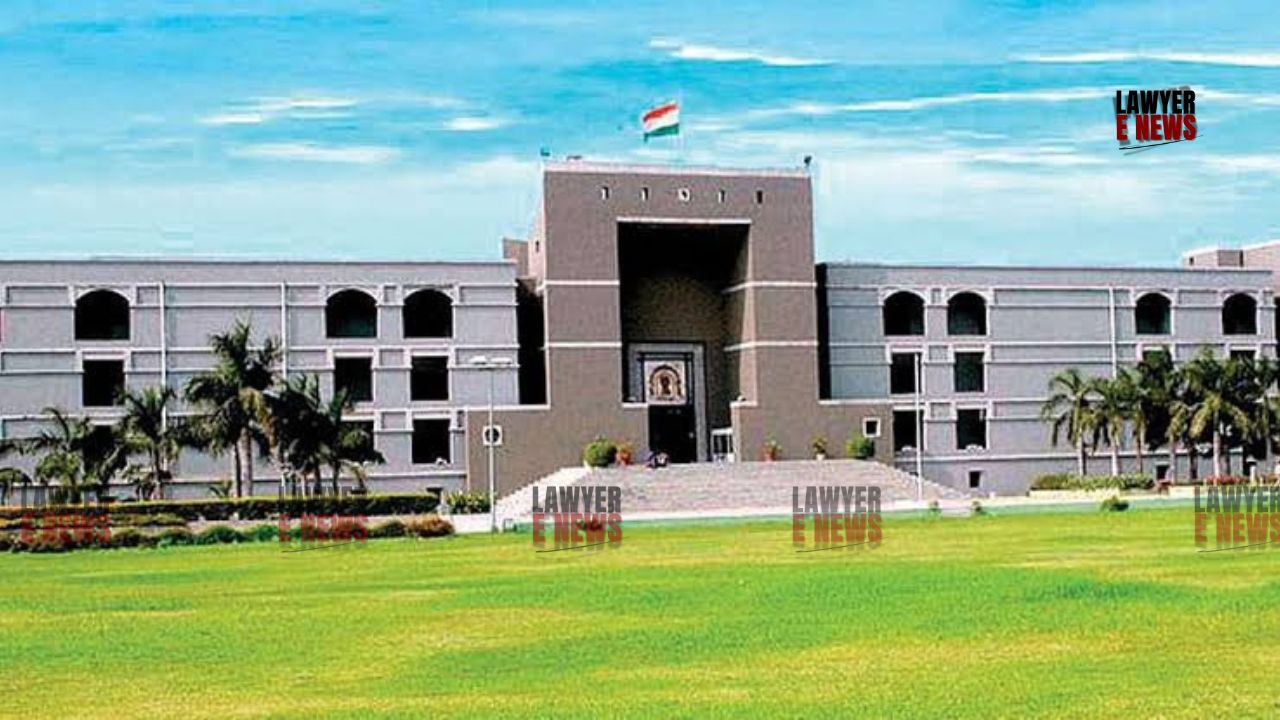
"The avoidance clause in the policy makes all the difference", Gujarat High Court has held that an insurance company cannot escape paying compensation to road accident victims even after successfully proving that the offending vehicle's driver held an expired driving licence — ruling that the avoidance clause in the standard commercial vehicle package policy obligates the insurer to satisfy the entire award at first instance, with liberty only to recover from the vehicle owner thereafter.
Justice Nisha M. Thakore, in a judgment delivered on March 24, 2026, partly allowed the insurance company's appeal while simultaneously allowing the claimants' cross-objections for enhancement, enhancing the total compensation from Rs. 5,63,200/- to Rs. 8,94,032/- with interest at 9% per annum from the date of filing of the claim petition.
On June 9, 2010, Maheshbhai Ramanbhai Prajapati — an idol-maker traveling in a three-wheeler tempo — was killed when the driver of a tanker bearing registration no. GJ-6 TT 9717 came at full speed on the wrong side of the road and dashed into the tempo. The deceased succumbed to his injuries on the spot. His widow, both aged parents, and two major sons filed a claim petition before the Motor Accident Claims Tribunal (Auxiliary) at Vadodara under Section 166 of the Motor Vehicles Act, 1988, seeking Rs. 12,00,000/- in compensation.
The Tribunal had partly allowed the claim, holding all three opponents — the driver, the owner, and the insurance company — jointly and severally liable to pay Rs. 5,63,200/-. The insurance company challenged its liability on the ground that the driver's licence had expired in 2004, six years before the 2010 accident. The claimants cross-objected seeking enhancement.
Two distinct questions arose: first, whether the insurance company had established its defence under Section 149(2)(a)(ii) of the Motor Vehicles Act that the driver lacked a valid driving licence, and if so, whether it could be completely exonerated from liability toward third-party claimants. The second issue was whether the quantum of compensation awarded by the Tribunal was just and proper.
On the Invalid Licence Defence — Proved, But Insufficient to Exonerate
The Court carefully examined the RTO certificate produced at Exh. 39 and the driving licence extract at Exh. 51. The records showed the driver's licence for heavy goods vehicles was valid only from March 10, 1995 to September 9, 2004. No renewal endorsement appeared beyond that date. The driver and owner of the tanker, despite having been duly served summons, chose not to appear before the Tribunal and led no evidence in rebuttal.
The Court held that the insurance company had successfully established its defence: "In absence of any further document reflecting the renewal of the aforesaid driving license, the defense raised by the insurance company that the driver of the tanker was not holding driving license at the relevant time stands established."
The Court also noted that the driver was carrying Hydrochloric Acid — a hazardous chemical — and that the driving licence did not carry the requisite endorsement for transporting hazardous goods, adding a further layer of breach.
"Pay and Recover" — The Avoidance Clause Changes Everything
However, the Court firmly held that proving the licence breach does not entitle an insurer to walk away from third-party liability. Relying extensively on the Supreme Court's three-Judge Bench decision in National Insurance Company Ltd. v. Swaran Singh, (2004) 3 SCC 297, and the subsequent three-Judge Bench in Pappu v. Vinod Kumar Lamba, (2018) 3 SCC 208, the Court reiterated that breach of policy conditions relating to driving licence validity — while available as a defence against the insured — cannot be used to defeat the rights of innocent third-party claimants.
The decisive factor was the avoidance clause in the standard commercial vehicle package policy produced as Exh. 36/49, which read: "The insured is not indemnified, if the vehicle is used or driven otherwise than in accordance with the schedule. Any payment made by the company by reason of wider terms appearing in the certificate in order to comply with the Motor Vehicles Act, 1988 is recoverable from the insured."
The Court applied the Gujarat High Court's larger Bench ruling in Shantaben v. Yakubbhai Ibrahimbhai Patel, 2012 (3) GLR 1985, and the Supreme Court's decision in New India Assurance Co. Ltd. v. Vimal Devi, (2010) 12 SCC 492, which had settled that wherever an avoidance clause exists in the insurance policy, the insurer is obligated to first satisfy the entire award to the claimants and then recover from the owner.
"In view of the avoidance clause read with the third party risk covered as contained in the insurance policy, which is 'standard commercial vehicle package policy', the insurance company is bound to satisfy the entire award amount to the claimants at first instance with liberty to recover such amount of compensation from the owner of the vehicle insured, which was involved in the accident."
On Quantum — Skilled Labourer's Income Fixed at Minimum Wages; Consortium Enhanced
Turning to compensation, the Court declined to accept the claimants' claim of Rs. 10,000/- monthly income in absence of direct documentary proof, but equally rejected the Tribunal's assessment of Rs. 4,000/- as arbitrary. Applying minimum wages for skilled labour prevailing in Gujarat at the time of the accident, the income was fixed at Rs. 4,210/- per month — the deceased being an idol-maker qualifying as a skilled labourer.
Since the deceased was self-employed, the Court applied 25% towards future rise of income as mandated by the Supreme Court in National Insurance Company Ltd. v. Pranay Sethi, (2017) 16 SCC 680. Deduction of one-fourth towards personal expenses was upheld, the deceased being survived by five dependants — widow, both parents, and two major sons. The multiplier of 13 for the age group of 46-50 years under Sarla Verma v. Delhi Transportation Corporation, (2009) 6 SCC 121 was correctly applied. Dependency loss was redetermined at Rs. 6,15,732/-.
On conventional heads, the Court applied a 10% enhancement under Pranay Sethi principles, fixing funeral expenses and loss of estate at Rs. 18,150/- each. The Court significantly enhanced consortium amounts: Rs. 48,400/- for the widow as spousal consortium, Rs. 96,800/- jointly for the aged parents as filial consortium, and Rs. 96,800/- for the two major sons as parental consortium — totaling Rs. 2,42,000/- under consortium heads alone, as against the Tribunal's paltry Rs. 10,000/-.
The First Appeal filed by the insurance company was partly allowed — the insurer's liability was established but restricted to the "pay and recover" mode. The Cross-Objections filed by the claimants were allowed in full. Total compensation was enhanced from Rs. 5,63,200/- to Rs. 8,94,032/-. The insurance company was directed to deposit the enhanced amount of Rs. 3,30,832/- with the Tribunal within six weeks, with liberty to recover the full amount from the vehicle owner by execution.
Date of Decision: March 24, 2026