-
by sayum
28 August 2026 2:11 PM







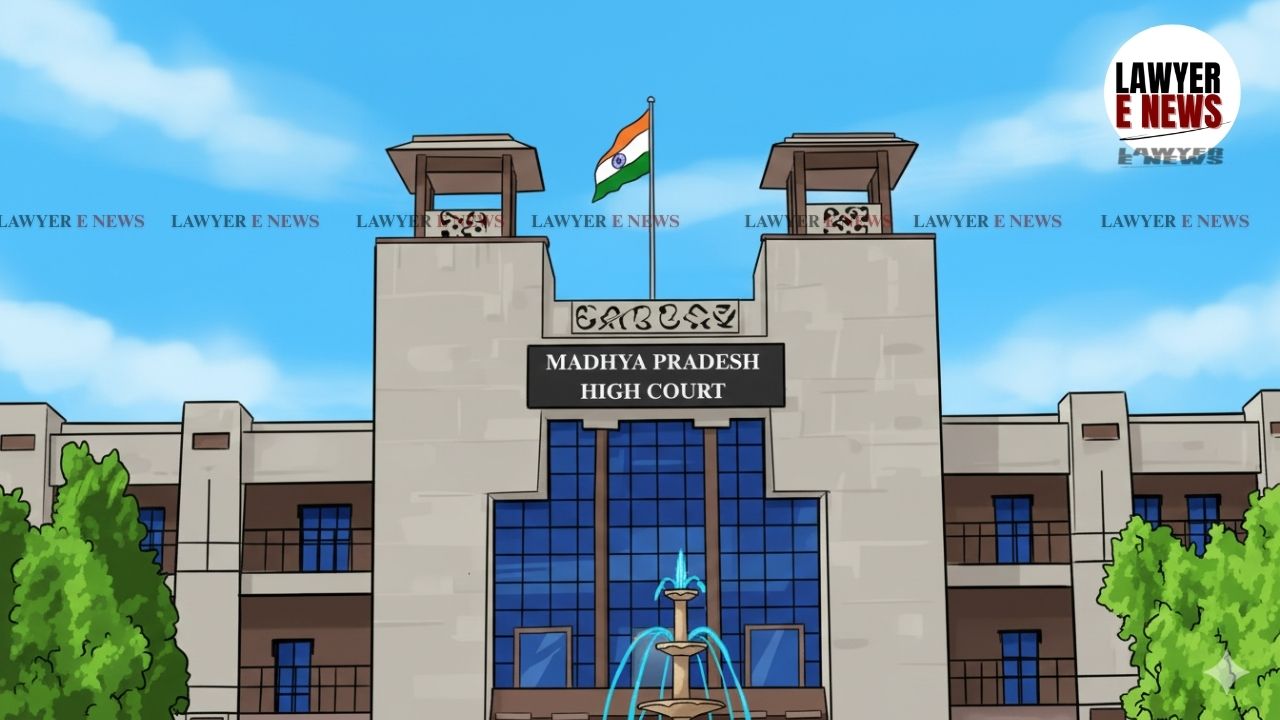
“The core arbitration agreement survives even if the appointment mechanism becomes inoperative—neutrality must be ensured, not the extinguishment of arbitration,” ruled the Supreme Court in a pivotal decision restoring the right to arbitrate despite the disqualification of a named arbitrator and delay due to COVID-19. On October 7, 2025, the Supreme Court reversed the Madhya Pradesh High Court's rejection of an application under Section 11(6) of the Arbitration and Conciliation Act, 1996, and referred the matter to the Delhi International Arbitration Centre (DIAC) for appointment of an independent arbitrator. The Court held that the application was filed within limitation, once the COVID-19 exclusion period was properly accounted for, and further clarified that invalidity of the named arbitrator under Section 12(5) does not invalidate the arbitration clause itself.
“Core Arbitration Agreement Cannot Be Defeated by Procedural Ineligibility”: Court Affirms Power to Appoint Arbitrator
Rejecting the argument that the arbitration clause ceased to exist after the statutory ineligibility of the named arbitrator, the Court made a significant clarification:
“Merely because the procedure to appoint an arbitrator provided in the clause has become inoperative due to statutory amendments, it would not mean that the core of the contract referring the dispute to arbitration is rendered nugatory.”
The Court firmly held that the arbitration agreement must be interpreted purposively, not literally, and invalidation of the appointment mechanism does not destroy the parties’ agreement to resolve disputes through arbitration.
Referring to the law laid down in Perkins Eastman Architects DPC v. HSCC (India) Ltd. (2020) 20 SCC 760 and TRF Ltd. v. Energo Engineering Projects Ltd. (2017) 8 SCC 377, the Court reiterated:
“Once the named arbitrator becomes ineligible by operation of Section 12(5) read with the Seventh Schedule of the Act, the ineligibility extends to the power of nomination as well.”
Hence, the Court retains the jurisdiction under Section 11(6) to appoint a neutral and independent arbitrator when the agreed procedure fails or becomes invalid.
“Exclusion of COVID-19 Period Revives Arbitration Claim”: Limitation Held Extended by Supreme Court’s Own Orders
In another key holding, the Court found the application under Section 11(6) to be within limitation despite being filed in March 2022, nearly four years after the final bill was raised on 20.03.2018.
While ordinarily governed by Article 137 of the Limitation Act, 1963, which prescribes a 3-year limitation for such applications, the Court clarified that:
“Once the period from 15.03.2020 to 28.02.2022 is excluded in line with this Court’s directions in In Re: Cognizance for Extension of Limitation [(2022) 3 SCC 117], the application falls well within limitation.”
The Supreme Court had, during the COVID-19 pandemic, excluded the period between 15.03.2020 to 28.02.2022 from all limitation computations. The Court found that this exclusion applied squarely to the present case and reversed the High Court's erroneous computation that ignored this relief.
The Court further observed: “It would be unjust and detrimental to not consider this while deciding upon the period of limitation in the present case.”
High Court Orders Set Aside: Arbitration Referred to DIAC
Refusing to uphold the High Court’s conclusion that the arbitration clause was extinguished due to the ineligibility of the Managing Director or nominee, the Court held such reasoning to be unsustainable both in law and policy.
The Court set aside the High Court’s orders dated 19.12.2023 and 10.04.2024, which had dismissed the arbitration application and the review petition, respectively.
Instead, the matter was referred to the Delhi International Arbitration Centre, with a direction that the Centre appoint a suitable independent arbitrator, in accordance with law and the applicable rules.
“Purpose of 2015 Amendment Is to Ensure Neutrality, Not to Defeat Arbitration Itself”
The Court emphasized that the 2015 Amendment to the Arbitration Act—particularly Section 12(5) and the Seventh Schedule—was introduced to secure neutrality and impartiality in arbitration, and not to render arbitration clauses inoperative.
“The legislative intent behind the 2015 amendment was to enforce neutrality of arbitrators—not to make arbitration clauses void,” the Court clarified.
Thus, even if the named arbitrator (in this case, the Managing Director or nominee of Bharat Oman Refineries Ltd.) became ineligible due to statutory disqualification, the arbitration clause continued to operate, enabling the Court to step in and ensure that the arbitration mechanism survives.
Dispute Arises From Delay and Deductions in Contract Execution
The case arose from a contract awarded in December 2016 to Offshore Infrastructures Ltd. for construction works related to a modular Penex Unit at Bharat Petroleum’s Bina Refinery. Though the contract was to be completed in 5 months, the work concluded only in January 2018.
Final bills were raised in March 2018, with a “No Claim Certificate” issued in October 2018. The final payment was made in June 2019, with deductions for liquidated damages. The contractor issued claims in April 2021 and invoked arbitration in June 2021. When no arbitrator was appointed, it filed a Section 11 application in March 2022. The High Court dismissed the claim as time-barred and the arbitration clause as ineffective—an approach now overruled.
Supreme Court Reaffirms Liberal and Purposeful Approach to Arbitration Law
The judgment is yet another affirmation of the Supreme Court’s consistent line of decisions encouraging arbitration and ensuring that technicalities do not defeat the substantive rights of parties to resolve disputes through the alternative mechanism.
Arbitration Agreement Survives Despite Procedural Invalidity
The Supreme Court has once again clarified that a defective or invalid arbitration appointment mechanism does not render the entire arbitration clause void. Courts are empowered to step in and preserve the parties’ intent to arbitrate—especially where delay was caused by unprecedented events like the COVID-19 pandemic.
“The arbitration clause is the soul of dispute resolution in a commercial contract. It cannot be treated as dead merely because the name of the arbitrator becomes invalid,” the Court concluded.
Date of Decision: October 7, 2025