NDPS | Mentioning FIR Number On Memos Before Registration Makes the Entire Recovery Suspect: Himachal Pradesh High Court MACT | Once Deceased Is Proven To Be Skilled Worker, Deputy Commissioner's Wage Notification Is Applicable: P&H HC Bank’s Technical Excuses Can’t Override Employee’s Right to Ex Gratia Under Old Circulars: Bombay High Court Slams Canara Bank’s Rejection of Claim Once Worker Files Affidavit of Unemployment, Burden Shifts to Employer to Prove Gainful Employment: Delhi High Court Grants 17B Relief Despite 12-Year Delay Specific Relief Act | Readiness and Willingness Must Be Real and Continuous — Plaintiffs Cannot Withhold Funds and Blame the Seller: Bombay High Court Even If Claim Is Styled Under Section 163A, It Can Be Treated Under Section 166 If Negligence Is Pleaded And Higher Compensation Is Claimed: Supreme Court When Cheating Flows from One Criminal Conspiracy, the Law Does Not Demand 1852 FIRs: Supreme Court Upholds Single FIR in Multi-Crore Cheating Case Initiating Multiple FIRs on Same Facts is Impermissible: Supreme Court Quashes Parallel FIRs and Grants Bail Protection in Refund Case Limitation Act | Quasi-Judicial Bodies Cannot Invoke Section 5 Principles Without Express Statutory Grant: Supreme Court Arbitration Act | Commencement of Proceedings Triggered by Notice Receipt, Not Section 11 Filing: Supreme Court Strong and Cogent Evidence Must Exist at the Threshold to Deny Bail Under Section 319 CrPC: Supreme Court Appellate Court Under Section 37 Cannot Sit in Appeal Over Arbitral Award on Merits: Supreme Court Affidavit Ratifying Power of Attorney Cannot Be Disowned Later: Supreme Court Orders Specific Performance Despite Earlier Revocation Claims No Law Empowers a Corporation to Haunt a Retiree: Supreme Court Quashes Post-Retirement Disciplinary Action for Want of Jurisdiction Mere Expectation of Higher Bids Can't Justify Cancelling a Valid Auction: Supreme Court Quashes GDA’s Arbitrary Rejection of Highest Bidder Prolonged Incarceration Without Trial Violates Article 21, Even in Grave Economic Offences: Supreme Court Grants Bail to Arvind Dham in ₹673 Crore PMLA Case Article 14 | ‘Rules of the Game Cannot Be Changed Midstream’: Supreme Court Quashes Punjab’s Modified Sports Quota Policy for MBBS Admissions Rules of the Game Cannot Be Changed Midway: Supreme Court Quashes Bihar’s Retrospective Recruitment Amendment "Imaginary Ghost" - Court Permits Karthigai Deepam at Thiruparankundram ‘Deepathoon’: Madras High Court 353 IPC | Continuing Prosecution Against Citizens Despite Statutory Findings of Police Atrocities Is Abuse of Process: Kerala High Court Court Cannot Compel Plaintiff to Continue Suit Where No Liberty to File Fresh Suit is Sought: Bombay High Court Claim for Demurrage is Not a Crystallized Debt—Only an Unadjudicated Right to Sue: Andhra Pradesh High Court Declared Foreign Nationals Have No Right to Reside in India: Gauhati High Court Upholds Expulsion of Bangladeshi Woman Without Requiring Deportation Protocols

High Court Quashes Orders on Interim Compensation in Cheque Bounce Case: Misuse of Discretionary Power

07 May 2024 8:19 AM

By: Admin


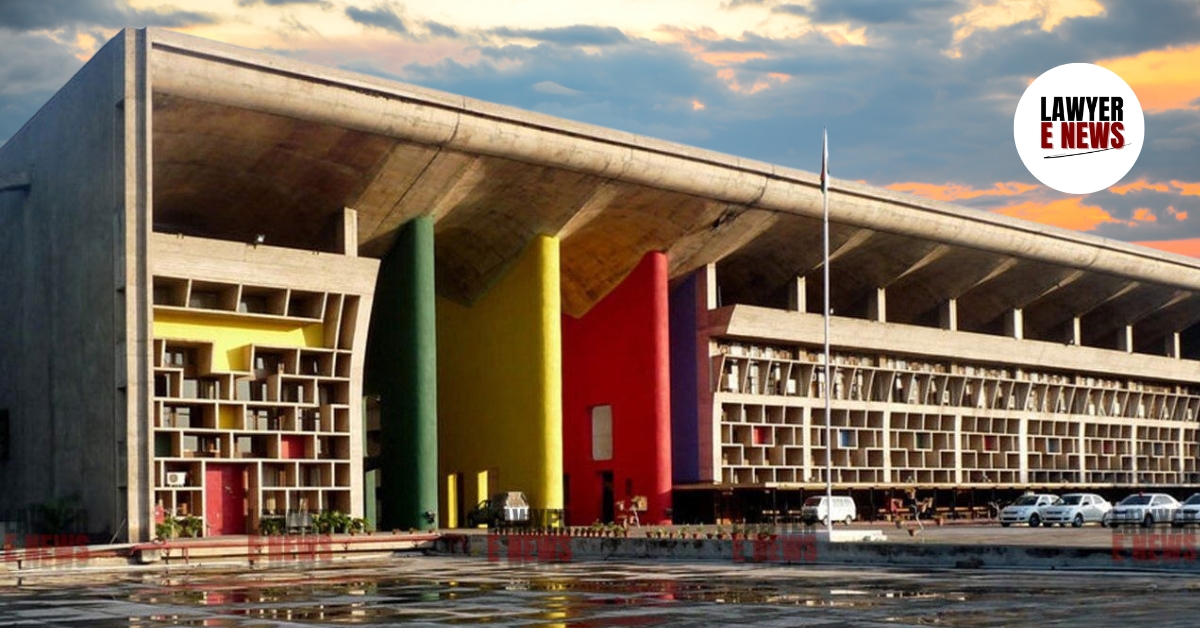
In a significant ruling, the Punjab and Haryana High Court has set aside two orders pertaining to the deposit of interim compensation in a cheque bounce case under Section 138 of the Negotiable Instruments Act. The bench headed by Hon’ble Mr. Justice N.S. Shekhawat delivered the judgment, emphasizing the importance of judicial discretion and adherence to the principles of natural justice.

The case involved petitioner Raman Kumar Arora challenging the orders dated 06.09.2021 and 27.09.2022 passed by the Court of JMFC, SAS Nagar, and the Court of Additional District and Sessions Judge, SAS Nagar, respectively. These orders mandated the petitioner to deposit 20% of the cheque amount as interim compensation to the complainant.+.

Justice Shekhawat observed, “The trial Court had granted the interim compensation under Section 143-A of the Act in a very casual and routine manner. Even, it is clear that there was no application of judicial mind by the trial Court.” This statement underscores the High Court’s concern over the arbitrary application of judicial discretion.

The Court’s decision emphasized the proper application of law, stating, “The Court had wide discretion to grant the interim maintenance, which could vary from 1% to 20% and the discretion had been exercised in a manner, which is alien to law and such arbitrary order is liable to be quashed.”

In its judgment, the High Court also referred to similar cases, including CRM M-29424-2022 titled “Vikas Vs. Jai Shree Balaji Electrical,” to highlight the importance of proper application of Section 143A of the Act and the exercise of judicial discretion.

The petitioner’s counsel, Mr. Karan Suneja, welcomed the judgment, stating that it reinforced the legal principles of fairness and judicious application of law. On the other hand, the respondent’s counsel, Mr. R.K. Chaudhary, expressed respect for the Court’s decision.

The High Court’s decision to quash the impugned orders and remand the matter back to the trial Court for reconsideration marks a significant step in ensuring that judicial discretion is exercised thoughtfully and in accordance with the law. This ruling is expected to have a considerable impact on similar cases involving the interpretation of Section 143-A of the Negotiable Instruments Act.

Date of Decision: 30.11.2023

Raman Kumar Arora VS Tanu Bathla 

Latest Legal News