-
by sayum
28 August 2026 12:24 PM







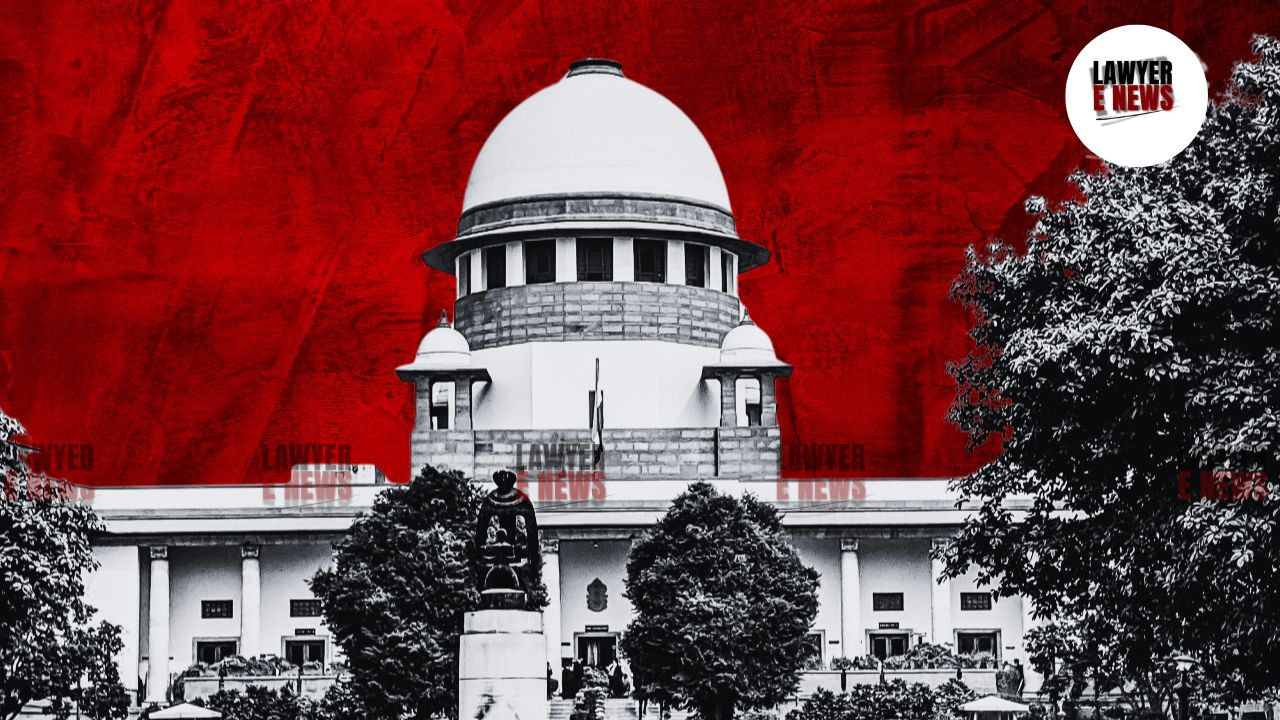
“The High Court has no jurisdiction to recall or review its final order in criminal proceedings—doing so violates Section 362 CrPC and amounts to an abuse of judicial process” - On October 8, 2025, the Supreme Court delivered a crucial judgment decisively curbing the misuse of inherent powers by the High Courts in criminal proceedings. A Bench comprising Justices Vikram Nath and Sandeep Mehta quashed the Rajasthan High Court’s orders that had recalled an earlier final decision and transferred the investigation of two FIRs to the Central Bureau of Investigation (CBI), terming the act as “jurisdictionally impermissible.”
The Apex Court held that the High Court’s orders recalling and modifying its own final judgment were “wholly without jurisdiction”, declaring that criminal courts have no power to review or revisit final orders except for correcting clerical or accidental errors. The Court underscored that “there was neither any clerical mistake nor any inadvertent error in the original order”, and thus the High Court’s later orders amounted to an unauthorised review under the garb of modification.
This ruling sets a firm precedent reinforcing the finality of criminal court decisions and restricting successive petitions filed under different labels seeking the same relief.
“Second Petition Under Different Procedural Label for Same Relief is Abuse of Process”—No Fresh Petition Permissible Without Liberty After Withdrawal
“A mere change in label does not revive the right to relief—legal remedies must follow procedure, not tactical re-litigation”
The dispute arose after Parmeshwar Ramlal Joshi, a granite mining businessman from Bhilwara, Rajasthan, filed FIRs against a former State Revenue Minister, alleging criminal intimidation, extortion, theft, and political interference. Joshi initially moved the High Court through a criminal writ petition seeking transfer of the investigation to the CBI, alleging political influence and police bias. That writ petition, however, was withdrawn without liberty to refile.
Shortly thereafter, the complainant filed a fresh petition—this time under Section 528 of the Bharatiya Nagarik Suraksha Sanhita, 2023 (BNSS), the successor to Section 482 CrPC—seeking the same reliefs in identical language.
The Supreme Court noted with concern that the second petition amounted to a “repackaging of the same plea under a new provision”, observing that “once a writ petition seeking particular relief has been dismissed as withdrawn without liberty, the same relief cannot be sought again through a different procedural route.”
The Court declared that such successive litigation is a "clear abuse of process of law", and the only legitimate course available to the complainant was to challenge the previous order through an appeal or review as provided by law—not to seek a fresh adjudication.
Allegations of Threats by Former Minister Over Mining Business Sparked Legal Battle
The legal proceedings stem from serious allegations made by the complainant, Parmeshwar Ramlal Joshi, against former Revenue Minister Ramlal Jat and others, claiming that he was forced to part with business shares under threats and intimidation. Joshi, who was operating granite mining leases through M/s. Black Mount Granite Pvt. Ltd. and M/s. Aravali Granimarmo Pvt. Ltd., alleged that the accused used their political connections to sabotage his operations, including theft of minerals, equipment, and destruction of CCTV systems at the mine.
Despite several complaints to senior police officers and the registration of FIRs, Joshi claimed the investigation was being deliberately mishandled due to political pressure. The police eventually filed a negative final report, stating the dispute appeared civil in nature. Joshi then filed a protest petition, and two further FIRs were registered, which he again sought to be investigated by an independent agency.
When the High Court initially declined his request for a CBI probe and merely directed the Superintendent of Police to ensure fair investigation, the complainant filed an application to recall that order, which the High Court allowed, and then proceeded to order the transfer of the case to the CBI.
This act of recalling a final judicial order became the central legal question before the Supreme Court.
“Recalling a Reasoned Final Order Is Review in Disguise – And Criminal Courts Have No Such Power”
“To err is human—but errors in judicial orders cannot be revised without legal authority”
The Supreme Court examined whether the High Court had the power to recall or review its own final order dated 16 January 2025, which had not granted the prayer to transfer the case to the CBI. It categorically held that “there was no inadvertent or clerical error in the order”, and the subsequent recall amounted to an impermissible review.
Referring to established precedent in Simrikhia v. Dolley Mukherjee and Sooraj Devi v. Pyare Lal, the Bench held that “Section 362 CrPC (now Section 403 BNSS) places a complete bar on reviewing or modifying final orders in criminal proceedings, except to correct clerical or arithmetical mistakes.”
The Court rejected the High Court’s justification that its failure to order a CBI investigation was a “clerical mistake”, holding:
“The reasoning adopted by the High Court that the omission to grant the prayer for CBI investigation was a result of inadvertent clerical error is not borne out from the record. The order was passed after full consideration and there was no ambiguity or mistake warranting correction.”
The Bench also clarified that a fresh petition seeking the same relief without demonstrating any change in circumstances or procedural permission is not maintainable, and that inherent powers under Section 528 BNSS cannot be invoked to override statutory bars on review.
“Inherent Power Cannot Be Used to Circumvent Express Legal Prohibitions”—Supreme Court on Limits of Judicial Discretion
In dismissing the respondent’s argument that the High Court had acted to “balance equities” and ensure a fair investigation, the Court asserted:
“The Court’s duty to dispense justice cannot extend to violating express provisions of criminal procedure. Inherent jurisdiction is not a tool to sidestep the law.”
The judgment made it clear that judicial discretion must remain within the confines of statutory frameworks, and “courts cannot override limitations merely on grounds of perceived fairness or equity”.
High Court’s Recall and CBI Direction Quashed—Liberty to Complainant to Challenge Earlier Orders as per Law
The Supreme Court allowed the State of Rajasthan’s appeal, quashed the High Court’s orders dated 24 January 2025 and 4 February 2025, and set aside the direction transferring the investigation to the CBI.
However, acknowledging the “gravity of the allegations”, the Court gave liberty to the complainant to seek appropriate remedies against the earlier High Court orders, stating:
“The complainant is at liberty to challenge the orders dated 23 October 2024 and 16 January 2025 in accordance with law, if so advised.”
The connected Special Leave Petitions (SLP (Crl.) Nos. 3308–3309 and 3310–3311 of 2025) were dismissed as infructuous, and the appeals were disposed of accordingly.
Date of Decision: 08 October 2025