-
by sayum
04 August 2026 1:39 PM







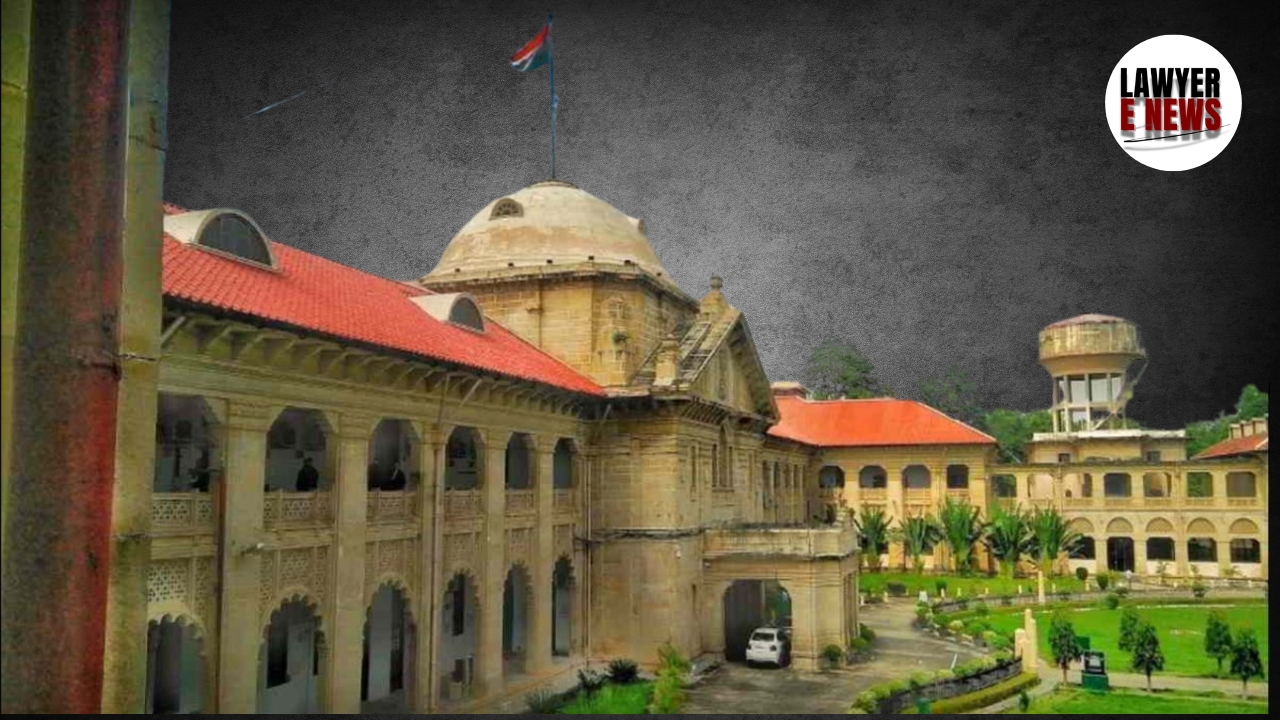
“When Appointment Is Approved by Highest Executive Body, It Cannot Be Cancelled Later Citing Internal Lapses” – Allahabad High Court (Lucknow Bench), in a landmark service law decision, allowed two writ petitions filed by Anand Singh Aswal and Niranjan Kumar, quashing the withdrawal of their appointment to the post of Producer in the Electronic Multi Media Research Centre (EMMRC), Babasaheb Bhimrao Ambedkar University (BBAU), Lucknow.
Delivering a strongly worded judgment, Justice Rajesh Singh Chauhan held that the unilateral withdrawal of duly accepted offers of appointment was arbitrary, non-speaking, violative of natural justice and contrary to Article 14 of the Constitution. The court further invoked the principles of promissory estoppel, legitimate expectation, and the doctrine of indoor management, holding the university accountable for breaching its legal obligations.
“The action of the University, in withdrawing the appointment on the basis of a defect that was never communicated and known to the petitioners, and which the university itself overlooked while approving the appointment, is arbitrary and violative of Article 14.”
Offer of Appointment Was Binding Once Accepted – Petitioners Had Right to Fair Process
The petitioners were selected for the post of Producer at the EMMRC through a duly advertised selection process and were issued formal offers of appointment dated 08.06.2018, which they accepted. However, the university rescinded those offers via order dated 27.11.2019, citing alleged irregularities in the composition of the Selection Committee.
The Court rejected this rationale, pointing out that the same selection had already been approved by the Board of Management (BOM) on 30.01.2018, and that no defect was raised at the time of appointment. The judge observed:
“If the Committee was wrongly formed from the very beginning, then the question arises as to why did the Board of Management approve such committee on 30.01.2018 and issue the offer of appointment on 08.06.2018?
Non-Speaking Order Violates Natural Justice and Due Process
Referring to the impugned order dated 27.11.2019, the Court held that it failed the test of reasonableness and transparency:
“The impugned order is absolutely a non-speaking and unreasoned order... only stating that the offer is withdrawn in terms of the BOM resolution, without disclosing any justification.”
Citing the Supreme Court’s precedents in E.P. Royappa v. State of Tamil Nadu and Ramana Dayaram Shetty v. International Airport Authority, the Court reiterated that:
“Article 14 demands that State actions be fair, just, and reasonable. Administrative decisions affecting civil consequences must be supported by recorded reasons.”
It emphasized that the withdrawal impacted the livelihood and career of the petitioners, and hence triggered the requirement to comply with natural justice, per Dr. Binapani Dei v. State of Orissa and A.K. Kraipak v. Union of India.
Legitimate Expectation and Promissory Estoppel: State Cannot Resile From a Concluded Contract
The Court invoked the doctrine of legitimate expectation, noting that the petitioners had altered their position and foregone other opportunities after accepting the offer. It further held that:
“The petitioners had no reason to suspect any irregularity in the selection process, having complied with all formalities and received approval from the competent authority.”
Relying on Motilal Padampat Sugar Mills v. State of U.P. and Food Corporation of India v. Kamdhenu Cattle Feed Industries, the Court held:
“Where a party acts on a clear promise made by the State to its detriment, the State is estopped from going back on that promise.”
Thus, even if the university had the contractual power to withdraw offers under certain clauses, the exercise of such discretion must pass the tests of fairness, transparency, and public interest, which were clearly absent in this case.
Petitioners Cannot Be Penalized for Internal Irregularities – Doctrine of Indoor Management Applied
The Court drew an analogy to the doctrine of indoor management, holding that outsiders dealing with a public authority cannot be burdened with knowledge of its internal defects, especially when appointments are made through official procedures. Citing Chairman & MD, BPL Ltd. v. S.P. Gururaja, the Court observed:
“Once the BOM approved the selection and offers were issued, it was inequitable for the university to cancel those offers based on internal administrative lapses.”
It noted that petitioners had no role or control over the selection committee's constitution and were never informed of any flaw in the process.
Court Distinguishes Shankarsan Dash and Tej Prakash Pathak
The university had relied on the Supreme Court’s ruling in Shankarsan Dash and the recent judgment in Tej Prakash Pathak to argue that a candidate does not have an indefeasible right to appointment even after selection.
The High Court, however, distinguished those precedents, clarifying that:
“This is not a case where appointment was denied prior to offer. Here, formal offers were issued and accepted, creating enforceable legal obligations. Arbitrary post-acceptance withdrawal violates the fundamental right to equality.”
The Court also observed that no fresh public interest or intervening circumstance had arisen to justify the withdrawal, rendering the decision legally unsustainable.
Accordingly, the Court allowed the writ petitions and passed the following operative directions: “The impugned order dated 27.11.2019, the BOM resolution dated 31.10.2018, and confirmation order dated 20.08.2019 are quashed. The University is directed to give effect to the offer of appointment dated 08.06.2018 and appoint the petitioners to the post of Producer with all consequential service benefits.”
The Court also acknowledged the valuable research assistance of law interns Mr. Rudra Singh Krishna and Ms. Mariyam Iqbal, who helped in identifying key precedents.
Public Authority Bound by Rule of Law, Even in Administrative Decisions
This judgment reinforces the constitutional mandate that government institutions must act in accordance with law and fairness, even in contractual and service matters. Once an offer of appointment is made and accepted, any withdrawal must satisfy strict standards of reasonableness and transparency. The State cannot hide behind its own lapses, and rights of selected candidates must be protected from arbitrary state action.
Date of Decision: 6 June 2025