-
by sayum
21 October 2026 5:27 PM







D.D: 21.06.2022
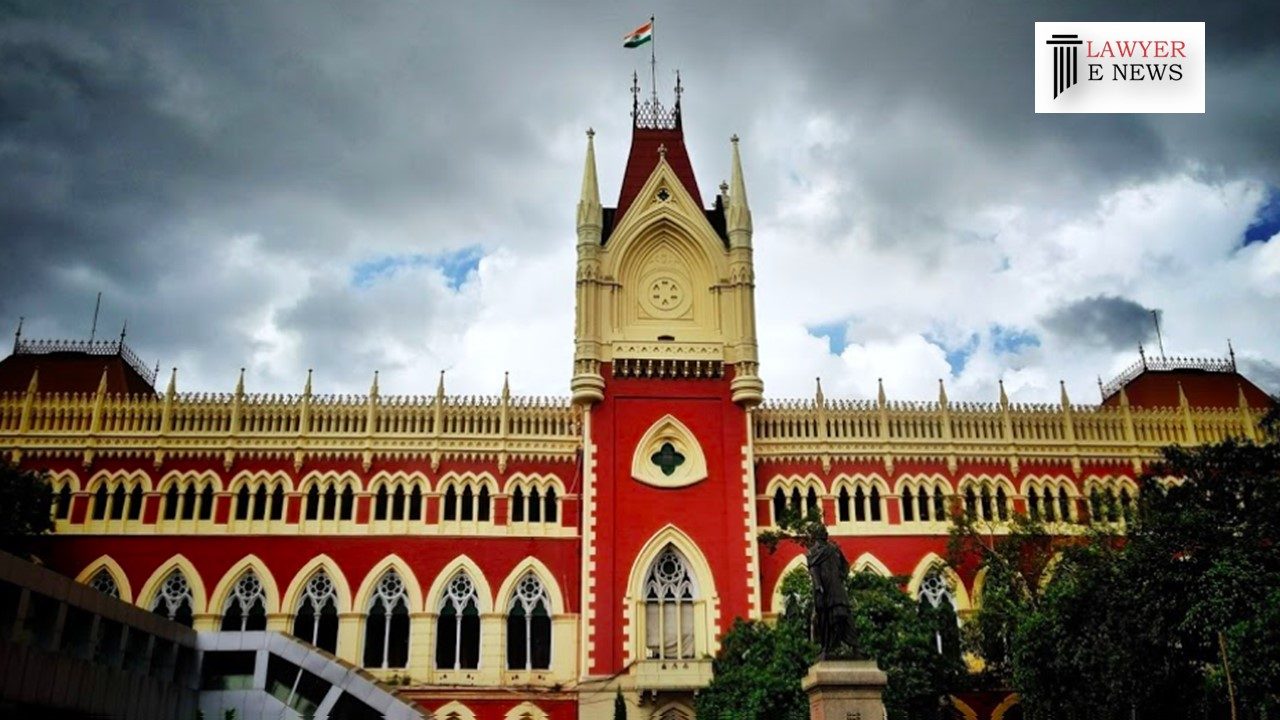
The Calcutta High Court recently accepted the report submitted by the Special Investigation Team (SIT) that investigated the death of social activist and student leader Anis Khan, who was discovered dead in February of this year outside his home in Howrah's Amta neighbourhood. Salem Khan v. West Bengal State
Justice Rajasekhar Mantha ruled that there was no need to transfer the investigation to a third party, citing the SIT's strict adherence to the Standard Operating Procedure for investigations and best practises.
Noting that all evidence, including statements under Sections 164 and 161 of the Code of Criminal Procedure (CrPC) as well as forensic and medical reports, was presented during the investigation, the Court ruled,
"According to the SIT, the evidence points to the actions and omissions of a group of individuals, including police officers. The SIT has determined that both the raiding party and the raid itself committed errors. The prima facie findings against these individuals are plausible, and they are subject to the Sessions Court's trial and findings."
The court also determined that Anis' father's fears that the investigation would be compromised were unfounded. The directive stated,
"In the present instance, the SIT itself has implicated some police officials in its investigation report, criticising the raid's execution. Therefore, the petitioner's concern that the accused police officers will be shielded by the police is without merit. As the SIT is comprised of highly ranked police personnel, there is no reason to suspect impropriety in the investigation or trial, despite the fact that some police officers are involved."
On the evening of February 19, this year, police officers and social workers allegedly broke into their home and murdered Anis. While one of them spoke with his father on the first floor, the others assaulted him on the second-floor terrace and pushed him down.
He was a public-spirited individual who participated in protests against the Citizenship Amendment Act (CAA), the National Register of Citizens (NRC), and the most recent Hijab ban controversy in Karnataka.
In February of this year, the High Court took independent notice of the situation, noting that it was grave and urgent.
The father of Anis later claimed that his son's participation in protests rendered him an eyesore to the State's ruling government. He claimed that the raid conducted on that fateful day was part of a plot to eliminate Anis. In addition, he asserted that the State's SIT, comprised of three senior IPS officers, had failed to investigate the conspiracy angle of the case.
Fearing that those responsible for his son's death would not be brought to justice, he sought to have the incident investigated by an independent agency from outside the state.
In his decision, Justice Mantha accepted the SIT's findings. He noted that Anis's encounters with the law in 2017 and 2021 were unrelated to his death.
"There is a significant time lapse between the incidents in question and the victim's death. The connection between these events and the death appears to be tenuous at best."
In addition, the judge noted that Anis's father made no mention of the conspiracy theory in his Section 161 and 164 CrPC statements.
"There was no mention of a political vendetta regarding the death of his son. This Court therefore does not fault the SIT for failing to consider the conspiracy angle worthy of investigation "The court ruled.
In its decision, the court noted that the immediate cause of the raid that resulted in Anis's death remained to be determined.
After identifying "inflammatory posts" on Facebook, the Social Media Monitoring Cell of the Howrah Police District initiated an investigation, according to the SIT report. These posts pertained to the volatile situation in the state amidst protests over the Karnataka-originated Hijab issue.
Approximately 25 individuals responsible for such posts were tracked down, contacted, and required to remove them. Several other individuals have been charged under Section 107 of the Criminal Code. In this context, the Court observed,
"Therefore, the Howrah Police zeroed in on the few remaining posts and Facebook account holders. Given the deceased's public-spirited background and Facebook posts, it is plausible that the Howrah Police would have been on the lookout to identify and apprehend the deceased."
After conducting an investigation, the SIT discovered evidence that five police officers had violated Indian Penal Code Sections 120(b) [punishment for criminal conspiracy], 452 [house-trespass after preparation for hurt, assault, or wrongful restraint], 304A [causing death by negligence], and 341 [punishment for wrongful restraint].
While accepting the SIT report, the court ordered that an indictment against the accused police officers be drafted immediately. The trial in this case was ordered to begin and conclude within six months of the date of commitment, at the latest.
Before rendering its verdict, the Court clarified,
"When the trial begins, the Sessions judge will act independently, unaffected by the aforementioned observations. This Court's observations and findings stated above are limited to addressing the petitioner's prayers in this writ petition and serve no other purpose."
For the petitioner, Senior Advocate Bikash Ranjan Bhattacharya appeared alongside Advocates Rabi Sankar Chatterjee, Samim Ahammed, Imteaz Ahammed, Saloni Bhattacharya, Gulsanwara Pervin, Sabyasachi Chatterjee, Kaustav Bagchi, Debayan Ghosh, Priti Kar, Debolina Sarkar, R Mukherjee, and Akashdeep Mukherjee.
The State was represented by Advocate General SN Mookherjee, Senior Advocate Amitesh Banerjee, and Advocates Ayan Bhattacharya and Sandip Dasgupta, Raja Saha, Saaqib Siddique, and Aviroop Mitra.
The CBI was represented by Additional Solicitor General Billwadal Bhattacharyya and Advocates Kallol Mondal and Samrat Goswami.
STATE OF WEST BENGAL & ORS.
[gview file="http://lawyer-e-news.com/wp-content/uploads/2022/06/Salem_Khan_vs_State_of_West_Bengal11.pdf"]