-
by sayum
28 August 2026 2:11 PM







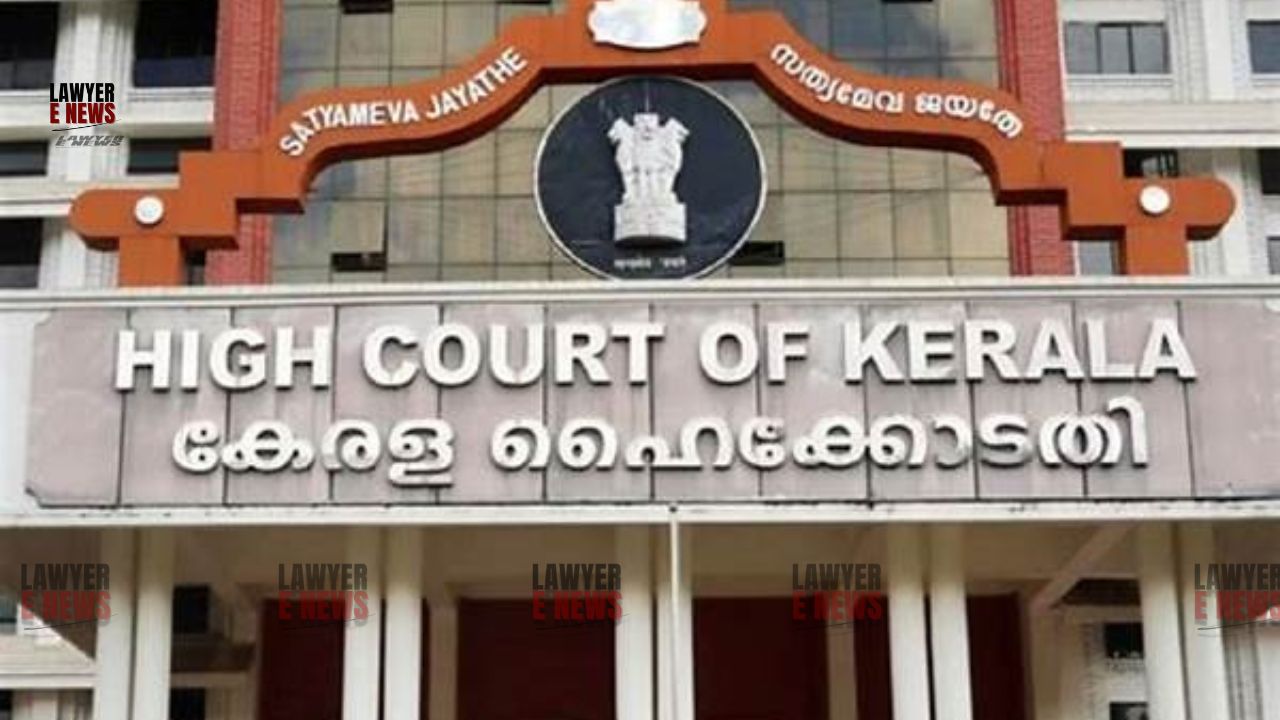
Kerala High Court struck down a final decree passed by the Sub Court, Kochi, which had ordered auction of prime family properties in a partition suit. Justice C. Pratheep Kumar held that the trial court acted in disregard of the binding preliminary decree and wrongly relied on a mediator’s report that had no legal sanctity under the Code of Civil Procedure.
“Preliminary Decree Once Confirmed is Final and Binding – Trial Court Cannot Travel Beyond It”
The High Court observed that the preliminary decree of 2004, as confirmed in RFA 255 of 2005 and upheld again in OP(C) No. 658 of 2017, specifically reserved that properties covered by Exhibits A1, A2, and A3 must be allotted to defendants 1 to 7. Despite this reservation, the trial court in 2018 ordered sale of the D and E schedule properties, which included these very lands, and directed division of the sale proceeds.
Justice Kumar held: “The final decree must conform to the spirit of the preliminary decree. The trial court, by ordering sale of D and E schedule properties, has disregarded the reservation made in favour of defendants 1 to 7. Such deviation from a confirmed preliminary decree is impermissible.”
The partition suit arose out of properties originally belonging to the late K.B. Jacob, who died intestate in 1928. His descendants litigated over nine schedules of property, with D and E schedules—about one acre of prime land with a large residential building—becoming the main bone of contention.
A preliminary decree dated 28 October 2004 granted the plaintiff one-fourth share and expressly stipulated that the properties conveyed under Exhibits A1, A2, and A3 should be adjusted against the share of defendants 1 to 7. This was later confirmed by the High Court, making it binding.
However, in the final decree proceedings, instead of complying with earlier directions, the Sub Court relied on a “mediator’s” report recommending sale of D and E properties. This led to an order dated 14 November 2018 directing public auction, prompting the present appeals (RFA No. 208 of 2019 and RFA No. 270 of 2020).
“Mediator Cannot Replace Commissioner – Report Has No Legal Sanctity
The Court strongly criticised the procedure adopted below. The commissioner originally deputed under Order 26 Rule 10 CPC had filed reports and was directed to cure defects in line with the preliminary decree. Instead of carrying out these directions, the trial court appointed a senior lawyer as “mediator,” who unilaterally inspected the property and recommended sale.
Justice Kumar ruled: “Since Ext.C3 is a report filed by an advocate styled as ‘mediator’, prepared without the juncture of the commissioner, it does not have the sanctity of a report under Order XXVI Rule 10(2) CPC. The trial court was not justified in discarding the commissioner’s role and acting upon such a report.”
Deviation from Judicial Directions
The High Court noted that the trial court ignored its own earlier order in I.A. 470 of 2015, which had specifically remitted the commissioner’s report to ensure compliance with the preliminary decree. That order was upheld by the High Court in 2017. Instead of ensuring compliance, the trial court adopted a “strange procedure” by relying on the mediator’s report and ordering sale.
Justice Kumar emphasised: “The procedure adopted by the trial court is in utter disregard of the binding preliminary decree and the directions confirmed by this Court. Such deviation can never be encouraged.”
The impugned final decree dated 14 November 2018 was set aside. The matter was remanded to the Sub Court with a direction to remit back the commissioner’s report and prepare a final decree in strict conformity with the preliminary decree. The High Court also directed that the final decree application be disposed of within one year.
It was clarified that only if partition was found to be impracticable upon due attempt, the trial court could then resort to sale and division of proceeds, in accordance with law.
By this ruling, the Kerala High Court reaffirmed the inviolability of preliminary decrees in partition suits. It made clear that once a preliminary decree has attained finality, the trial court has no authority to deviate from it while framing the final decree. Equally, the judgment underscores that a mediator cannot usurp the statutory role of a commissioner under the CPC.
Date of Decision: 16 September 2025