
-
by sayum
28 August 2026 2:11 PM







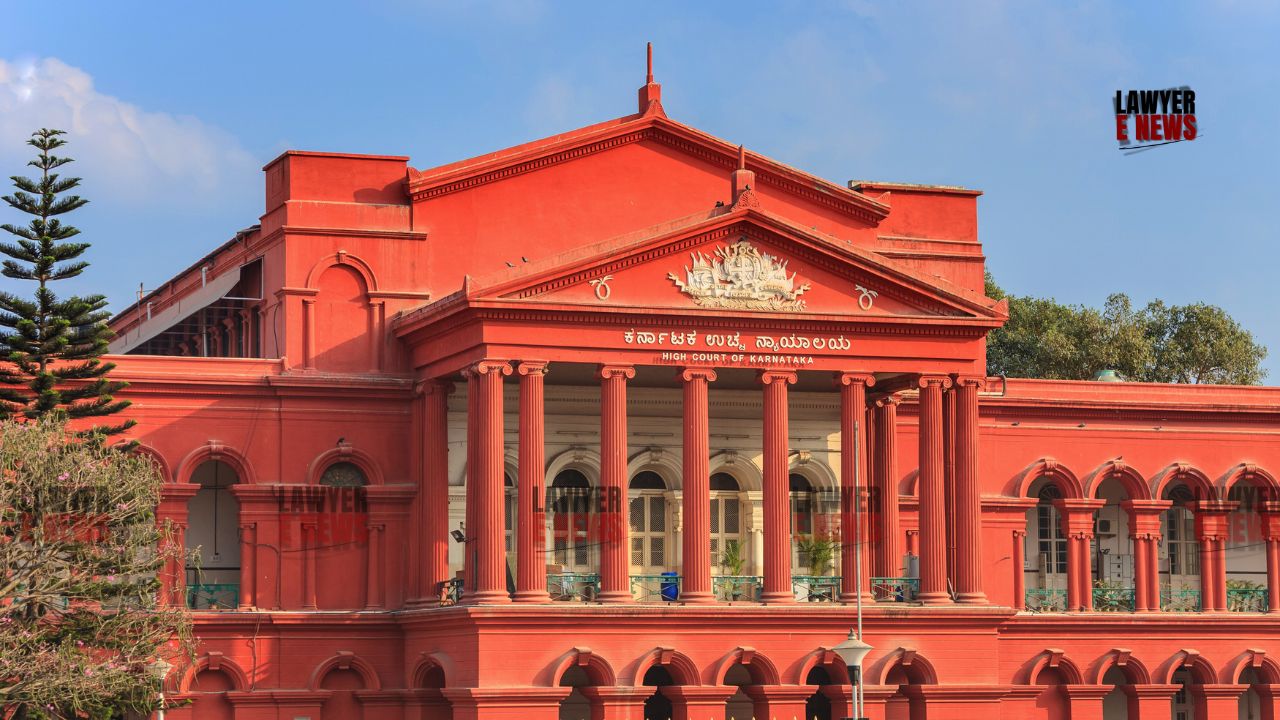
“If the biological father has permanently surrendered custody and visitation rights, his refusal to consent or take a stand on adoption proceedings must be deemed an implied consent” – In a precedent-setting judgment Karnataka High Court decisively ruled that a biological father’s prolonged silence or refusal to take a clear stand in adoption proceedings—after formally relinquishing custody and visitation rights—shall legally amount to implied consent. This groundbreaking declaration marks a judicial recalibration of the adoption process, prioritizing the best interest and welfare of the child over procedural rigidity and parental indecision.
The Court was addressing a peculiar conflict in which the Central and State Adoption Authorities had stalled the adoption of a 16-year-old boy—despite a mutual divorce and an earlier custody settlement—on the ground that explicit written consent of the biological father was missing. The Court stepped in to fill this legislative vacuum with constitutional pragmatism.
“If the Father Has Already Waived Custody and Visitation, He Cannot Keep the Child in Legal Limbo by Withholding Consent for Adoption”
The petitioners, a couple residing in Bengaluru, sought to legally adopt the boy who was biologically born to the first petitioner (mother) and the fifth respondent (biological father). The couple had entered into matrimony after the mother's previous marriage ended in mutual consent divorce via MC No. 3427/2012 before the Family Court. As part of the divorce proceedings, it was expressly recorded that:
“The first petitioner - father has no objection for the second petitioner - mother to have permanent care and custody of their minor son … and to be the sole guardian to him. The first petitioner - father hereby gives up his right to claim any visitation/custody rights to visit their minor son in future.”
Despite this recorded waiver, the Central Adoption Resource Authority (CARA) and the State Adoption Resource Agency rejected the adoption application in March 2025, insisting on fresh consent from the biological father, citing CARA guidelines that mandate express consent from both parents if alive.
“Silence is Not Always Golden – Especially When It Deprives a Child of a Family and Legal Identity”
Justice B.M. Shyam Prasad, after appointing Senior Advocate Sri Vikram Huilgol as Amicus Curiae, delivered a landmark opinion that reshapes the understanding of parental consent in adoption matters.
The Court observed: “The refusal to take a stand in the circumstances of the case must justify an inference in favour of the minor being taken in adoption … the fifth respondent has not come forward to extend justifiable reasons to deny the benefit of adoption—not just to the petitioner but also to the minor whose interest must be paramount.”
Supporting this line of reasoning, both the learned Additional Solicitor General for CARA, Sri Arvind Kamath, and the Amicus Curiae emphasized that drawing a legal inference of consent in such cases was consistent with both jurisprudential logic and child welfare principles.
The biological father, through his counsel, maintained an evasive position—declining to give either explicit consent or a justified denial. The Court held that such refusal to take a stand amounted to dereliction of parental responsibility, especially when the father had already renounced all legal connection with the child.
“Justice Demands That the Law Not Be Weaponized to Block a Child’s Future in a Loving Family”
Justice Shyam Prasad firmly concluded: “This Court is of the opinion that there must not only be an inference of consent by the fifth respondent in favour of the adoption but there should also be a direction to the second and fourth respondents to consider completion of the adoption process in the light of this inference.”
Further, the Court directed that the petitioners shall be entitled to upload this judgment as proof of the biological father’s deemed consent, and the authorities must process the adoption application accordingly.
This effectively allowed the continuation and completion of the adoption process without any additional procedural blockades.
A Child’s Right to Belong Cannot Be Held Hostage by a Parent’s Ambiguity
The High Court’s judgment is a monumental step in reconciling statutory procedures with the lived realities of children and single parents navigating adoption. By shifting the focus from rigid procedural formality to constructive legal presumptions based on past custodial conduct, the Court has provided a child-centric blueprint for similar cases across India.
This ruling may now serve as a model in all future adoption matters involving surrendered parental rights, avoiding unnecessary trauma, delay, and emotional uncertainty for children seeking stability and belonging.
Date of Decision: 22.08.2025





