
-
by sayum
26 August 2026 1:49 PM







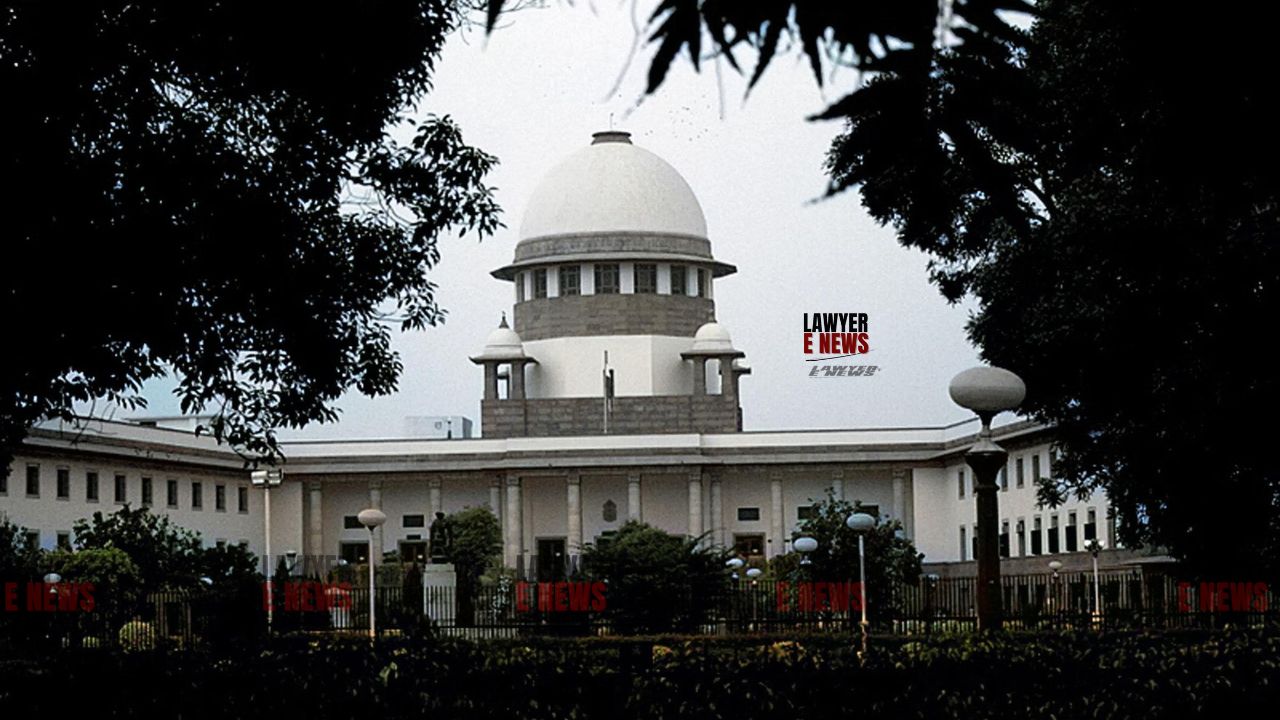
“The traditional burden of proof on the prosecution cannot be allowed to be wrapped in a pedantic coverage—offenders in serious offences would be the major beneficiaries and society would be the casualty,” ruled the Supreme Court, restoring the conviction of a man accused of murdering his daughter-in-law under the guise of accidental electrocution.
In a significant ruling Supreme Court of India reinstated the conviction of the respondent, Janved Singh, who had been acquitted by the Madhya Pradesh High Court in a dowry death and murder case. The Court held that the false narrative of electrocution, the circumstantial evidence, and failure to explain the custodial death inside the matrimonial home formed a conclusive chain pointing unerringly to the guilt of the accused.
The Court noted that while the High Court had overturned the conviction citing delayed witness statements and alleged lack of proximity to the crime scene, it had ignored key legal principles, including the burden under Section 106 of the Indian Evidence Act, and the relevance of a false explanation in completing the chain of circumstantial evidence. The Supreme Court observed:
“When an accused offers a false explanation regarding the cause of death which takes place within the confines of his house, such falsity becomes an additional link in the chain of circumstances pointing to the guilt of the accused.” [Para 14]
“Strangulation, Followed by Fabricated Electrocution Story, Shows Guilty Mind”: Court Finds Homicide Established Beyond Reasonable Doubt
The judgment comes in a case involving the suspicious death of Pushpa, a young married woman, who was found dead inside her matrimonial home in Bhind district of Madhya Pradesh. Her father-in-law, Janved Singh, had claimed that she died by electrocution while ironing clothes. However, the medical examination revealed strangulation as the cause of death and showed that burn injuries were inflicted post-mortem, clearly indicating an attempt to stage an accident.
Rejecting the High Court’s view that the prosecution’s case was unreliable due to delay in witness testimony and absence of direct evidence, the Supreme Court restored the Trial Court’s conviction under Sections 302, 498A, and 201 of the Indian Penal Code, directing that the respondent be taken into custody to serve out his sentence.
Pushpa was married to Mahesh Singh, son of the accused Janved Singh. After the marriage, she was allegedly subjected to harassment and cruelty over dowry demands by her husband and in-laws. On 31st December 1997, Janved Singh filed a report stating that Pushpa had died of electrocution while ironing.
Following preliminary investigation, a criminal case was registered under Sections 302, 304-B, 498-A, 193, and 201 IPC. The post-mortem report categorically revealed that Pushpa died of asphyxia due to strangulation, and burn marks were inflicted post-mortem, undermining the narrative of accidental death.
The Sessions Court, in January 2000, convicted Janved Singh under Sections 302, 498-A, and 201 IPC, holding him guilty of causing the death, attempting to destroy evidence, and misleading the investigation. However, in April 2010, the High Court reversed the conviction, mainly on the ground of delayed statements from witnesses and lack of direct evidence.
The State of Madhya Pradesh challenged the acquittal before the Supreme Court.
The case raised several critical legal questions concerning circumstantial evidence, false defence, burden of proof under Section 106 of the Evidence Act, and scope of interference in appeal against acquittal.
“Section 106 Evidence Act Applies When Death Occurs in Custodial Surroundings Known Only to the Accused”
The Court stressed that Section 106 of the Evidence Act, which shifts the burden of proof to the accused when facts are especially within their knowledge, was squarely applicable:
“Once the prosecution established homicidal death inside the house, the burden shifted to the accused to explain the circumstances. Failure to discharge such burden strengthens the prosecution case.” [Para 13]
“The accused No.1 was at home on the date of incident and lodged a false report that the deceased died of electric shock. The explanation offered is not supported by any witness.” [Para 17]
The Court noted that no independent witness corroborated Janved Singh’s claim of being in the fields at the time of the death, and that no field worker or neighbour was examined to support this alibi.
“False Explanation Itself Becomes a Circumstantial Link”
Reinforcing the principle laid down in Sharad Birdhichand Sarda v. State of Maharashtra and other precedents, the Court ruled:
“False explanation by the accused regarding the cause of death is not merely a neutral factor—it is a relevant circumstance that strengthens the prosecution's case.” [Para 14]
The accused's deliberate filing of a false report of accidental electrocution constituted fabrication of evidence, attracting Section 201 IPC.
“Chain of Circumstances Complete and Unbroken”
The Court found that the prosecution had established a continuous chain of circumstances, ruling out any reasonable hypothesis of innocence:
Medical evidence proved death by strangulation, not electrocution.
Death occurred inside the house controlled by accused No.1.
FIR lodged by Janved Singh himself established his presence at the crime scene.
The accused's version of being in the field had no supporting evidence.
False report and staging of electrocution confirmed post-crime fabrication.
Prior incidents of dowry harassment and beatings were corroborated by three prosecution witnesses (PW-2, PW-4, and PW-19).
“Each link fits seamlessly with the next, forming a continuous chain which points unerringly to the guilt of accused No.1 and excludes all reasonable hypothesis of innocence.” [Para 19]
On Delay in Witness Statements
The High Court had discarded the testimony of Pushpa’s parents and uncle on the ground that their statements were recorded 6–10 months after the death. The Supreme Court dismissed this reasoning as flawed:
“Minor delay in recording statements cannot be treated as fatal where the evidence is otherwise corroborated by medical and circumstantial findings.” [Para 18]
High Court’s Acquittal Set Aside for Ignoring Material Evidence
The Court held that the High Court failed to consider the reasoning and evidence relied on by the Trial Court, and instead based its conclusions on infirm and incomplete assumptions. It reiterated the law that interference in an acquittal is warranted where the findings are perverse or contrary to the evidence on record.
“The High Court has not considered the material evidence on record and has failed to take into account the reasons which weighed with the Trial Court. The findings recorded by the High Court suffer from serious infirmity.” [Para 20]
Conviction Restored, Accused to Be Taken into Custody Immediately
Reversing the High Court’s acquittal, the Supreme Court restored the conviction of Janved Singh under Sections 302, 498-A, and 201 IPC. Holding that the prosecution had proved its case beyond reasonable doubt, the Court directed that the accused be taken into custody forthwith to serve out the remainder of his sentence.
“The accused caused the death of deceased by strangulation and attempted to mislead the investigation by fabricating a false story of electrocution.” [Para 21]
“The impugned judgment and order of the High Court is set aside, and the conviction and sentence of Janved Singh by the Trial Court is restored.” [Para 22]
Date of Decision: 14 October 2025





