-
by sayum
28 August 2026 10:07 AM








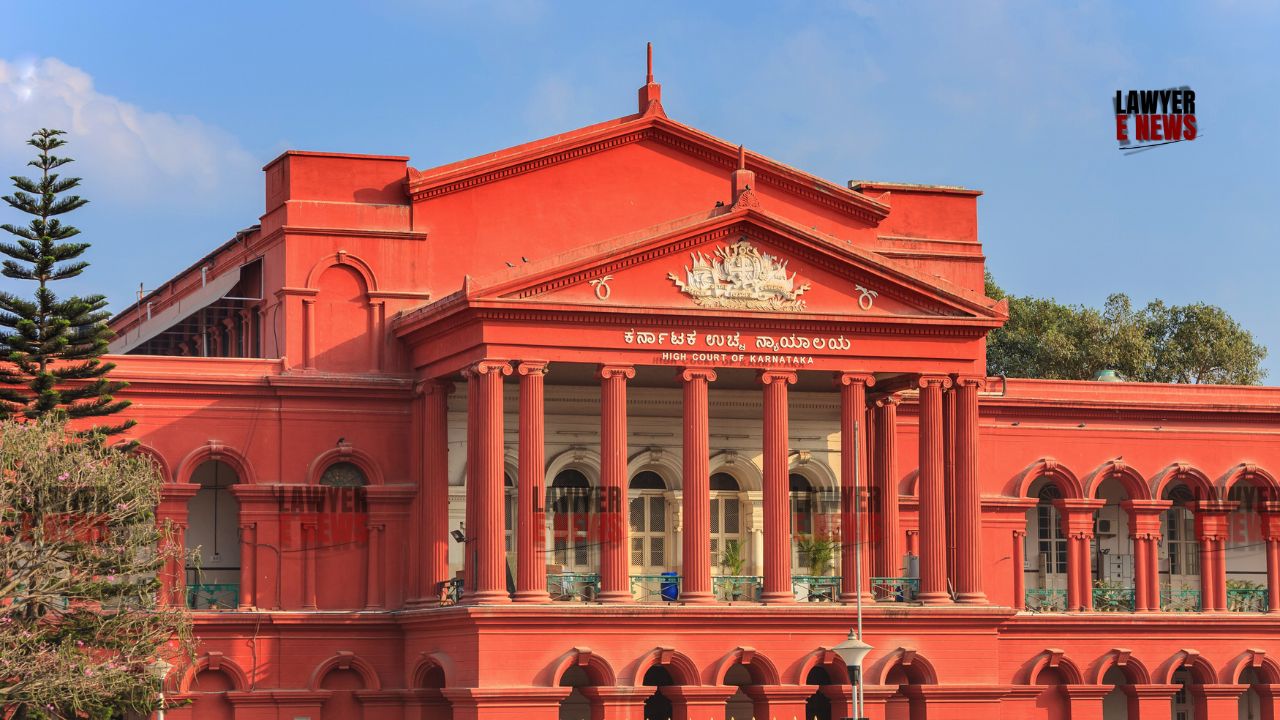
“Even without a written statement, a defendant’s right to cross-examine is not foreclosed. Procedural law is a servant, not a tyrant.” - On October 8, 2025, the Supreme Court of India delivered a crucial decision while overturning a decree passed by the Karnataka High Court and a Commercial Court which had refused to allow the defendant to file a written statement due to delay, and proceeded to decree the suit in the absence of defence or cross-examination. The Court ruled that the defendant’s failure to file a written statement within 120 days did not automatically bar their right to cross-examine the plaintiff’s witnesses, especially when the timeline was protected by the COVID-19 limitation orders issued under Article 142 of the Constitution.
The Court lambasted the mechanical application of procedural timelines in the context of the Commercial Courts Act, 2015, particularly when it results in the denial of a fair trial:
“Procedural law is not to be a tyrant but a servant, not an obstruction but an aid to justice. It is the handmaid of justice and not its mistress.”
Holding that both the rejection of the written statement and the denial of cross-examination violated the principles of natural justice, the Bench comprising Justice Aravind Kumar and Justice N.V. Anjaria allowed the appeal, remanding the matter to the trial court with liberty to the defendant to file the written statement upon paying costs of ₹1 lakh, and to cross-examine the plaintiff’s witnesses.
“COVID-19 Limitation Orders Must Be Given Full Effect — Rejection of Written Statement Filed Within Excluded Period Is Unsustainable”
“Both the summons and the delayed filing fell squarely within the exclusion period from 15.03.2020 to 28.02.2022 — Rejection of Written Statement contrary to binding precedent”
The core legal issue involved the rejection of the appellant’s written statement in a commercial suit, as it was filed beyond the 120-day deadline mandated by the proviso to Order VIII Rule 1 CPC (as amended by the Commercial Courts Act, 2015). The trial court, followed by the High Court, treated the filing as time-barred and proceeded to pass a decree.
However, the Supreme Court noted that the date of service of summons (17.07.2021) and the date of filing of the written statement (07.01.2022) both fell within the limitation exclusion period declared by the apex court in In Re: Cognizance for Extension of Limitation, (2022) 3 SCC 117. The Court had specifically held that the period between 15.03.2020 and 28.02.2022 would be excluded for computing limitation in all legal proceedings.
“The High Court ought to have excluded the aforesaid period for the purpose of filing the written statement… and ought to have permitted the defendant to contest the suit on merits rather than dismissing the appeal.”
In support of its reasoning, the Court relied upon its previous decisions in Babasaheb Raosaheb Kobarne v. Pyrotek India Pvt. Ltd., 2022 SCC OnLine SC 1315, and Prakash Corporates v. Dee Vee Projects Ltd., (2022) 5 SCC 112, both of which applied the COVID exclusion orders to permit written statements filed outside the 120-day commercial suit window.
“Cross-Examination Cannot Be Denied Solely Due to Absence of Written Statement” — Court Cautions Against Misuse of Order VIII Rule 10
“Even if no written statement is filed, the defendant retains a limited but vital right to cross-examine the plaintiff’s witnesses”
A further blow to the trial court’s order came with the Court’s censure of the denial of cross-examination rights to the defendant solely on the ground that it had failed to file its written statement. The trial court had treated this procedural lapse as a forfeiture of all rights, even recording the cross-examination of the plaintiff’s witness as “Nil.”
The Supreme Court found this to be perverse and legally untenable, ruling that even in the absence of a written statement, a defendant has the right to cross-examine the plaintiff’s witnesses, especially when the trial is otherwise proceeding ex parte or summarily.
“The denial of the right to cross-examine acted as the final nail in the coffin to the defendant’s right of defence.”
Citing its recent decision in Ranjit Singh v. State of Uttarakhand, 2024 INSC 724, the Court reaffirmed that: “Even if a defendant does not file a written statement and the suit is ordered to proceed ex parte against him, the limited defence available to the defendant is not foreclosed. A defendant can always cross-examine the witnesses examined by the plaintiff to prove the falsity of the plaintiff’s case.”
“Decree Passed Without Trial and Denial of Fair Hearing Is an Abuse of Procedure” — Supreme Court Orders Remand with Costs
“Technical rules must yield to the higher principle of fair hearing and adjudication on merits”
The Court held that both the Commercial Court and the High Court failed to recognise the overriding nature of the COVID-19 limitation orders, and applied the procedural bar in a rigid manner, causing grave prejudice to the defendant. Emphasising that the commercial jurisprudence cannot be reduced to a tyranny of deadlines, the Court held:
“Where substantial justice is at stake, technicalities must give way to ensure that the litigant is afforded sufficient opportunity to defend.”
The Supreme Court thus allowed the appeal, set aside the impugned decree, and remanded the matter back to the Commercial Court with specific directions:
The defendant (Appellant) is permitted to file its Written Statement on record upon payment of ₹1,00,000 as costs.
The defendant is also granted full liberty to cross-examine the plaintiff’s witnesses.
The Commercial Court is directed to dispose of the suit within 6 months.
Procedural Law Is a Tool for Justice, Not an Obstacle — COVID Exclusion Period Must Be Respected Across All Civil and Commercial Litigation
This judgment underscores the Supreme Court’s commitment to protecting substantive rights over procedural formalism, particularly in the backdrop of COVID-19’s disruption of judicial timelines. It serves as a warning against blanket applications of technical rules where Article 142 orders and principles of natural justice demand a more equitable approach.
The judgment also clarifies a key point of law — non-filing of a written statement does not extinguish the defendant’s right to participate in trial or to cross-examine witnesses, especially where no mala fides are shown, and particularly during the statutorily excluded pandemic period.
Date of Decision: October 8, 2025