-
by sayum
05 August 2026 5:12 AM







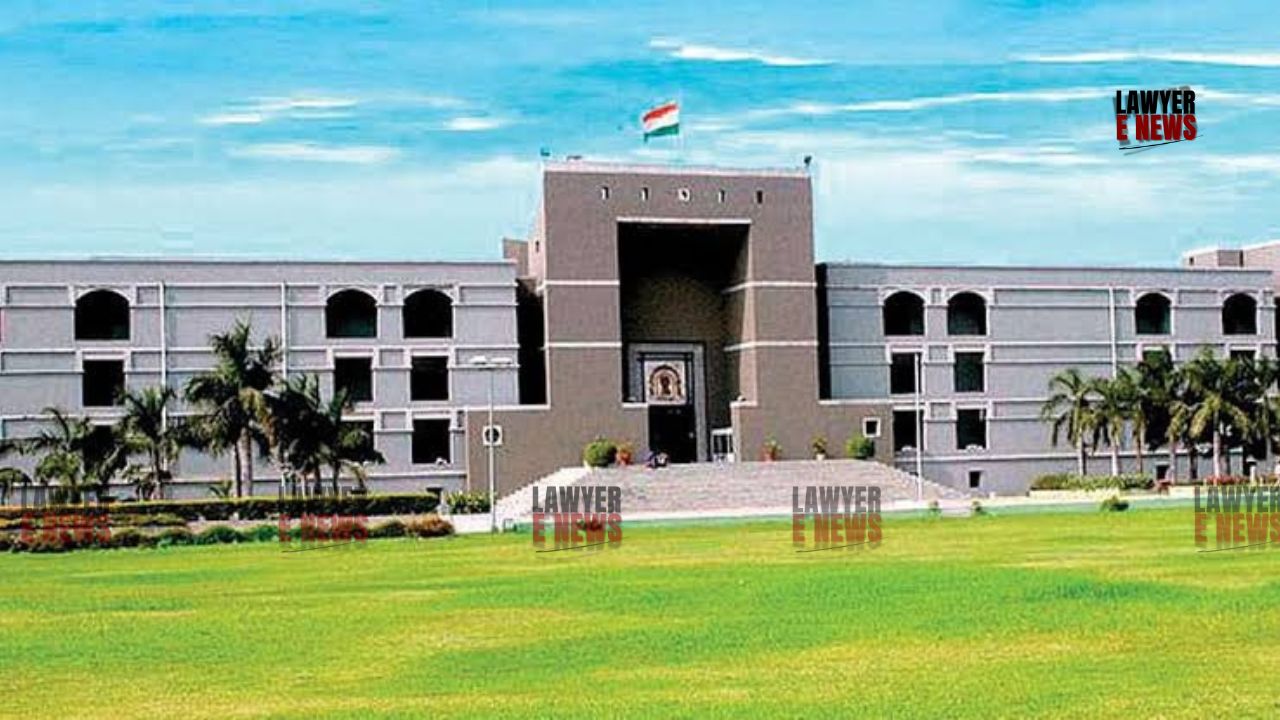
“Where Plaintiff Has Slept Over Rights, No Exceptional Circumstances Exist To Justify Ex-Parte Orders”, - Gujarat High Court declined to interfere with a trial court’s refusal to grant ex-parte interim injunctions and other urgent equitable reliefs sought by the plaintiff company against two ex-employees accused of divulging trade secrets. Justice Maulik J. Shelat held that the plaintiff’s delay of over a year in initiating legal proceedings after discovering the alleged breach “would be not appropriate to grant such ex-parte relief without hearing defendants.” The decision sets a significant precedent on the limits of equitable discretion, especially in commercial confidentiality disputes.
Kerry Ingredients filed a civil suit (Special Civil Suit No. 38 of 2025) before the Vadodara court against its former employees, who had joined as R&D and Quality Assurance Executives, alleging violation of confidentiality clauses after their resignation in August and September 2022. The plaintiff relied on forensic reports and internal emails suggesting the employees had transferred proprietary client lists, formulas, and trade data to their private emails, later used in a company linked to one defendant’s spouse.
Despite having this information by early 2023, the plaintiff initiated legal action only in February 2025. The trial court, citing the lack of exceptional urgency, refused to grant ex-parte injunctions or appoint a receiver and commissioner. Kerry Ingredients challenged these orders through Appeals from Orders Nos. 30 and 48 of 2025 and Special Civil Application No. 3631 of 2025.
The central legal question was whether the trial court’s refusal to grant ex-parte reliefs was erroneous or perverse, given the alleged misuse of confidential information.
Justice Shelat ruled emphatically: “The observation of the trial Court while refusing ex-parte injunction cannot be said to be perverse, erroneous or arbitrary… A view taken by the trial Court is a possible view which should not be disturbed by this Court in its appellate power.”
The Court emphasized that the plaintiff’s conduct—including its decision to not act on known breaches for over a year—undermined any claim of urgency or irreparable harm:
“When the plaintiff has waited for long time after getting response from defendants... it would be not appropriate to grant such ex-parte relief.”
Citing Morgan Stanley Mutual Fund v. Kartick Das (1994) and Mandali Ranganna v. T. Ramachandra (2008), the Court reaffirmed that:
“Ex-parte injunction could be granted only under exceptional circumstances... Delay, conduct of parties, and the timing of filing must weigh heavily in deciding such prayers.”
“Equity Demands Clean Hands and Prompt Action”
The High Court was particularly critical of the plaintiff’s selective urgency. After having accepted the defendants’ resignations and received their explanations via email in early 2023, Kerry Ingredients took no legal action until February 2025. The Court noted:
“Plaintiff was remained silent from February, 2023... till October, 2024 when engaged forensic investigation agency. It would be delayed action... and does not warrant ex-parte orders.”
Ex-Parte Appointment of Receiver, Commissioner, and Discovery Also Refused
Kerry Ingredients also sought urgent orders for appointment of a receiver and court commissioner to secure allegedly misused data. The High Court upheld the trial court’s refusal to grant such relief:
“It is not a case where the plaintiff was unaware of the facts... Merely alleging that evidence may be destroyed cannot justify such extraordinary relief without hearing the other side.”
On this point, the Court cited Wander Ltd. v. Antox India Pvt. Ltd. and held: “The appellate court should not flimsily, whimsically or lightly interfere... unless such exercise is palpably perverse.”
“Suit Filed Under Common Law, Not Trademark or IP Statutes—Hence, Principles of Equity Must Be Strictly Applied”
The Court observed that although Kerry Ingredients alleged breach of confidentiality, the suit was not one for trademark or copyright infringement under intellectual property law. Therefore, general equitable standards, rather than relaxed IP-specific standards, would apply:
“In the present case, suit is not filed for any infringement of trademark or its passing off… it is filed as a non-commercial suit under common law.”
The Court also distinguished the plaintiff’s reliance on Midas Hygiene Industries v. Sudhir Bhatia, noting that:
“That case dealt with infringement of trademark... whereas here the claim is based on employment terms and alleged misuse post-resignation.”
The Gujarat High Court’s ruling reaffirms that ex-parte interim reliefs are extraordinary remedies and not to be granted merely because trade secrets are allegedly involved. It placed particular emphasis on the equitable doctrine that delay and acquiescence weigh against urgent relief:
“Equitable reliefs are not automatic but discretionary remedies, particularly when delay and conduct of the party seeking relief are questionable.”
Accordingly, the Appeals from Orders and the Special Civil Application were dismissed, upholding the trial court's discretion.
Date of Decision: 4 April 2025