-
by sayum
28 August 2026 2:11 PM







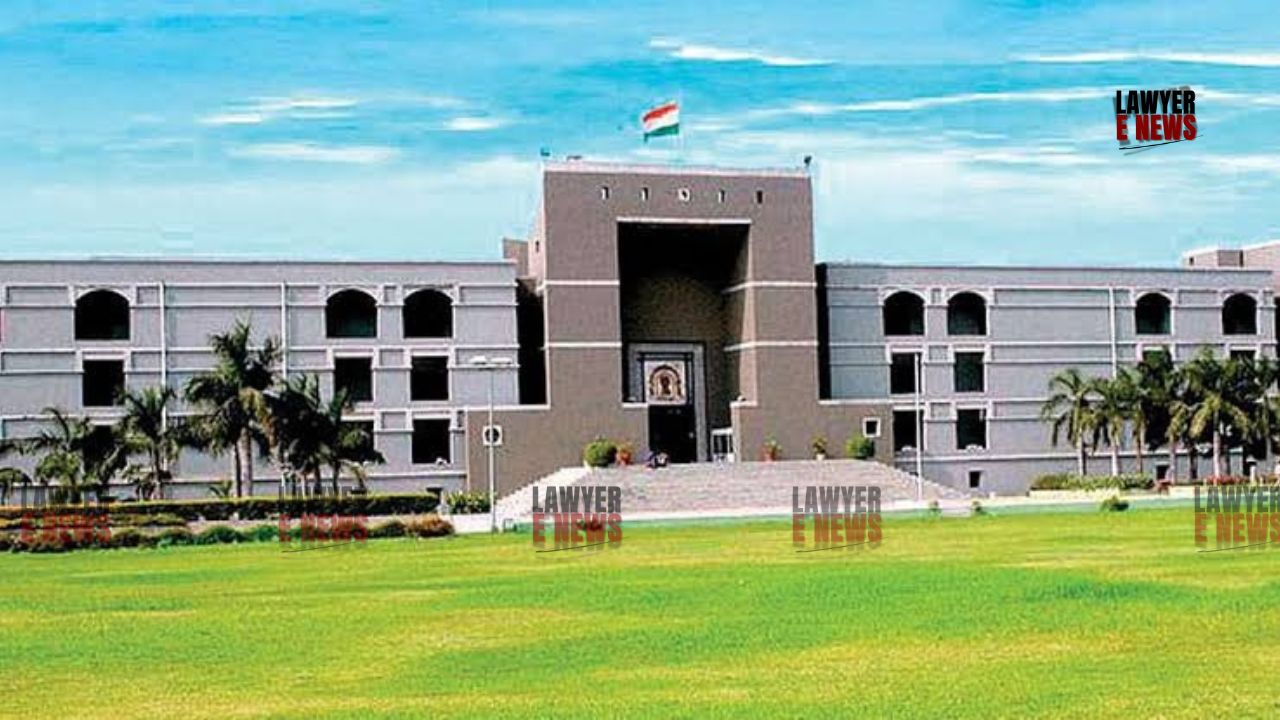
“Validity of Appeal Can’t Be Retrospectively Decided to Deny Settlement Benefits Under DTVSV Scheme”: High Court Quashes Rejection Order On 8 September 2025, the Gujarat High Court, in the landmark judgment of Neelaben Ghanshyambhai Parmar vs. The Principal Commissioner of Income Tax, delivered by Justice Bhargav D. Karia and Justice Pranav Trivedi, emphatically ruled that “a pending appeal on the specified date under the Direct Tax Vivad Se Vishwas Scheme, 2024 (DTVSV Scheme) cannot be declared ineligible for settlement merely because it was later held to be non-maintainable.”
The Court quashed the rejection of the petitioner’s declaration filed under the DTVSV Scheme and directed the Designated Authority to process her claim afresh in accordance with law.
This decision sets an important precedent in interpreting tax settlement schemes, emphasizing the intent of such schemes — “to end litigation, not to ignite fresh disputes on technicalities.”
"Pending Means Pending – Not Valid or Invalid Pending" – Scheme Meant for Settlement, Not Technical Rejection
The High Court held that eligibility under the DTVSV Scheme, 2024 depends solely on whether an appeal was pending on 22 July 2024, which is the “specified date” under Section 89(1)(n) of the Finance (No.2) Act, 2024.
Justice Bhargav D. Karia observed:
“Even if the appeal is held to be invalid or non-maintainable after 22.07.2024, it was pending as on the specified date. That alone is relevant under the scheme.”
The ruling emphasizes that the Designated Authority cannot sit in appeal over the maintainability or competence of a pending appeal, especially after the cutoff date, and reject the declaration merely on that basis.
Background: Taxpayer Penalized Despite Timely Appeal and Filing
Neelaben Ghanshyambhai Parmar, the petitioner, had filed a return for AY 2012–13. The assessment under Section 144 r/w Section 147 of the Income Tax Act resulted in an addition of ₹30,80,770. Aggrieved, she filed an appeal before the CIT (Appeals) along with a delay condonation application on 29 May 2023. This appeal was admittedly pending on 22 July 2024, the specified date under the DTVSV Scheme.
Despite this, her Form-1 declaration under Section 90(1) r/w Section 91(4) of the DTVSV Scheme was rejected on 11 April 2025, on the ground that her appeal was later declared “non-maintainable.”
Court Relies on CBDT FAQ and Precedents: "Appeal is Appeal, Even if Later Declared Invalid"
The Court heavily relied on FAQ No.36 issued by CBDT in Guidance Note No.2/2024, dated 16 December 2024, which clearly stated:
“Yes, such cases are eligible for settlement under the Scheme as appeal was pending as on 22.7.2024… the disputed tax will be calculated as if the appeal pending on 22.7.2024 is yet to be disposed of.”
The Court held:
“This clarification directly applies. The Designated Authority had no justification to reject the Form-1 declaration.”
Additionally, the Court cited the Supreme Court's reasoning in CIT v. Shatrusailya Digvijaysingh Jadeja and the Gujarat High Court decisions in Tushar Agro Chemicals v. PCIT and Atul Roshanlal Gupta v. PCIT, all holding that pendency of appeal is sufficient, regardless of its later treatment.
In Tushar Agro Chemicals, the Gujarat High Court had held:
“It was not for the respondent to decide whether such appeal was irregular or incompetent… What matters is whether it was filed and pending on the specified date.”
"Litigation Settlement Schemes Are Not Meant for Hyper-Technicalities" – High Court Protects Taxpayer Intent
Referring to the purpose behind such tax settlement schemes, the Court underlined:
“The DTVSV Scheme, like its predecessors, is a litigation resolution scheme – not a new battleground for procedural objections.”
It reiterated that the object of the scheme is to reduce litigation, ensure timely revenue to the government, and provide peace of mind to taxpayers. Thus, denying settlement based on post facto rejection of appeal defeats the very purpose of the scheme.
The Court held that the Designated Authority acted unlawfully by rejecting the declaration on the ground of appeal invalidity. Accordingly, it directed:
“The impugned communication dated 11.04.2025 rejecting the declaration is quashed. The Designated Authority is directed to process the declaration in Form-1 filed by the petitioner under the DTVSV Scheme, 2024 in accordance with the said Scheme.”
The petition was allowed, and Rule was made absolute.
Date of Decision: 8 September 2025