-
by sayum
28 August 2026 2:11 PM







“The decision by the subordinate forum merges in the decision by the superior forum and it is the latter which subsists, remains operative and is capable of enforcement in the eye of law”—Justice Alok Awasthi, MP High Court
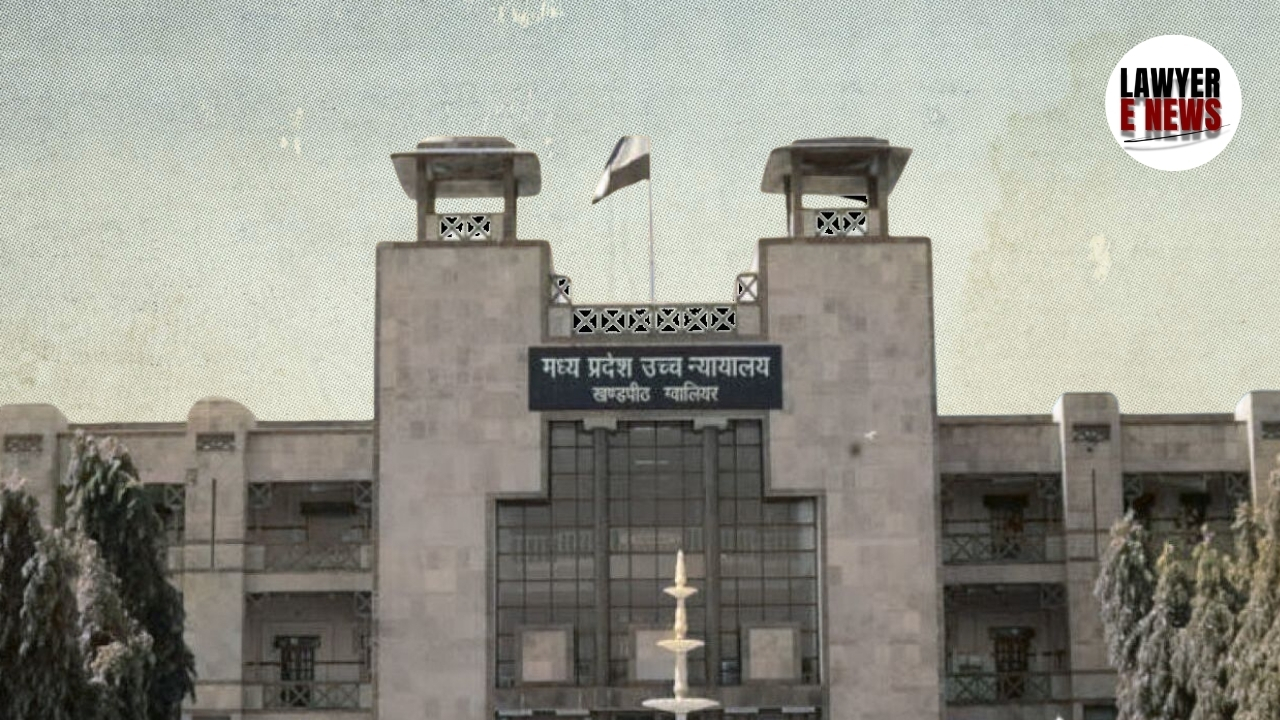
Madhya Pradesh High Court at Indore pronounced a pivotal judgment reaffirming that once an appellate authority modifies a consumer forum’s award, the doctrine of merger applies in full force. The Court held that interest on the enhanced compensation amount must relate back to the date of the original award, especially where the appellate body does not disturb the interest component.
The High Court also clarified that where no further appeal lies from a State Commission’s execution order, a petition under Article 227 is maintainable before the High Court.
The Genesis of the Dispute: Compensation for Deficiency in Housing Project
The litigation stemmed from a housing dispute dating back to 2012, when the complainants approached the District Consumer Disputes Redressal Commission-II (DCDRC-II), Indore. On 18.01.2017, the DCDRC awarded Rs. 4,05,000/-, comprising compensation for deficient construction and delay. The award included an interest rate of 18% per annum if not paid within two months.
The petitioners partially complied by paying Rs. 4,00,000/-, including some interest, through demand drafts.
However, the respondents appealed to the Madhya Pradesh State Consumer Disputes Redressal Commission (MPSCDRC), Bhopal under FA No. 232/2017. On 01.06.2023, the State Commission enhanced the compensation for reduced built-up area from Rs. 2,00,000/- to Rs. 2,96,310/-, stating that “the rest of the impugned order in regard to the interest and cost shall remain unaffected.”
This led to an execution proceeding by the respondents and a further round of litigation.
“The Doctrine of Merger Applies in Full: Enhanced Compensation Relates Back to the Original Order”
The petitioners challenged the retrospective application of 18% interest on the enhanced sum of Rs. 96,310, arguing that they were unaware of the appellate order until bailable warrants were issued. Their core grievance was that the interest calculation from 18.01.2017 was unjust, especially since the MPSCDRC had not explicitly imposed interest on the enhanced amount.
However, the Court squarely rejected this view by invoking the doctrine of merger, relying heavily on the judgment of the Supreme Court in Kunhayammed v. State of Kerala, (2000) 6 SCC 359. Justice Alok Awasthi observed:
“Where an appeal or revision is provided and the superior forum modifies the decision, the subordinate forum's decision merges with the superior forum’s ruling. The latter alone subsists and is capable of enforcement.”
Thus, the interest clause of the original DCDRC-II order automatically applied to the enhanced amount, as it formed part of the merged judgment.
“This Is Not Compound Interest—Only Statutory Simple Interest on Principal Is Being Applied”
The petitioners cited Suneja Towers (P) Ltd. v. Anita Merchant, 2023 SCC OnLine SC 443 to argue that compound interest is disapproved in consumer cases. But the Court distinguished the case by noting:
“In the present case, 'interest on interest' has not been taken. The respondents have only been held entitled to interest on the enhanced principal amount. Hence, compound interest is not involved.”
The Court also brushed aside the plea that 18% interest was excessive, noting that this was the statutory default applied in the original award and not arbitrary.
“Article 227 Jurisdiction Is Attractable—No Appeal or Revision Lies Against Execution Orders of State Commission”
A key preliminary issue was whether the petition under Article 227 was even maintainable. The respondents argued that statutory remedies under the Consumer Protection Act, 2019 were not exhausted. However, the Court clarified that in execution matters, no appeal or revision lies against the State Commission’s order, relying on a catena of Supreme Court decisions:
“Against an order passed by the State Commission in execution, no further appeal or revision shall lie”—Palm Groves Cooperative Housing Society Ltd. v. Magar Grime, 2025 LiveLaw (SC) 826
“Where the appellate order arises from execution, a writ under Article 227 is maintainable”—Ibrat Faizan v. Omaxe Build Home Pvt. Ltd., 2022 LiveLaw (SC) 481
The Court concluded that: “This Court is of the view that the present miscellaneous petition is maintainable.”
“Merely Because Appellate Forum Is Silent on Interest Does Not Mean Original Interest Terms Are Overridden”
The MPSCDRC order stated that the enhancement to Rs. 2,96,310 was allowed but the “rest of the impugned order in regard to the interest and cost shall remain unaffected.” The petitioners argued this was ambiguous and did not warrant retrospective interest.
However, the High Court clarified:
“Such a statement clearly reinforces the application of interest clause from the original award, which gets merged and becomes operative from the date of DCDRC-II’s order i.e., 18.01.2017.”
Thus, the claim for Rs. 1,11,238/- as interest on Rs. 96,310/- was held to be legally sound.
“Unjust Enrichment Argument Has No Merit—Consumer Forums Aim to Ensure Prompt Payment, Not Penalize”
The petitioners invoked the doctrine of unjust enrichment, stating that the consumers were being allowed to earn more in interest than the principal. The Court rejected this reasoning:
“The purpose of imposing high interest rate in the Consumer Commission is always with the intention to make the payee pay the principal amount as early as possible and not to make additional income to the consumer.”
The Court found no arbitrariness in the statutory imposition of 18% interest, especially when the petitioners themselves delayed compliance.
Justice Alok Awasthi concluded that the appealed and execution orders were sound, and the petition under Article 227 was devoid of merit. The Court held:
“The impugned order dated 09.11.2023 passed by MPSCDRC in AEA/23/34 and the order dated 03.10.2023 passed by DSCDRC in EA/30/2023 are just and proper and do not warrant any interference.”
Accordingly, the Miscellaneous Petition was dismissed.
Date of Decision: 19 September 2025