-
by sayum
28 August 2026 2:11 PM







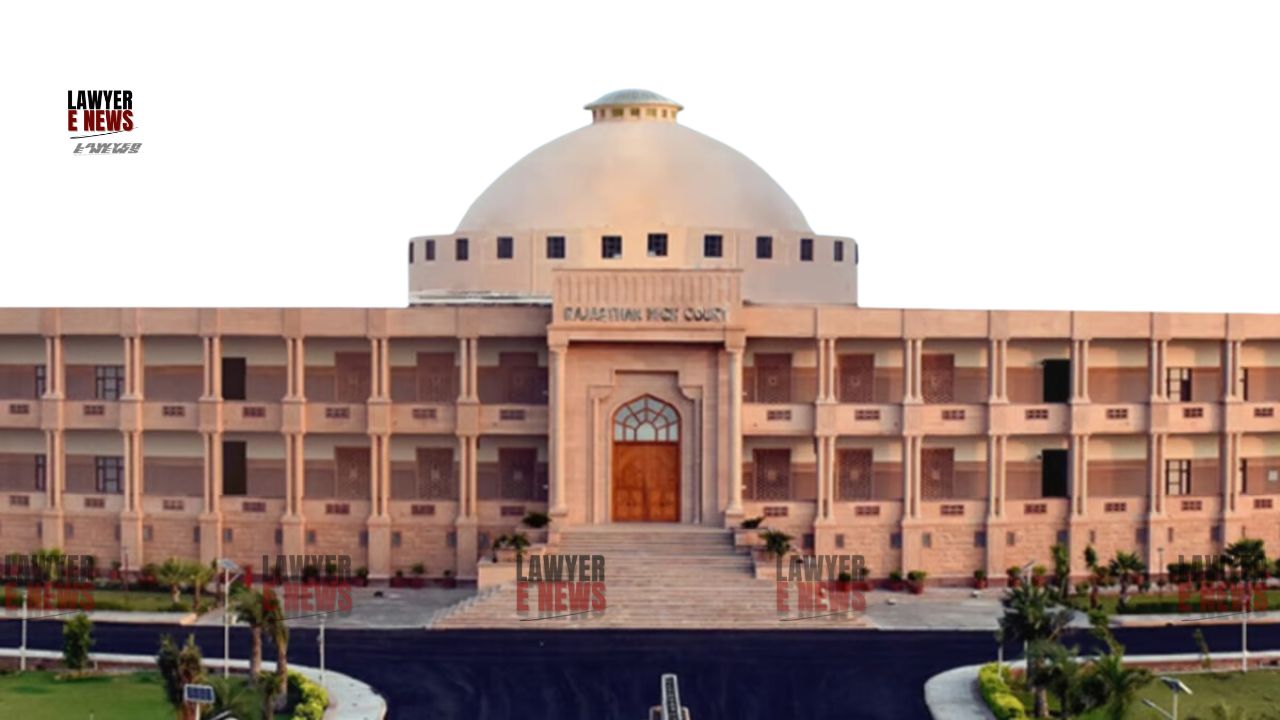
“Procedure Is the Handmaid, Not the Mistress, of Justice – Rules Must Advance, Not Defeat, Justice” - In a judgment reinforcing the foundational principles of judicial fairness and substantive justice, the Rajasthan High Court held that a Debt Recovery Tribunal (DRT) cannot dismiss a Securitisation Application (SA) under Section 17 of the SARFAESI Act on technical grounds after entertaining it for five years. The Court quashed the DRT’s order dated 12.08.2025, terming it as a clear defiance of fundamental principles of judicial procedure.
Justice Anoop Kumar Dhand ruled: “Once the petition submitted by the petitioners was entertained and an interim order was passed therein and the same was kept pending for a period of more than five years, the DRT instead of rejecting the application on technical counts should have decided the application on its merits.”
DRT Acted in Defiance of Judicial Procedure by Rejecting SA on Grounds of Non-Signing and Impleadment
The core issue before the High Court was the legality of the DRT's decision to reject the Securitisation Application solely on the following procedural grounds:
That not all applicants had signed the petition or the supporting affidavit, and
That all borrowers had not been impleaded as parties.
The High Court observed that these grounds were hyper-technical and unsustainable, particularly since the petition had been duly entertained, vakalatnamas had been filed by all borrowers, and interim orders had been in force for years.
The Court asked: “Is there any express rule mandating all borrowers to sign the petition or file separate affidavits when a common vakalatnama has been executed and the petition was entertained long ago?”
Finding no such mandate, the Court held: “Counsel for the respondents has failed to satisfy this Court whether it is mandatory for all the petitioners/applicants to sign the petition and submit individual affidavits… The rules of procedure are not to operate as tyrants.
Reliance on Supreme Court Precedent: Sathyanath v. Sarojmani and the Doctrine of Procedural Justice
The Court drew heavily from the Supreme Court’s ruling in Sathyanath & Anr. v. Sarojmani, (2022) 7 SCC 644, reiterating the well-established principle:
“All the rules of procedure are the handmaid of justice. The object of prescribing procedure is to advance the cause of justice… Processual law is not to be a tyrant but a servant, not an obstruction but an aid to justice.”
Quoting Kailash v. Nanhku and Sushil Kumar Sen v. State of Bihar, the High Court stressed:
“The humanist rule that procedure should be the handmaid, not the mistress, of legal justice compels consideration of vesting a residuary power in judges to act ex debito justitiae, where the tragic sequel otherwise would be wholly inequitable.”
Thus, the DRT’s rejection of the SA was held to be not only unjustified, but contrary to the very ethos of adjudicatory justice.
High Court’s Writ Jurisdiction Maintainable Despite Alternative Remedy under DRAT
Respondents argued that the petitioners should have approached the Debt Recovery Appellate Tribunal (DRAT) instead of invoking Article 226 of the Constitution.
However, the Court rejected this objection, relying on the Supreme Court’s decision in PHR Invent Educational Society v. UCO Bank, AIR 2024 SC 1894, which carved out exceptions to the rule of alternative remedy.
The High Court held: “In the present case, the DRT has acted in defiance of the fundamental principles of judicial process. Thus, the case falls within the exception carved out in PHR Invent, where interference under Article 226 is justified despite the availability of an alternative remedy.”
DRT’s Role Is to Ensure Substantive Justice — Not to Hide Behind Technicalities
The petitioners had originally filed the SA in 2020, challenging SARFAESI action by the respondent-financier, Laxmi India Finleasecap Pvt. Ltd. Though only one of the borrowers had signed the affidavit, all borrowers were represented through counsel, and vakalatnamas were on record.
The Court held: “Once the DRT had accepted the petition, passed interim orders, and kept it pending for more than five years, it could not suddenly reject it on hyper-technical grounds. Doing so defeats the very object of Section 17 of the SARFAESI Act, which exists to provide a substantive remedy to aggrieved borrowers.”
DRT’s Rejection Order Quashed — Matter Remanded for Merits Decision Within Two Months
Having found the DRT’s order unsustainable, the High Court quashed it, ordering:
“The impugned order dated 12.08.2025 passed by the DRT is not tenable and is hereby quashed and set aside. The matter is remitted to the DRT for its disposal on its merits.”
The Court also directed that: “The DRT would make all possible endeavours to decide the pending SA expeditiously, preferably within a period of two months from the date of receipt of certified copy of this order.”
Procedural Law Must Aid, Not Obstruct, Justice – Petitioners Entitled to Fair Hearing
This ruling underscores the judiciary’s consistent emphasis on substantive justice over procedural rigidity. The High Court reminded tribunals that rules of procedure must remain subordinate to the core objective of fair adjudication, especially when litigants have long relied on the court’s willingness to hear them.
As the Court summed up: “Justice is the goal of jurisprudence — processual, as much as substantive.”
Date of Decision: 27 August 2025