-
by sayum
28 August 2026 6:47 AM







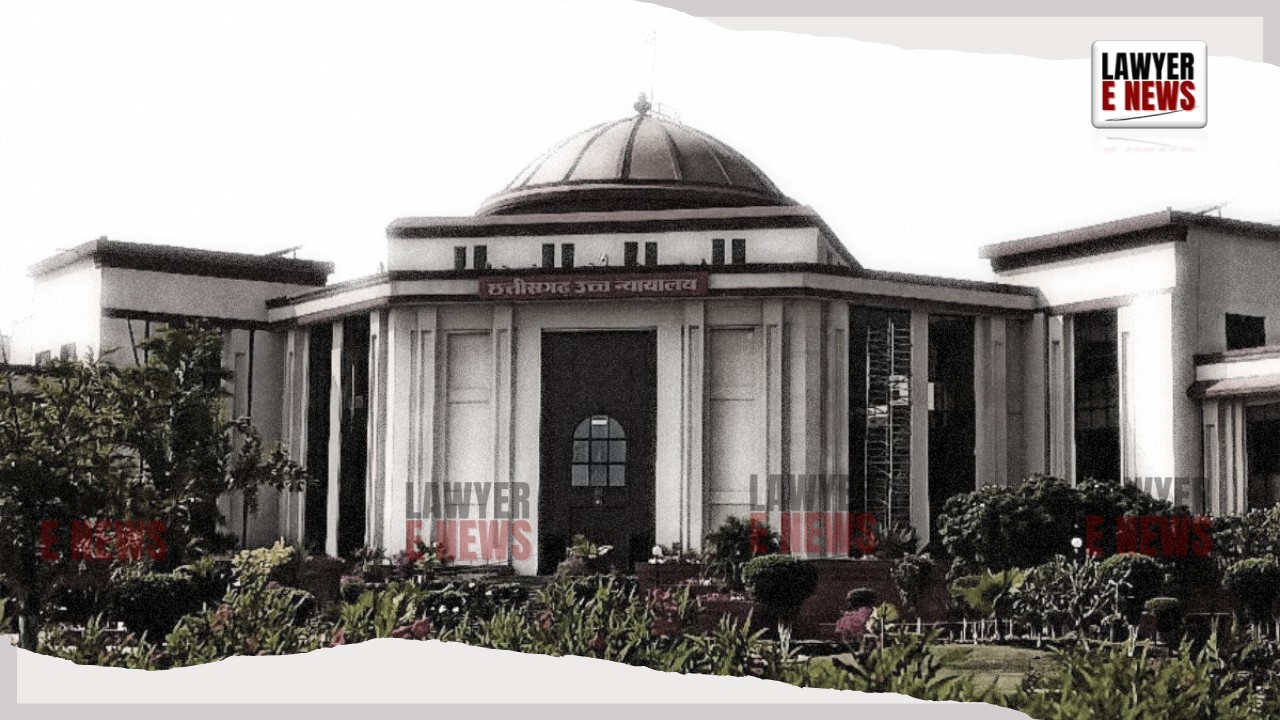
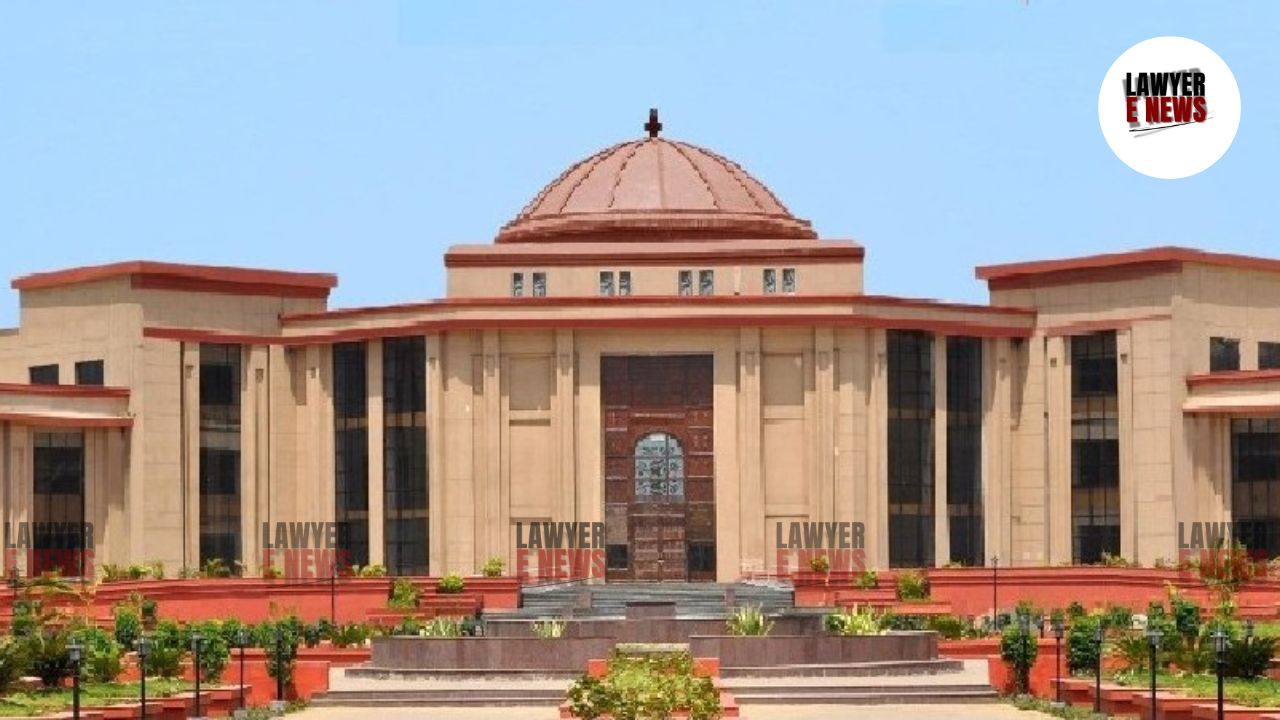
"The mere assertion that witnesses were unwilling to depose cannot, by itself, justify dispensing with a fullfledged enquiry, particularly when the punishment imposed is that of removal from service, which carries grave civil consequences." Chhattisgarh High Court, in a significant ruling, held that a government employee cannot be dismissed from service without a proper departmental enquiry merely on the assertion that witnesses are unwilling to depose.
A single-judge bench of Justice Amitendra Kishore Prasad observed that bypassing mandatory procedural safeguards on the ground that an enquiry is "not reasonably practicable" requires compelling objective material, failing which the imposition of a major penalty violates the principles of natural justice.
BACKGROUND OF THE CASE
The petitioners, serving as Constables in the 39th Battalion of the Central Reserve Police Force (CRPF), were dismissed from service in 2009 after being booked in a criminal case involving charges of rioting and attempt to murder. The disciplinary authority invoked extraordinary powers under Section 11 of the CRPF Act, 1949, read with Rule 27-CC(ii) of the CRPF Rules, 1955, to dispense with a regular departmental enquiry. Although a trial court convicted them for voluntarily causing hurt under Section 323 of the Indian Penal Code, 1860, the High Court subsequently acquitted them of all charges in 2014, prompting the present writ petitions after the CRPF rejected their representations for reinstatement.
LEGAL ISSUES
The primary question before the court was whether the disciplinary authority could legally dispense with a regular departmental enquiry merely based on a criminal FIR and an unproved assertion that witnesses were unwilling to testify. The court was also called upon to determine whether the subsequent acquittal of the employees entitled them to reinstatement, particularly when similarly situated co-delinquents had already been taken back into service.
COURT'S OBSERVATIONS
The court strongly criticized the mechanical affirmation of the dismissal orders by the appellate and revisional authorities. Noting that no witnesses were examined during the preliminary stage, the bench rejected the department's justification that witnesses were unwilling to come forward. The court emphasized that removal from service entails serious civil consequences and necessitates strict adherence to mandatory procedural safeguards, including the framing of definite charges, the supply of documents, and the right to cross-examine witnesses.
> "Unless such procedure is duly followed, imposition of a major penalty like removal from service, without holding a proper enquiry and without granting reasonable opportunity of hearing, cannot be sustained in the eyes of law."
Addressing the interplay between criminal trials and disciplinary action, the court acknowledged that departmental and criminal proceedings operate in distinct spheres. However, the bench noted that the initial dismissal was founded entirely on the criminal case registered against the petitioners under Sections 147, 148, 294, 506-B, and 307 of the IPC. Since the criminal conviction under Section 323 of the IPC was ultimately set aside by the High Court in a criminal appeal, and no independent departmental enquiry was ever conducted in accordance with the law, the foundational basis for the termination evaporated.
"Although departmental proceedings and criminal proceedings operate independently, once the criminal conviction itself does not survive and the departmental enquiry has not been conducted in accordance with law, the foundation of the impugned action becomes unsustainable."
Relying on a catena of judgments including the Supreme Court's rulings in Zuber Ahmed vs. The Union of India and Vijay Singh Bhadauriya vs. State of Madhya Pradesh, the bench reiterated that dispensing with a regular enquiry is an exceptional power. Relying further on Dwarka Prasad Kashyap vs. State of M.P. and Union of India vs. Parma Nand, the court ruled that the satisfaction of the disciplinary authority must be grounded in objective and compelling material, rather than mere ipse dixit or vague apprehensions, to bypass the audi alteram partem rule.
"The satisfaction recorded by the disciplinary authority that holding a regular enquiry was not reasonably practicable is not supported by any cogent or compelling material."
The bench took serious note of the discriminatory treatment meted out by the respondent authorities. The court observed that other co-delinquents who were similarly charged and subsequently acquitted in the same criminal proceedings had already been reinstated into the force. Denying identical relief to the present petitioners, who also secured a complete acquittal, was held to be manifestly arbitrary and violative of the constitutional guarantees enshrined under Articles 14 and 21 of the Constitution of India.
"Denial of similar treatment to the present petitioners, particularly when their conviction has also been set aside in appeal, results in manifest arbitrariness and discriminatory treatment."
While granting the relief of reinstatement, the court invoked the principle of "no work no pay" to balance the equities. The bench directed that the period of absence from the date of removal till reinstatement shall be counted for the purposes of continuity of service and retiral benefits, but explicitly denied the payment of monetary back wages due to the long duration the petitioners remained out of service.
"The period from the date of removal till reinstatement shall be treated for all other service benefits, including continuity of service and retiral benefits, but without monetary back wages."
CONCLUSION
The High Court allowed the writ petitions and quashed the orders of removal from service, along with the consequent appellate and revisional orders. The ruling reinforces the doctrine that extraordinary statutory powers cannot be used as a cloak to bypass the fundamental principles of natural justice, ensuring that government employees are not arbitrarily stripped of their livelihood.
Date of Decision: 24 March 2026