-
by sayum
03 October 2026 9:56 AM







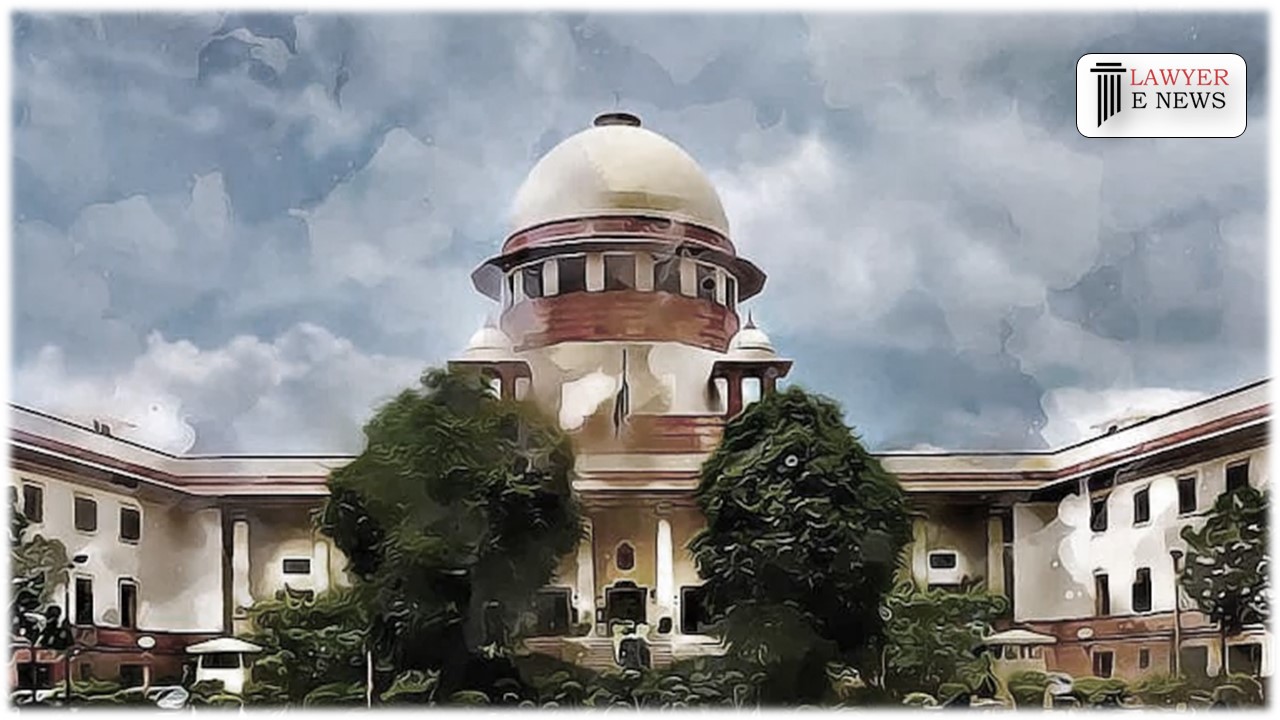
On 10 April 2023, Supreme Court upheld the dismissal from services of a Civil Judge in Case (THE REGISTRAR GENERAL, HIGH COURT OF KARNATAKA & ANR. Vs SRI M. NARASIMHA PRASAD) stated it is unacceptable for a judicial officer to deliver the concluding part of a judgment in open court before the entire text has been prepared or dictated. In the departmental enquiry, the respondent merely shifted the blame to an inexperienced and inefficient stenographer. The Court expressed concern that the High Court had completely ignored these serious charges in its judgment.
The Registrar General of the High Court of Karnataka appealed against decision made by a Division Bench of the High Court, which set aside a penalty of dismissal from service imposed on a Civil Judge (Junior Division) who was found guilty of gross misconduct. The respondent was suspended, and disciplinary proceedings were initiated against them. Enquiries were conducted for four charge memos, and separate reports were submitted. Some charges were proven, and others were not. The Full Court of the High Court imposed the penalty of dismissal from service based on the resolution. The respondent challenged the findings of the enquiry officer and the order of dismissal through writ petitions, which were dismissed. The respondent filed intra-court appeals, and the Division Bench allowed the appeals, setting aside the penalty and findings and directing that no further inquiry can be held against the respondent. The Registrar General of the High Court has appealed this decision.
The Supreme Court observed that some of the charges held against the respondent were related to judicial orders they passed, which the court decided to ignore. However, even without those charges, there were serious charges remaining, such as pronouncing the operative portion of a judgment in open court without the whole text of the judgment being ready. The Court emphasized that a judicial officer cannot do this, and that the respondent had merely passed the responsibility to their stenographer in the departmental enquiry. The Court found it concerning that the High Court had seemingly ignored these serious charges in its judgment.
The Supreme Court also observed that the Division Bench of the High Court had been unduly influenced by the respondent's allegations of animosity against a member of the local Bar and the Assistant Public Prosecutor. The Court noted that even if the charges were based on complaints from individuals with ill-will towards the respondent, this would not excuse the respondent's conduct in pronouncing the outcome of a case without preparing the judgment, which was a serious issue.
The Supreme Court noted that while some of the charges related to judicial pronouncements could not form the basis for departmental proceedings, the charges of gross negligence and callousness in not preparing or dictating judgments were completely unacceptable for a judicial officer. The Court found the respondent's defence of blaming the stenographer for the delay in preparing the judgment to be unacceptable and unsupported. The Court criticized the High Court's acceptance of this defence and blaming the administration for not examining the stenographer as a witness.
The Supreme Court noted that in considering a challenge to a penalty imposed on a judicial officer in disciplinary proceedings, the Court is obliged to consider established parameters such as whether the charges were proved, whether the inquiry officer's findings were reasonable and probable, whether the rules of procedure and principles of natural justice were followed, and whether the penalty was disproportionate. The Court criticized the High Court for not testing the correctness of the penalty on these parameters, and for recording findings that were curious and veiled attacks on the Full Court of the High Court. The Court found the High Court's certification of the respondent as an innocent and honest officer to be unfounded.
The Supreme Court noted that the High Court had incorrectly relied on a decision regarding the requirement of a second show cause notice and clarified the evolution of the law on the issue. The Court found that the Full Court of the High Court did not decide to impose the penalty of removal from service in advance, and therefore, the second show cause notices were not in violation of the principles of natural justice. The Court also criticized the High Court for creating a new jurisprudence by setting aside the order of penalty and quashing all inquiry reports without allowing for further inquiry. The Supreme Court allowed the appeal and upheld the order of dismissal from service.
THE REGISTRAR GENERAL, HIGH COURT OF KARNATAKA & ANR. Vs SRI M. NARASIMHA PRASAD