-
by sayum
28 August 2026 10:07 AM







“Since there is no quarrel with the fact that the petitioner was a child at the time of commission of the offence and the petitioner having been behind bars for more than 3 years, his liberty has been curtailed not in accordance with procedure established by law” – Supreme Court
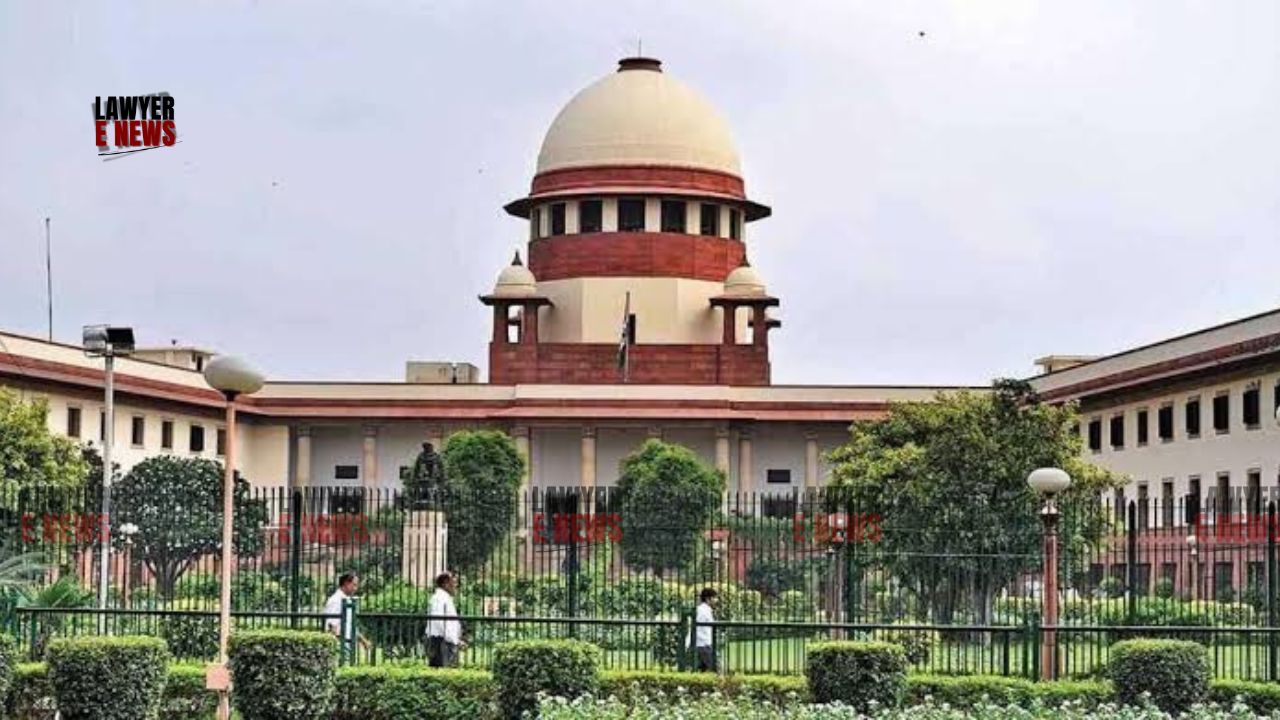
In a compelling invocation of constitutional and statutory protections for children in conflict with law, the Supreme Court on 9th October 2025 ordered the immediate release of a murder convict who was found to be a juvenile at the time of the offence committed in 1981. The two-judge Bench comprising Justice Dipankar Datta and Justice Augustine George Masih, in the case titled Hansraj v. State of Uttar Pradesh, held that the convict’s continued incarceration for over three years violated the Juvenile Justice (Care and Protection of Children) Act, 2000, and amounted to a “breach of the fundamental right to life and liberty under Article 21 of the Constitution.”
The Court allowed the writ petition filed under Article 32, noting that the convict, Hansraj, was only 12 years and 5 months old at the time of the alleged murder. While he had initially received protection under the Children’s Act, 1960, a complex series of appellate proceedings eventually culminated in his re-arrest in May 2022, following a Supreme Court judgment in 2009 that restored his conviction after the High Court had acquitted him. Despite being a juvenile, he had remained in custody for over 3 years and 10 months, in clear violation of Section 15(1)(g) of the JJ Act, 2000, which restricts detention of juveniles to a maximum of three years.
“Claim of Juvenility Can Be Raised at Any Stage – Even After Final Disposal”: Section 7-A of the JJ Act Applies Retrospectively, Reaffirms Court
“The proviso to Section 7-A makes it abundantly clear that a claim of juvenility may be raised before any court and it shall be recognised at any stage, even after final disposal of the case,” the Court observed. Relying on the landmark precedent of Pratap Singh v. State of Jharkhand (2005) 3 SCC 551, and its subsequent application in Dharambir v. State (NCT of Delhi) and Hari Ram v. State of Rajasthan, the Court reiterated that the JJ Act, 2000, has retrospective application and is applicable even to offences committed prior to its enactment, so long as the accused was below 18 years of age at the time of offence.
The Court noted that the factual claim of juvenility in this case was uncontested. “The petitioner’s date of birth and his age as on the date of the offence are not disputed by the respondent and, thus, no enquiry is needed to ascertain his age.” Therefore, in light of Section 7-A, the Court held that the claim of juvenility was valid and attracted statutory protection under the JJ Act, 2000.
The Bench further remarked, “In the present case, no such determination is at all required since the petitioner stands on firmer footing,” distinguishing this case from others where factual inquiries into age were necessary.
Joint Trial of Juvenile and Adults Violated Section 24 of the Children’s Act, 1960 – “Legislative Safeguards Were Ignored by the Trial Court”
The Court expressed its disapproval over the conduct of the trial court in holding a joint trial of Hansraj with adult co-accused, in breach of Section 24 of the Children’s Act, 1960, which strictly prohibits such proceedings. “We have also not been shown by [State counsel] why provisions contained in Section 24 of the 1960 Act – prohibiting joint trial of a child with a person who is not a child – was observed in the breach.”
Referring to the purpose behind the 1960 Act and the later Juvenile Justice framework, the Court emphasized that children must be tried in separate proceedings, and not subjected to criminal trials designed for adult offenders. The original conviction had been handed down by invoking Section 149 IPC, without any specific role attributed to the juvenile, which further underscored the disproportionate nature of his prolonged custody.
“Liberty Has Been Curtailed Not in Accordance With Procedure Established by Law” – Incarceration of Juvenile Offender Held Unconstitutional
The Bench drew a direct link between the petitioner’s overextended detention and the right to personal liberty under Article 21, holding that such custody lacked the backing of lawful procedure.
“Since there is no quarrel with the fact that the petitioner was a child at the time of commission of the offence and the petitioner having been behind bars for more than 3 years, his liberty has been curtailed not in accordance with procedure established by law,” the judgment stated. The Court termed the extended detention “clearly in breach of the petitioner’s right to life protected by Article 21.”
Highlighting the reformative rather than retributive intent of juvenile law, the Court also rejected the State’s argument that the heinous nature of the crime should deny the petitioner any relief. “Culpability being writ large,” the State argued, claiming that murder attracts a minimum life sentence. But the Court emphasized that juvenile justice prioritizes rehabilitation, and noted that the maximum prescribed detention is only three years, regardless of the crime.
Supreme Court Directs Immediate Release Without Waiting for Certified Copy
Acting on its findings, the Court passed unequivocal directions: “There shall be an order in terms of prayer (a) of the writ petition. The petitioner shall be immediately released, if not wanted in any other case.”
To expedite compliance, the Bench directed the Senior Superintendent, Central Jail, Varanasi, to act on the basis of a downloaded copy of the judgment. “There is no need to insist on a certified copy,” it said, recognizing the urgency of restoring the petitioner’s liberty.
Judgment Reinforces India’s Commitment to the Principles of Juvenile Justice
This ruling by the Supreme Court once again underscores that juvenility is not a temporary label, and the statutory and constitutional protections guaranteed to children must be upheld, regardless of the time elapsed. The case of Hansraj presents a compelling reminder that procedural fairness and individual liberty do not expire with the passage of decades, particularly where a child’s rights are concerned.
By invoking the retrospective scope of the JJ Act, 2000, and ordering the immediate release of a juvenile detained beyond permissible limits, the Court has signalled its firm commitment to the transformative ideals underlying India’s juvenile justice system.
Date of Decision: 9 October 2025