-
by sayum
28 August 2026 2:11 PM







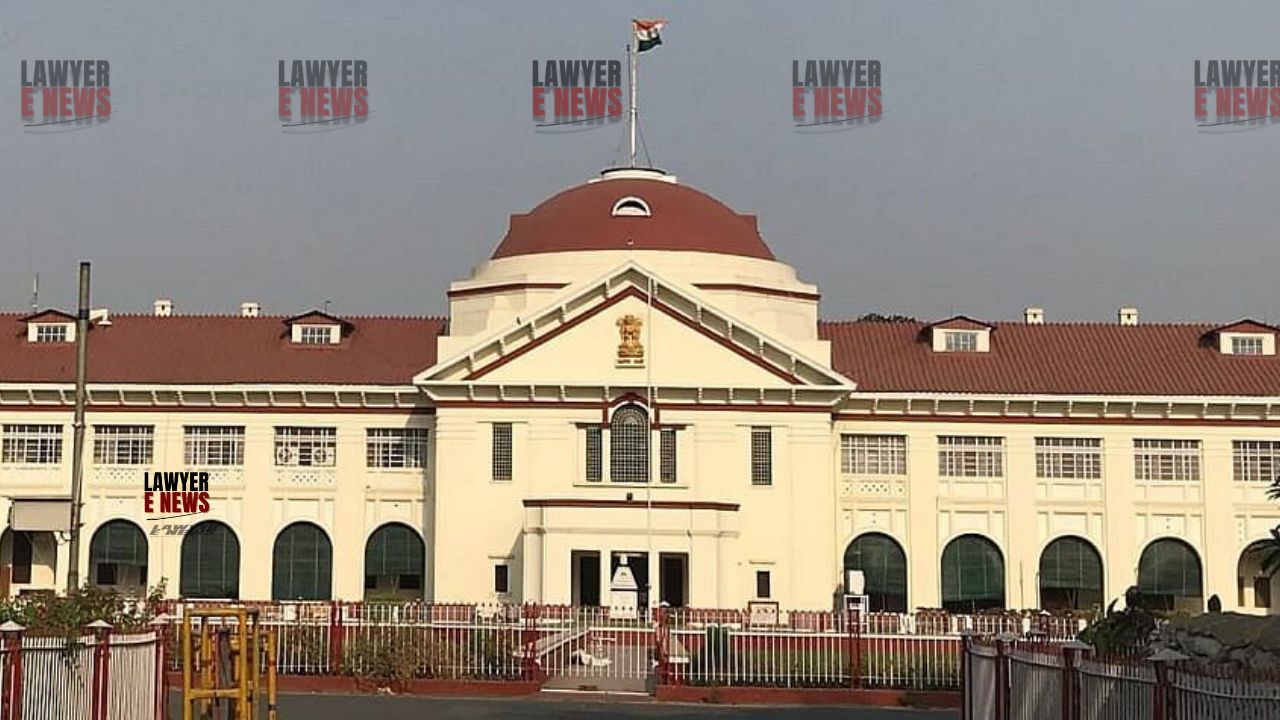
“If divorce is not granted, it will not serve the sanctity of marriage. The matrimonial bond is virtually beyond repair.” — Patna High Court set aside the dismissal of a divorce petition filed by a woman who had alleged persistent cruelty and desertion by her husband. The Family Court’s refusal to grant a decree of divorce was found unsustainable in light of compelling evidence of emotional, financial, and physical abuse, as well as irretrievable breakdown of the marital bond.
The Division Bench comprising Acting Chief Justice P. B. Bajanthri and Justice S. B. P. Singh declared that “there is long separation between the parties and the matrimonial bond is virtually beyond repair,” and that continuing such a relationship would only “show scant regard for the feelings and emotions of the parties.”
“Cruelty is Not to Be Judged by the Standards of an Ideal Spouse, But By the Anguish of the One Who Suffers It”
In a firm rebuke to the lower court’s narrow interpretation of cruelty, the High Court underscored that the legal threshold for cruelty is based on how it affects the aggrieved party. Citing the Supreme Court’s ruling in Narayan Ganesh Dastane v. Sucheta Dastane, the Court reiterated, “The question is not whether the conduct would be cruel to a reasonable person, but whether it would have that effect upon the aggrieved spouse.”
The appellant, Soma Raha, had approached the Family Court seeking dissolution of her marriage on grounds of cruelty and desertion. The Family Court, however, dismissed the petition on 11 September 2018, prompting this appeal. After examining the record, the High Court concluded that the Family Court had failed to consider the true nature of the matrimonial cruelty alleged.
The Marriage That Collapsed Under the Weight of Greed, Assault, and Silence
The parties were married on 23 April 2000 under the Special Marriage Act. A daughter was born from the wedlock. But behind this union lay a story of sustained abuse and betrayal. The appellant stated that her husband, soon after the marriage, began making demands for dowry, misappropriated her jewellery under the pretext of depositing it in a bank locker, and continuously pressured her to seek money from her father.
Her testimony described a gradual escalation in cruelty, both emotional and physical. According to the appellant, “On 08.03.2013, I was beaten badly with an intention to kill and locked in a room. From 10.03.2013, the respondent has completely deserted me.”
Despite these allegations, and the failure of the respondent to provide any evidence or witness, the Family Court dismissed her suit, finding no sufficient proof of cruelty. The High Court, however, took a different view entirely.
“A Marriage Cannot Be Reduced to a Tool of Misery”: High Court Finds Both Cruelty and Desertion Proven
While examining the evidence of cruelty, the Court referred to the landmark decision in Samar Ghosh v. Jaya Ghosh, where the Supreme Court observed that “sustained unjustifiable conduct affecting physical and mental health of the other spouse” amounts to cruelty. The Court in this case held, “The treatment complained of and the resultant danger or apprehension must be very grave, substantial and weighty.”
The Court noted that the appellant had not only testified to being emotionally tortured but had also suffered physical assault that ultimately forced her to leave her matrimonial home. Her father’s testimony corroborated her version.
Referring again to the ratio in Samar Ghosh, the Court emphasized: “Mental cruelty is a state of mind. The feeling of deep anguish, disappointment, frustration in one spouse caused by the conduct of the other for a long time may lead to mental cruelty.”
As to desertion, the Court pointed out that the husband had made no real attempt to resume cohabitation, nor did he appear before the court to contest the appeal, despite repeated notices. The High Court remarked, “The factum of separation and the intention to bring cohabitation to a permanent end goes to establish that the respondent has deserted the appellant continuously for a period of more than two years.”
“By Refusing to Sever the Legal Tie, the Law Would Perpetuate Misery”
The judgment observed that the parties had been living separately since March 2013, and that the husband's last-ditch attempt to file a restitution petition in 2016 was itself abandoned by him and dismissed in 2022 due to his non-appearance. The Court concluded that the marriage had become a mere legal formality with no emotional or physical foundation remaining.
Referring again to the Supreme Court, the Bench quoted: “Where there has been a long period of continuous separation, it may fairly be concluded that the matrimonial bond is beyond repair. The marriage becomes a fiction though supported by a legal tie.”
In a scathing criticism of the respondent’s conduct, the Court noted, “He was granted many opportunities to appear and contest his case, but chose not to. This clearly suggests that he is no more interested to pursue the case.”
Marriage Dissolved, Legal Closure Granted
Allowing the appeal and granting the decree of divorce, the Court ruled:
“Accordingly, the judgment and decree dated 11.09.2018 passed by learned Principal Judge, Family Court, Purnea in Matrimonial Case No. 93 of 2014 is hereby set aside and the marriage between the appellant-wife and respondent-husband is hereby dissolved by a decree of divorce.”
The Court clarified that the appellant-wife had limited her prayer to divorce only, and was free to approach the appropriate forum if she wished to seek permanent alimony in the future.
Date of Decision: 18 September 2025