-
by sayum
04 August 2026 1:39 PM







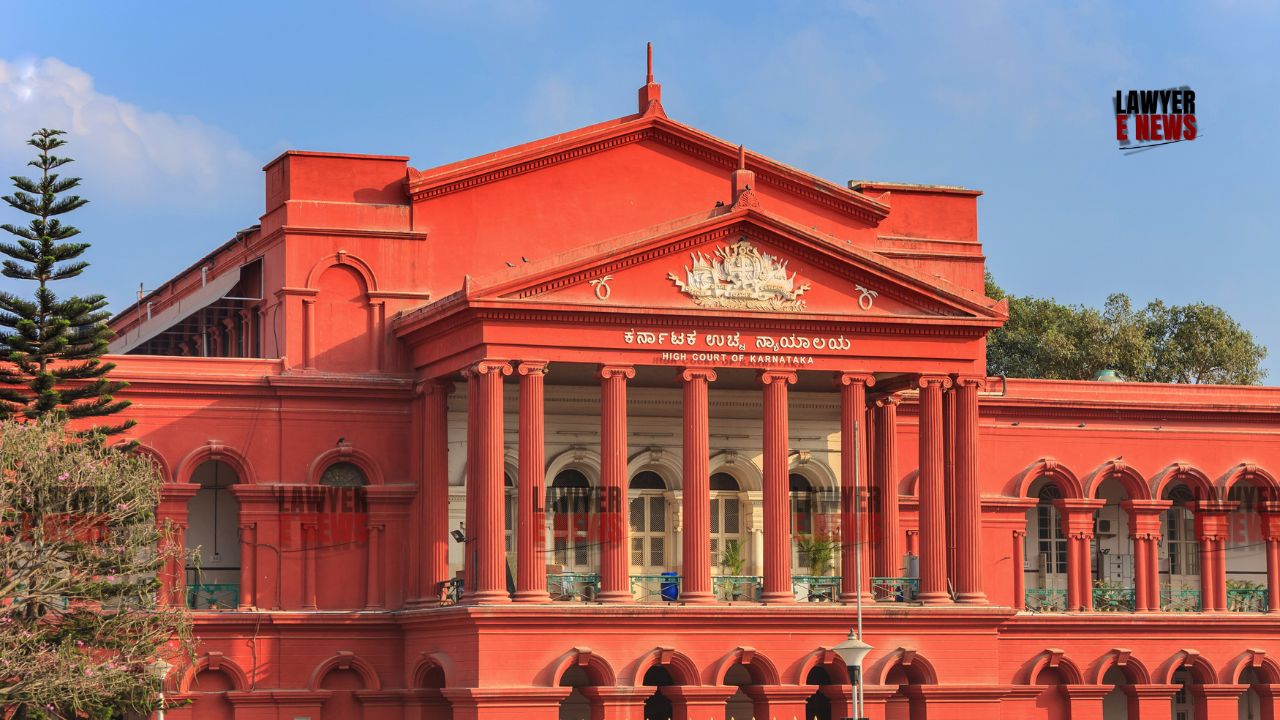
“Appellate Authority Must Holistically Examine Allegations and Extraneous Pressure Before Confirming School Closure”— Karnataka High Court granted interim protection to a 30-year-old English-medium school whose recognition was withdrawn by the education authorities citing misrepresentation and land title issues.
Justice B.M. Shyam Prasad held that while the petitioner has a statutory appellate remedy under Section 130 of the Karnataka Education Act, 1983, considering the school's long-standing operation, enrollment of over 1,500 students, and absence of educational non-compliance, the cancellation order must be stayed pending appeal. The Court disposed of the writ petition, permitting the petitioner to file an appeal within four weeks, and stayed the cancellation order dated 30.05.2025 until it is reviewed by the Appellate Authority.
The petitioner, Al Jamia Mohamadiyah Education Society, a Maharashtra-registered society, has been running an English-medium school in Bengaluru from Classes I to X. The institution's recognition had been renewed for the period 2023–2028, but was suddenly cancelled via order dated 30.05.2025 by the Deputy Director of Public Instruction (DDPI), invoking Sections 34 and 39(1)(c) of the Karnataka Education Act, 1983.
The show cause notice alleged that the institution had misled the public and the department and raised concerns about its legal ownership of the land. The school responded to the notice, but the recognition was withdrawn nonetheless.
“Civil Dispute Over Property Cannot Alone Justify Shutting Down a Functioning School”—Court Emphasizes Context
The petitioner alleged that the land dispute was being manipulated by rival claimants who had:
Filed a collusive civil suit and obtained a judgment, which the petitioner is challenging in a separate suit.
Previously filed a writ petition (W.P. No. 30975/2024) seeking directions to the authorities, which was dismissed on 06.02.2025 as the complainants had no enforceable legal right.
Allegedly pressured educational authorities through linguistic and cultural associations.
Justice B.M. Shyam Prasad remarked: “The Appellate Authority will have to examine, amongst others, whether indeed it could be said that the petitioner has no interest in the property where the School building is situated when a civil dispute is pending consideration.” (Para 9)
He further noted the seriousness of allegations of coercion upon the DDPI and emphasized that extraneous considerations must not affect statutory decision-making.
“Discrepancies in Records are Typographical, Not Grounds for Withdrawal”—Court Notes Bona Fide Errors
The third respondent’s cancellation order referred to alleged discrepancies in the petitioner’s documentation, including misstatements of identity and address. The petitioner’s counsel, Sri V.B. Shivakumar, explained these were typographical errors and not attempts to deceive.
The Court did not delve into the factual correctness of these claims but underscored that such matters must be examined in appellate proceedings, not by immediate administrative fiat that disrupts education:
“The consequence of withdrawal of recognition is an extreme action especially when… the petitioner's school is functioning for over decades… and there are no allegations insofar as compliance with curriculum or infrastructure.” (Para 8)
“Statutory Appeal Is Available—But Interim Protection Necessary to Avoid Irreparable Harm”
The Court acknowledged that the petitioner had an alternative remedy under Section 130 of the Karnataka Education Act, but emphasized the need for interim protection:
“This Court is of the opinion that the petitioner's school cannot be shut down exposing the students to uncertainty unless a very strong case is established.” (Para 9)
Accordingly, the Court issued a three-part order:
ORDER
[A] The writ petition was disposed of, reserving liberty to the petitioner to file an appeal within four weeks under Section 130 of the Karnataka Education Act.
[B] The operation of the cancellation order dated 30.05.2025 is stayed, subject to the petitioner availing appellate remedy.
[C] The stay will continue until disposal of the appeal, unless modified by a reasoned order of the Appellate Authority.
“All questions must be thoroughly examined by the Appellate Authority… so that such decision dispels all apprehension of extraneous considerations.” (Para 9)
This judgment reinforces the principle of proportionality in administrative action under educational law. The Karnataka High Court emphasized that school closures affecting thousands of students must not be based on technical or unsubstantiated grounds, particularly when alternative remedies exist and civil disputes remain unresolved. The order protects the continuity of education while respecting the statutory framework for redressal.
Date of Decision: June 3, 2025