-
by sayum
28 August 2026 2:11 PM







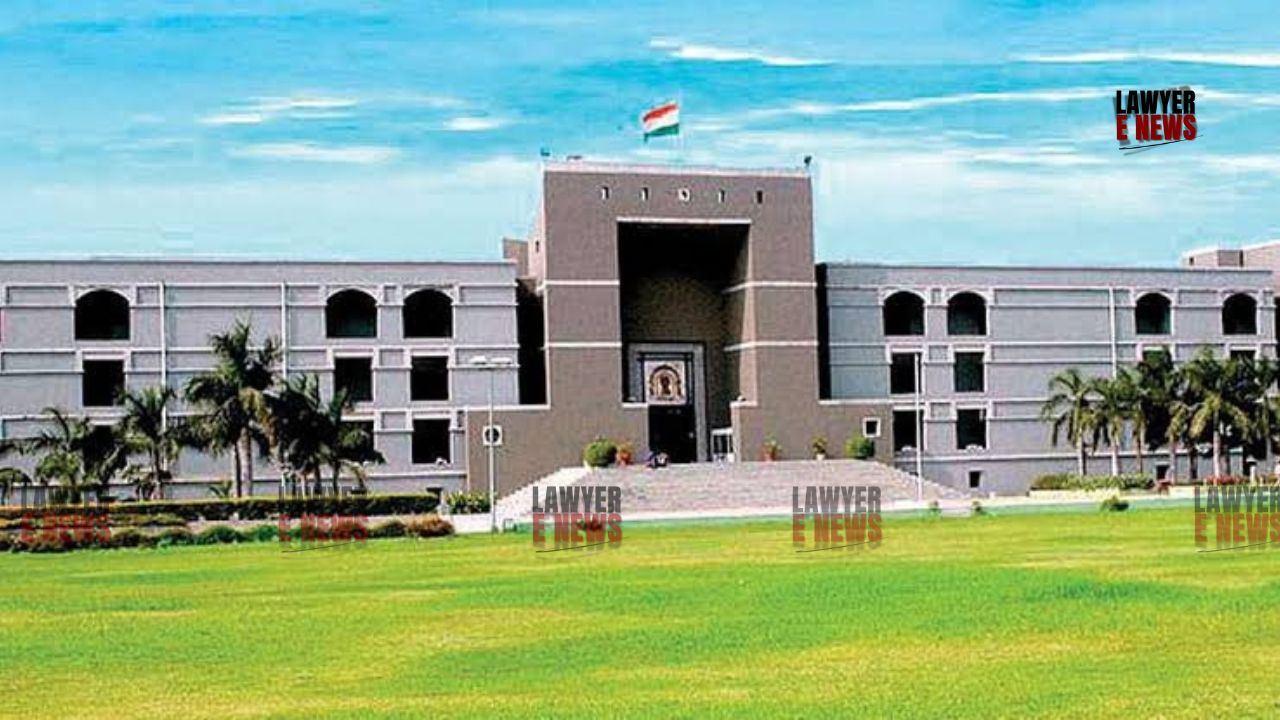
"Complaint itself is not maintainable as cleanser is not fallen under the definition of the Act more particularly Section 3(b) and, therefore, section itself is not attracted then the whole prosecution case is based on such foundation is cut from the route, " Gujarat High Court, in a significant ruling, held that a product classified as a 'cleanser' does not fall under the definition of a 'drug' as per Section 3(b) of the Drugs and Cosmetics Act, 1940.
A bench of Justice Hemant M. Prachchhak observed that when a substance is not a 'drug', the very foundation of a prosecution for selling sub-standard medicines is extinguished. The Court made these observations while dismissing the State’s appeal against a 2008 acquittal order.
The case originated in June 1986 when a Drug Inspector visited the premises of Alpesh Chemicals and Amar Trading Corporation in Vadodara. Samples of a specific medicine/chemical were purchased and sent for analysis, where the government analyst opined that the sample was sub-standard. A complaint was subsequently filed in 1987 under Sections 18(i)(a), 18(c), and 27 of the Drugs and Cosmetics Act. However, in June 2008, the Chief Judicial Magistrate, Vadodara, acquitted the accused, leading the State to prefer the present appeal.
The primary question before the court was whether the 'cleanser' seized by the authorities fell within the statutory definition of a 'drug' under Section 3(b) of the Drugs and Cosmetics Act. The court was also called upon to determine the validity of the sampling procedure and whether the appellate court should interfere with a long-standing order of acquittal where two views are possible.
Product Outside The Ambit Of Drugs And Cosmetics Act
The High Court noted that the chemical seized by the authorities did not fall under the definition of Section 3(2) or Section 3(b) of the Act. The bench observed that the prosecution failed at the very threshold because the substance in question—a cleanser—was not legally a drug. Justice Prachchhak emphasized that the entire case was built on a flawed foundation.
"It appears that the chemical which was seized by the concerned authority is not fallen under Section 3(2) of the Act and, therefore, the complaint itself is not maintainable as cleanser is not fallen under the definition of the Act... the whole prosecution case is based on such foundation is cut from the route."
Procedural Lapses In Collection Of Samples
The Court further pointed out significant procedural irregularities committed by the Drug Inspector during the investigation. It was noted that the authorized officer failed to follow the prescribed procedures under the Act and Rules for collecting samples. Specifically, the prosecution failed to secure the support of independent panch witnesses during the raid.
Prosecution Fails To Examine Panch Witnesses
The bench highlighted that the panch witnesses, though having identified their signatures on the panchnama, eventually turned hostile. The Court held that the trial court was justified in disbelieving the prosecution’s version when the mandatory procedure of sampling in the presence of independent witnesses was not effectively proven.
Non-Joinder Of Manufacturer As An Accused
Another critical lacuna identified by the Court was the failure to prosecute the actual manufacturer. The record indicated that the respondent had purchased the chemical from 'Shree Chemical Industries, Vadodara'. Despite finding relevant material during the investigation, the manufacturer was never joined as an accused in the case.
"The respondent No.4 had purchased the said chemical from one Shree Chemical Industries, Vadodara being a manufacturer, who has not been joined as an accused in the present case though relevant material was found during the course of the investigation."
Double Presumption Of Innocence In Acquittal Appeals
Regarding the scope of appellate interference, the Court reiterated the principles laid down by the Supreme Court in Chandrappa vs. State of Karnataka and Ramesh vs. State of Karnataka. The bench noted that an order of acquittal reinforces the presumption of innocence. Unless the trial court's view is "perverse" or "vitiated by manifest illegality," the High Court should not substitute its own view even if a second conclusion is possible.
High Court Relies On Apex Court Precedents
Citing Rajendra Prasad v. State of Bihar, the Court observed that the High Court must find it "well-nigh impossible" to sustain the trial court's reasoning before reversing an acquittal. In the present case, the High Court found the trial court’s judgment to be a "cogent and well-considered" one that rightly gave the benefit of doubt to the accused.
"Merely because two views are possible, the Court of appeal would not take the view which would upset the judgment delivered by the Court below... the accused having secured his acquittal, the presumption of their innocence is further reinforced, reaffirmed and strengthened by the trial Court."
The High Court concluded that the prosecution had "miserably failed" to prove the charges beyond a reasonable doubt. Finding no illegality or irregularity in the trial court's decision, the Court dismissed the State's appeal and confirmed the acquittal. The bail bonds of the respondents were ordered to be cancelled.
Date of Decision: 10 June 2026