-
by sayum
28 August 2026 6:47 AM







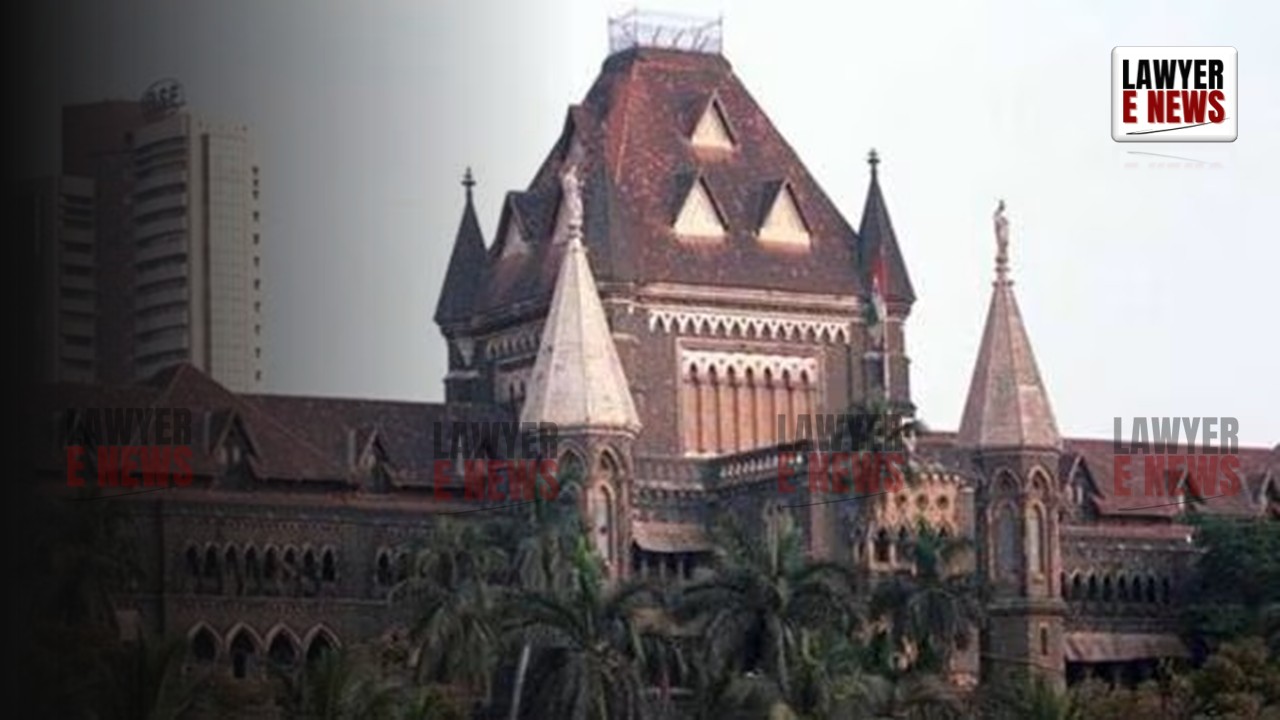
"It is a statutory Form identified by distinct identification number disbursed by the Returning Officer himself to each candidate... Hence, there is no case made out whatsoever to allege that non-reproduction of Note-1 to Note-5 as disclaimer in the Form is attributable to the candidate." – Bombay High Court
Bombay High Court, in a significant ruling, held that an election petition must contain a concise statement of material facts, and a returned candidate cannot be accused of corrupt practices merely for submitting a statutory pre-printed Form-26 affidavit that omitted certain disclaimer notes. A bench of Justice Milind N. Jadhav observed that since the affidavit format is disbursed by the Returning Officer, any omission in its printed contents is not attributable to the candidate and does not constitute a corrupt practice under the Representation of the People Act, 1951.
The petitioner, Sunil (Bhau) Chandrakant Bhusara, challenged the election of the returned candidate, Harishchandra Sakharam Bhoye, from the 129-Vikramgad (S.T.) Assembly Constituency in the Maharashtra General Election 2024. The petitioner alleged that the returned candidate committed corrupt practices by filing an incomplete nomination affidavit lacking mandatory disclaimers, and claimed that the candidate was ineligible to contest as he was a government servant. The returned candidate subsequently filed an application under Order VII Rule 11 of the Code of Civil Procedure, seeking dismissal of the election petition at the threshold for failing to disclose a complete cause of action.
The primary question before the court was whether the non-reproduction of certain disclaimer notes in the statutory Form-26 affidavit amounts to a corrupt practice that materially affects an election result. The court was also called upon to determine whether the election petition disclosed a complete cause of action under Section 83(1)(a) of the Representation of the People Act, and whether a headmaster of a state-aided Ashram school qualifies as a government servant barred from contesting elections.
Delving into the strict pleading requirements of election law, the court emphasized that Section 83(1)(a) of the Representation of the People Act (RP Act) mandates an election petition to contain a concise statement of material facts. The bench noted that the present petition was replete with vague and generic allegations devoid of the specific details required to prove that the returned candidate committed corrupt practices. Relying on Supreme Court precedents such as Kanimozhi Karunanidhi v. A. Santhana Kumar and Karim Uddin Barbhuiya v. Aminul Haque Laskar, the court reiterated that a failure to plead even a single material fact renders the cause of action incomplete, warranting rejection under Order VII Rule 11 of the Code of Civil Procedure. "Omission of even a single material fact would lead to incomplete cause of action and statement of Plaint would be bad."
Addressing the principal allegation that the returned candidate filed an improper Form-26 affidavit by failing to reproduce disclaimer Notes 1 to 5, the court found the argument fundamentally flawed. The bench observed that the affidavit was not downloaded or created by the candidate, but was a statutory, pre-printed form bearing a distinct identification number supplied directly by the Returning Officer. Consequently, the court held that the omission of the printed disclaimers could not be attributed to the candidate, nor could it be equated to a corrupt practice under Sections 100 or 123(4) of the RP Act. "It is a statutory Form identified by distinct identification number disbursed by the Returning Officer himself to each candidate on behalf of the Election Commission of India when applied for."
The court also rejected the petitioner's contention that the returned candidate was ineligible to contest because he was employed as a headmaster in a state-aided school, supposedly violating the Maharashtra Civil Services (Conduct) Rules, 1979. The bench clarified that the candidate's employment was governed by the Ashram Shala Sanhita 2019, published by the State's Adivasi Vikas Vibhag, rather than civil service rules. Furthermore, the court noted that the candidate had lawfully applied for and obtained prior written permission from his employer's trust to contest the election, a fact he explicitly disclosed in his nomination papers but which the petitioner deliberately suppressed. "Election Petition filed by Petitioner suppresses this permission altogether despite the same being otherwise uploaded and available on the website of the Election Commission of India."
On the statutory requirement of proving that an election result was materially affected under Section 100(1)(d)(iv) of the RP Act, the court clarified the strict threshold required for judicial interference. The bench observed that the petitioner had merely made bald allegations without furnishing precise details demonstrating how the alleged non-disclosure of disclaimers impacted the final voting outcome. The court firmly stated that mere partial disclosure or procedural irregularity attracts Section 125A of the RP Act, but cannot independently form a ground to set aside an election unless its material impact on the result is specifically pleaded and proved. "Mere narration of figures without any backup data cannot be considered as a concise statement of material facts."
"Once there is a failure of Election Petitioner to raise necessary pleadings to make out a case from existence of any ground under Section 100(1)(d) of RP Act, it would necessarily result in dismissal of the Election Petition under Order VII Rule 11 of the CPC."
Ultimately, the High Court allowed the application filed by the returned candidate and dismissed the election petition at the threshold for failing to disclose a complete cause of action. In a related administrative direction, the court also allowed an intervention application by the Chief Electoral Officer, directing the District Election Officer to release the 358 Ballot Units and 358 Control Units held in custody for the Vikramgad constituency.
Date of Decision: 30 March 2026