-
by sayum
24 August 2026 11:13 AM







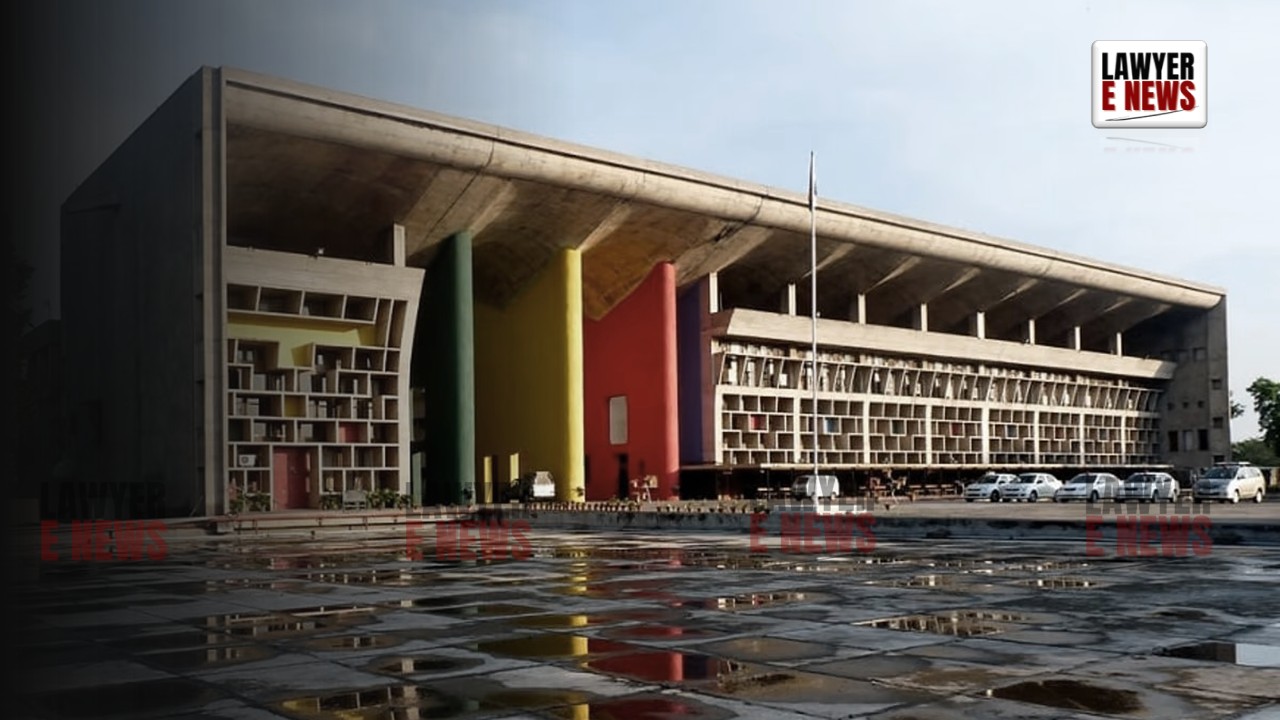
"Pension being a recurring and assured source of income... cannot be excluded while calculating loss of income" – In a significant ruling that reinforces the rights of legal heirs in motor accident claims, the Punjab and Haryana High Court enhanced the compensation awarded to the family of a deceased government school principal by over ₹11 lakhs, emphatically holding that pension drawn by a deceased cannot be excluded from the computation of income while assessing compensation under the Motor Vehicles Act.
The case, Smt. Sunita Devi and Others v. Shri Narinder Kumar and Others, was decided by Justice Harkesh Manuja in First Appeal From Order No. 1033 of 2020 with Cross Objection No. 32 of 2023. The Court reversed the erroneous exclusion of pension by the Tribunal and reaffirmed the principle that legal heirs are entitled to just and fair compensation reflecting the true income of the deceased.
“The Tribunal erred in excluding the pension amount received by the deceased from the computation of loss of dependency,” observed the Court, stressing that “pension being a recurring and assured source of income arising from past service of the deceased constitutes an integral part of pecuniary benefits.”
“Family Pension Belongs to the Widow – It Cannot Be Touched While Computing Deceased’s Income” – High Court Clarifies Legal Position
The deceased, Nirmal Singh @ Nirmal Singh Pathania, a 56-year-old retired armed forces veteran, was employed as a Principal in a government school in Himachal Pradesh. He was drawing a monthly salary of ₹89,772 and a pension of ₹26,113. After statutory deductions, his net salary came to ₹55,437. The Tribunal had completely excluded the pension and incorrectly calculated income by relying only on the salary, thereby under-assessing the loss to the family.
Referring to the recent Supreme Court decision in Kirosata Devi and Others v. Ram Ji Lal, SLP (C) No. 25497 of 2025, the Court reiterated that:
“Pension being a recurring and assured source of income arising from the past service of the deceased constitutes an integral part of his pecuniary benefits. Hence, while determining the loss of dependency, the pension amount cannot be excluded or deducted.”
Further strengthening the position of the widow, the Court cited National Insurance Co. Ltd. v. Birender and Others, (2020) 11 SCC 356, and held:
“Family pension received by the widow of the deceased is her own independent right and cannot be deducted from the compensation payable for the death of her husband.”
Justice Manuja clarified that the family pension payable to Claimant No. 1 was not a continuation of the deceased’s income, but her independent entitlement, and hence, had no place in the computation of loss of dependency.
Legal Heirs Are Entitled Even If Not Dependent – Court Reduces Deduction Towards Personal Expenses
The insurance company had argued that the major sons of the deceased (claimants no. 2 and 3) could not be considered dependents, and therefore, the deduction for personal expenses should be one-third instead of one-fourth. This argument was flatly rejected by the Court.
“While computing loss of dependency, it is immaterial if the claimants are married and not actually dependent on the deceased. All legal heirs are to be considered,” said Justice Manuja, placing reliance on Smt. Maniuri Bera v. Oriental Insurance Co. Ltd., (2007) 10 SCC 643.
He added that: “A legal representative is one who suffers on account of the death of a person due to a motor vehicle accident and need not necessarily be a wife, husband, parent or child.”
Consequently, with four claimants, the deduction towards personal expenses was rightly recalibrated to one-fourth, thereby further enhancing the compensation amount.
Award Under Conventional Heads Revisited – Consortium Payable to All Four Claimants
Justice Manuja also revisited the compensation granted under conventional heads and found the Tribunal’s award inadequate. Relying on the Supreme Court's decisions in Pranay Sethi, Sarla Verma, and Satinder Kaur, the Court held:
“Loss of consortium is payable to each of the four claimants at ₹48,000, in accordance with settled law. The Tribunal's limited award under these heads is required to be enhanced.”
The Court awarded ₹18,000 each under the heads of funeral expenses and loss of estate. However, it clarified that there was no separate entitlement for “loss of love and affection.”
Compensation Enhanced by ₹11.19 Lakhs – Rate of Interest at 9% with Penalty Clause for Delay
Upholding the 9% annual interest granted by the Tribunal, the Court introduced a penalty clause: “In case the enhanced amount is not paid within three months, the same shall carry interest at the rate of 12% per annum thereafter.”
The total compensation was enhanced from ₹67,04,800 to ₹78,24,382.50. The additional ₹11,19,582.50/- is now payable to the appellants, with the already paid amount to be deducted.
The cross objections filed by the insurance company challenging the grant of future prospects, the multiplier applied, and the interest rate were dismissed. The Court found: “There is no merit in the objections raised by the insurer. The reassessment has rightly led to enhancement, not reduction.”
Justice Delivered Through Legal Precision
This judgment stands out not merely for the numerical enhancement of compensation, but for its commitment to ensuring that every component of the deceased’s income is treated with legal sanctity and fairness. It reaffirms a foundational principle that:
“Just compensation must reflect the real economic contribution of the deceased, and cannot be based on arbitrary exclusions or technical misinterpretations.”
The High Court’s ruling restores the integrity of compensation law by ensuring that neither pension nor legal heirs are unfairly denied their rightful entitlements.
Date of Decision: 16 January 2026