Readiness and Willingness Under Section 16(c) Is Not a Ritualistic Phrase — Plaintiff Must Prove It With Substance, Not Just Words: Karnataka High Court FIR in Disproportionate Assets Case Quashed: Patna High Court Slams SP for 'Non-Application of Mind' and 'Absence of Credible Source Information' Ownership of Vehicle Linked to Commercial Quantity of Heroin – Custodial Interrogation Necessary: Punjab & Haryana High Court Denies Anticipatory Bail under Section 482 BNSS Death Caused by Rash Driving Is Not a Private Dispute — No FIR Quashing on Basis of Compromise in Section 106 BNS Cases: Punjab & Haryana High Court No Bank Can Override Court Orders: Rajasthan High Court Slams Axis Bank for Unauthorized Withdrawal from Court-Ordered FD" Indian Courts Cannot Invalidate Foreign Arbitral Awards Passed Under Foreign Law: Madhya Pradesh High Court Enforces Texas-Based Award Despite Commercial Court’s Contrary Decree Sudden Quarrel over Mound of Earth — Not Murder but Culpable Homicide: Allahabad High Court Eligibility Flows from Birth, Not a Certificate Date: Delhi High Court Strikes Down Rule Fixing Arbitrary Cut-Off for OBC-NCL Certificates in CAPF (AC) Recruitment Bar Under Order II Rule 2 CPC Cannot Be Invoked Where Specific Performance Was Legally Premature Due To Statutory Impediments: P&H High Court Once a Court Declares a Department an Industry Under Section 2(j), State Cannot Raise the Same Objection Again: Gujarat High Court Slams Repetitive Litigation by Irrigation Department “How Could Cheques Issued in 2020 Be Mentioned in a 2019 Contract?”: Delhi High Court Grants Injunction in Forged MOA Case, Slams Prima Facie Fabrication Calling Wife by Her Caste Name in Public Just Before Suicide is Immediate Cause of Self-Immolation: Madras High Court Upholds Husband’s Conviction Under Section 306 IPC Sole Testimony of Prosecutrix, If Credible, Is Enough to Convict: Delhi High Court Upholds Rape Conviction Cheque Issued as Security Still Attracts Section 138 NI Act If Liability Exists on Date of Presentation: Himachal Pradesh High Court No Work No Pay Is Not a Universal Rule: Punjab & Haryana High Court Dock Identification Without Prior TIP Is Absolutely Useless: P&H High Court Upholds Acquittal in Attempt to Murder Case Filing Forged Court Pleadings in Union Government’s Name is Criminal Contempt: Karnataka High Court Sentences Litigant to Jail Execution of Will Proved, But Probate Justly Denied Due to Concealment of Property Sale: Delhi High Court Mere Designation Doesn’t Establish Criminal Liability: Bombay High Court Quashes Proceedings Against ICICI Officials in Octroi Evasion Case Fraud on Power Voids the Order: Supreme Court Quashes FIR Against Karnataka BJP Leader R. Ashoka, Slams Politically Motivated Prosecution Cause of Fire Is Immaterial If Fire Itself Is Insured Peril: Supreme Court Rebukes Insurer’s Repudiation Dragging a Trained Army Officer Up 20 Steps Without Resistance? The Story Lacks Credence: Supreme Court Upholds Acquittal in Army Officer’s Murder Semen Stains Alone Do Not Prove Rape: Supreme Court Acquits Doctor Accused of Rape No Mortgage, No SARFAESI: Supreme Court Rules Against NEDFi, Says Recovery Action in Nagaland Without Security Agreement Was Illegal Parity Cannot Be Denied by Geography: Supreme Court Holds Jharkhand Bound by Patna HC's Judgment, Orders Pay Revision for Industries Officer Once Power Flows Continuously from a Synchronized Turbine, It Is No Longer Infirm: Supreme Court Orders TANGEDCO to Pay Fixed Charges to Penna Electricity Law of Limitation Binds All Equally, Including the State: Allahabad High Court Dismisses Review Petition with 5743 Days’ Delay Once Selected, All Are Equals: Allahabad High Court Slams State for Withholding Pay Protection From Later Batches of Ex-Servicemen Constables Non-Compliance With Section 42 of NDPS Act Is Fatal to Prosecution: Punjab & Haryana High Court Acquits Two Accused In 160 Kg Poppy Husk Case Unregistered Agreement Creating Right of Way Inadmissible in Evidence: Punjab & Haryana High Court Summary Decree in Partition Suit Denied: Unequivocal Admissions Absent, Full Trial Necessary: Delhi High Court No Court Can Allow Itself to Be Used as an Instrument of Fraud: Delhi High Court Exposes Forged Writ Petition Filed in Name of Unaware Citizen "Deliberate Wage Splitting to Evade Provident Fund Dues Is Illegal": Bombay High Court Restores PF Authority's 7A Order Against Saket College and Centrum Direct Anti-Suit Injunction in Matrimonial Dispute Set Aside: Calcutta High Court Refuses to Stall UK Divorce Proceedings Filed by Wife

Acceptance of Document After Closure of Evidence Must Be Matched by Equal Right of Rebuttal: Orissa High Court Invokes Natural Justice

22 September 2025 8:45 PM

By: sayum


“It is very fundamental in civil law that, whenever any document is accepted by the Court at the instance of one party, it is natural and obvious for providing opportunity to other sides for adducing rebuttal evidence… only in order to comply the principles of natural justice.” — Justice A.C. Behera

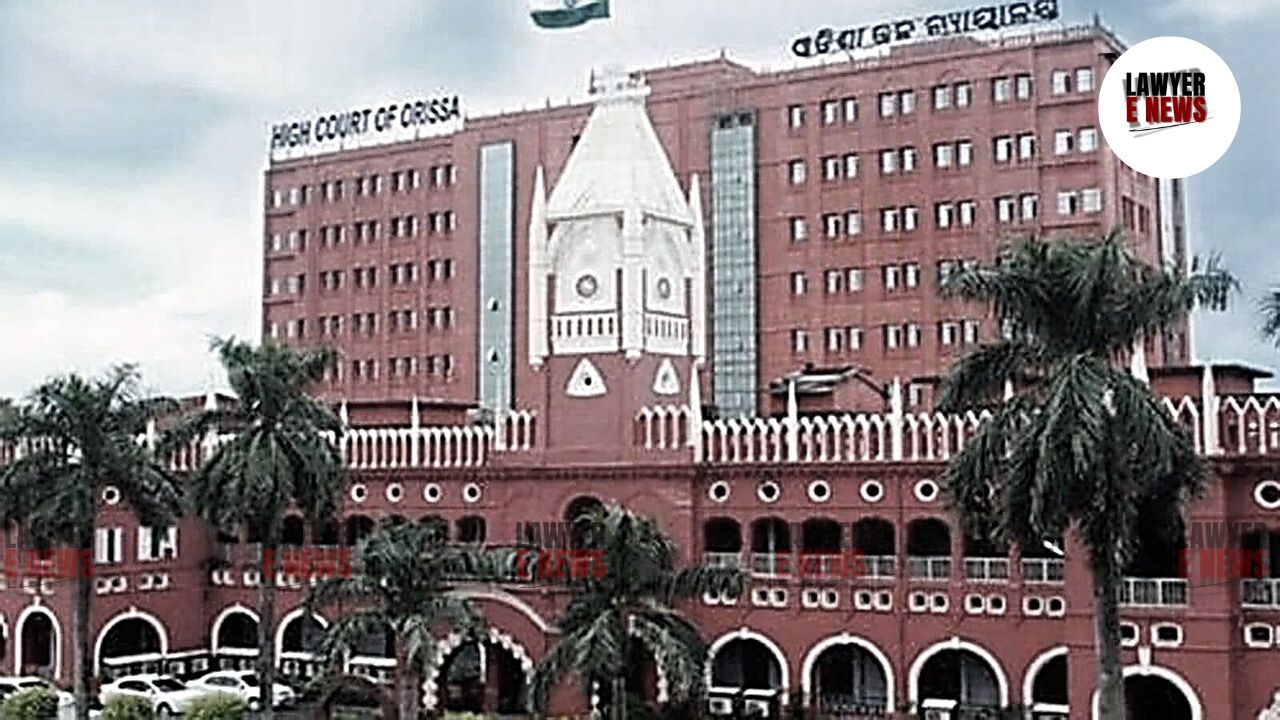
Orissa High Court emphasizing that trial courts cannot admit documents at the stage of final arguments — after closure of evidence — without granting the other side the right to rebut. The Court, exercising its supervisory jurisdiction under Article 227 of the Constitution, partially allowed the petition by the defendants and directed the trial court to provide them with an opportunity to rebut the belatedly introduced document.

The case reinforces that procedural fairness is not a technicality, but a substantive part of the right to be heard, flowing directly from the principle of audi alteram partem.

"You Cannot Ambush a Litigant With Late Evidence Without Offering a Right to Reply": Court Balances Order VII Rule 14(3) With Fairness

The controversy arose in C.S. No.127 of 2014 before the Civil Judge (Senior Division), Keonjhar. The plaintiff, Purna Chandra Mahanta, submitted a certified copy of the Record of Rights (R.o.R.) at the stage of final arguments — long after both parties had closed their evidence. The Trial Court accepted the document and marked it as Exhibit-25, without giving the defendants any opportunity to respond.

Challenging this procedural irregularity, the defendants filed a Civil Miscellaneous Petition under Article 227 before the Orissa High Court, arguing that this acceptance without granting the right to rebut violated their right to a fair trial. The petitioners contended that the trial court, while marking the R.o.R. as an exhibit, denied them the basic procedural safeguard to counter it through rebuttal evidence.

The plaintiff’s side, through senior counsel Mr. B. Bhuyan, defended the Trial Court's action by asserting that the document in question was a certified copy of a public document, and thus admissible even at a late stage under Order VII Rule 14(3) of the Code of Civil Procedure, 1908. It was argued that this was necessary to show that the area purchased by the defendants had undergone reduction after mutation, and that the court was well within its jurisdiction to allow the document to be marked.

Procedural Accommodation Must Not Eclipse Fairness

Justice A.C. Behera acknowledged the validity of Order VII Rule 14(3) CPC, which permits filing of documents even after institution of the suit, but placed a strong emphasis on the principles of natural justice as the overarching consideration. The Court observed:

“It is very fundamental in civil law that, whenever any document is accepted by the Court at the instance of one party, it is natural and obvious for providing opportunity to other sides for adducing rebuttal evidence… only in order to comply the principles of natural justice.”

While the Court refused to set aside the acceptance of the R.o.R. and left the Trial Court’s order dated 31.10.2019 “intact in all respects,” it partially allowed the Civil Miscellaneous Petition by directing that the petitioners (defendants) be given liberty to adduce rebuttal evidence against the impugned document, i.e., Exhibit-25. The Trial Court was further directed to dispose of the suit within three months from the date of production of the certified copy of this judgment.

“Right to Rebut is Not a Charity—It is a Constitutional Compulsion”: High Court Protects Equilibrium of Civil Procedure

This judgment strikes a careful balance between procedural discretion under the CPC and the non-negotiable constitutional requirement of fair hearing. While it did not interfere with the Trial Court’s discretion to accept late-stage evidence, it placed an equally strong obligation on the court to restore procedural equilibrium by affording the opposing party a right to respond.

The Court firmly rejected the idea that admissibility of a document—especially a public one—could override the defendant’s right to challenge its effect, noting that such an approach would amount to procedural ambush.

By directing the Trial Court to reopen the window for rebuttal evidence, the Orissa High Court preserved both judicial efficiency and litigant fairness, without nullifying the Trial Court’s discretion under the CPC.

The Civil Miscellaneous Petition thus stood disposed of finally, with all interim orders automatically rendered infructuous.

Date of Decision: 16.09.2025

Latest Legal News